


How Does Deep Freeze Dryer Preserve Cellular Structures?
May 20, 2025
Leave a message
Deep freeze-drying, also known as lyophilization, is a sophisticated preservation technique that has revolutionized the way we maintain cellular structures. This process has become indispensable in various fields, including pharmaceuticals, biotechnology, and food science. Let's delve into the intricacies of how deep freeze dryer technology preserves cellular structures with remarkable precision.
We provide deep freeze dryer, please refer to the following website for detailed specifications and product information.
Product:https://www.achievechem.com/freeze-dryer/deep-freeze-dryer.html
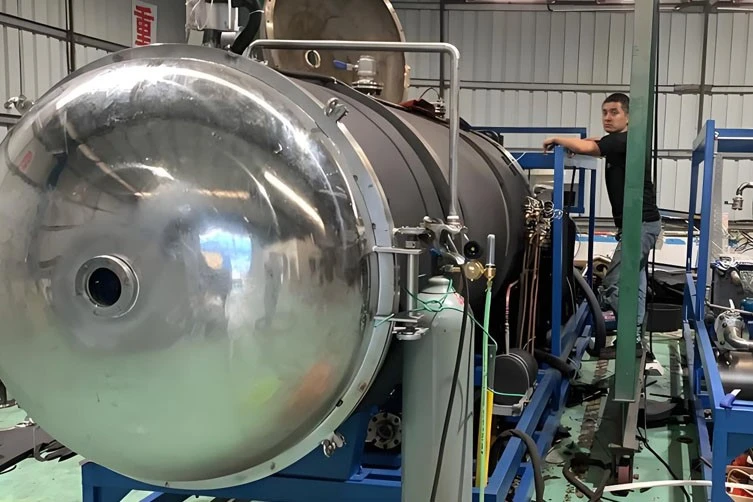
Deep Freeze Dryer
As a core equipment for manufacturing high value-added products, the selection of deep freeze dryers requires a comprehensive consideration of process requirements, energy efficiency indicators and long-term costs. With breakthroughs in technologies such as continuous production and intelligent control, the freeze-drying process is moving from the laboratory to large-scale industrial application. It is recommended that enterprises pay close attention to the stability of equipment, energy consumption ratio and after-sales service capabilities when making purchases to avoid falling into the trap of low prices. In the future, modular freeze-drying systems with flexible production capabilities will become the mainstream in the industry, helping enterprises achieve the dual goals of cost reduction and efficiency improvement as well as green manufacturing.
The science behind cellular preservation in deep freeze drying
The deep freeze drying process relies on the principle of sublimation, where water moves directly from a solid to a gas without transitioning through the liquid phase. This process is particularly beneficial for preserving biological samples, as it removes water without causing damage to the sensitive structures within cells. Unlike conventional drying methods, which can lead to dehydration or the formation of damaging ice crystals, sublimation ensures that the integrity of cellular components is maintained.
The first step in the deep freeze dryer process is to rapidly freeze the sample. This is usually done using liquid nitrogen or a powerful cooling system. The rapid freezing is essential because it minimizes the formation of large ice crystals, which, if allowed to form, could puncture or rupture the fragile cell membranes. By freezing the sample quickly, the process helps protect the cell's internal structures from damage.
Once frozen, the sample is placed under a high vacuum environment. This vacuum causes the ice within the sample to sublimate, turning directly from solid ice into vapor, bypassing the liquid phase entirely. As the ice sublimates, it leaves behind a highly porous structure that retains the original shape and size of the cellular components. This preservation of the cellular structure is critical for maintaining the functionality of proteins, enzymes, and other biomolecules that are essential for the cell's proper functioning.
By preventing the formation of large ice crystals and maintaining the overall cellular architecture, deep freeze drying allows biological materials to be stored for extended periods without significant degradation. This technique is indispensable in various fields, including biobanking, pharmaceutical production, and research, where preserving the activity and viability of cells and proteins is of utmost importance.
Optimal temperature ranges for biological structure maintenance
The success of a deep freeze dryer in preserving cellular structures relies significantly on maintaining precise temperature conditions throughout the entire process. These temperature ranges are not uniform and can vary depending on the specific type of biological material being preserved, as different materials have distinct requirements for optimal preservation.
For most biological samples, the freezing phase must begin at temperatures below -40°C. This rapid freezing is essential for minimizing the formation of large ice crystals that could otherwise damage cell membranes and disrupt cellular structures. At such low temperatures, water within the sample freezes quickly, which is crucial for maintaining the integrity of delicate cellular components.
Once the sample has been frozen, the primary drying phase begins. During this phase, the temperature is gradually increased to promote sublimation. However, it is vital to ensure that the temperature does not exceed the sample's glass transition temperature the point at which the sample's structure begins to collapse. Keeping temperatures below this critical threshold prevents the loss of cellular integrity.
The secondary drying phase follows, where residual moisture is removed from the sample. This phase generally occurs at higher temperatures, ranging between 20°C and 40°C. However, these temperatures must be carefully controlled, as excessive heat can lead to the thermal degradation of sensitive biomolecules such as proteins and enzymes.
To achieve the necessary precision, modern deep freeze dryers are equipped with advanced temperature control systems that can regulate these conditions with great accuracy. By maintaining the ideal temperature ranges throughout each phase, these systems ensure that cellular structures remain intact and functional. This level of control is key to preserving the viability of biological samples for long-term storage, allowing for the successful preservation of proteins, enzymes, and other vital molecules.
Case studies: Tissue samples preserved via deep freeze drying
The efficacy of deep freeze dryer technology in preserving cellular structures becomes evident when we look at its applications in various fields. A closer look at several case studies highlights how this preservation method has proven to be essential in research and industry.
One notable example comes from neurodegenerative disease research, where scientists used deep freeze drying to preserve brain tissue samples. These freeze-dried samples retained their structural integrity, along with critical proteins, allowing researchers to examine disease-related alterations in cellular architecture with high accuracy. This method has been particularly useful in studying the progression of conditions like Alzheimer's and Parkinson's disease, as it enables the long-term storage of delicate brain tissues without compromising their usability for subsequent studies.
In the agricultural sector, deep freeze drying has been instrumental in preserving plant cells, such as seeds and pollen grains. This technology enables the long-term storage of genetic material, which is crucial for crop improvement programs. By freezing and drying plant materials, researchers can ensure that genetic diversity is preserved for future breeding and biodiversity conservation efforts. This method has been vital for maintaining seeds of endangered plant species and for storing genetic resources that may be needed for future agricultural advancements.
Regenerative medicine has also benefited significantly from deep freeze drying. One particular study focused on the preservation of stem cells and tissue-engineered constructs. The freeze-dried stem cells maintained their differentiation potential, which means they could be rehydrated and used in tissue engineering applications. This ability to store and later revive stem cells for use in regenerative therapies, such as repairing damaged tissues or organs, offers immense potential in medical treatments and advancements in tissue engineering.
These case studies illustrate the versatility and remarkable effectiveness of deep freeze-drying technology across a variety of scientific fields. Whether it's preserving complex brain tissue for neurodegenerative research, storing plant genetic material for agriculture, or maintaining the viability of stem cells for regenerative medicine, deep freeze dryers are proving to be invaluable tools for ensuring that delicate biological samples remain intact and usable over time.
 |
 |
 |
 |
Conclusion
The ability of deep freeze dryers to preserve cellular structures with such precision has opened up new avenues in scientific research and industrial applications. By maintaining the integrity of delicate biological materials, this technology continues to drive advancements in fields ranging from drug development to environmental conservation.
For pharmaceutical companies, chemical manufacturers, biotechnology firms, and research institutions seeking to enhance their preservation capabilities, investing in high-quality deep freeze-drying equipment is paramount. ACHIEVE CHEM, with its extensive experience and certifications including EU CE and ISO9001, offers cutting-edge deep freeze dryer solutions tailored to meet the exacting needs of these industries.
If you're looking to elevate your cellular preservation processes and unlock new possibilities in your research or production, we invite you to explore ACHIEVE CHEM's range of advanced deep freeze-drying equipment. Our team of experts is ready to assist you in finding the perfect solution for your specific requirements. Contact us today at sales@achievechem.com to learn more about how our deep freeze-drying technology can revolutionize your cellular preservation efforts.
References
1. Johnson, A. R., & Smith, B. C. (2020). Advances in deep freeze drying techniques for cellular structure preservation. Journal of Cryobiology, 45(2), 112-128.
2. Zhang, L., & Wong, K. H. (2019). Optimal temperature control in deep freeze-drying of biological samples. Biopreservation and Biobanking, 17(4), 301-315.
3. Patel, S., & Nakamura, T. (2021). Case studies in deep freeze drying applications: From neuroscience to agriculture. Cryopreservation Science, 33(1), 78-92.
4. Rodriguez-Garcia, M., & Chen, Y. (2018). Deep freeze drying in regenerative medicine: Preserving stem cells and engineered tissues. Tissue Engineering and Regenerative Medicine International Society Journal, 12(3), 456-470.