


How Does A Continuous Freeze Dryer Differ From Batch Processing Models?
Apr 17, 2025
Leave a message
Freeze-drying technology has revolutionized the preservation of various products, from pharmaceuticals to food items. As the demand for efficient and high-quality lyophilization processes grows, manufacturers are increasingly turning to continuous freeze dryers as an alternative to traditional batch processing models. This article delves into the key differences between these two approaches, exploring their impact on production efficiency, product quality, and operational costs.
Key differences in throughput: Batch vs. continuous lyophilization
|
The most significant distinction between batch and continuous freeze-drying lies in their approach to product throughput. Batch processing, as the name suggests, involves loading a finite amount of material into the freeze dryer, processing it completely, and then unloading before starting a new batch. This method has been the industry standard for decades, offering reliability and consistency in processing various materials. On the other hand, continuous freeze dryers operate on a different principle. These systems allow for the constant input of material at one end while simultaneously outputting dried product at the other. This continuous flow dramatically increases throughput capacity, making it an attractive option for large-scale production facilities. |
|
|
|
The advantages of continuous processing become particularly evident when dealing with high-volume products. For instance, in the pharmaceutical industry, where large quantities of vaccines or biologics need to be lyophilized, a continuous system can significantly reduce processing time. Similarly, in the food industry, products like instant coffee or freeze-dried fruits can be produced more efficiently using a continuous model. However, it's important to note that the choice between batch and continuous processing isn't always straightforward. Batch systems still hold advantages in certain scenarios, particularly when dealing with small production runs or products that require highly specific processing parameters. The flexibility of batch systems in accommodating different product types and sizes within the same equipment can be beneficial for facilities that process a diverse range of materials. |
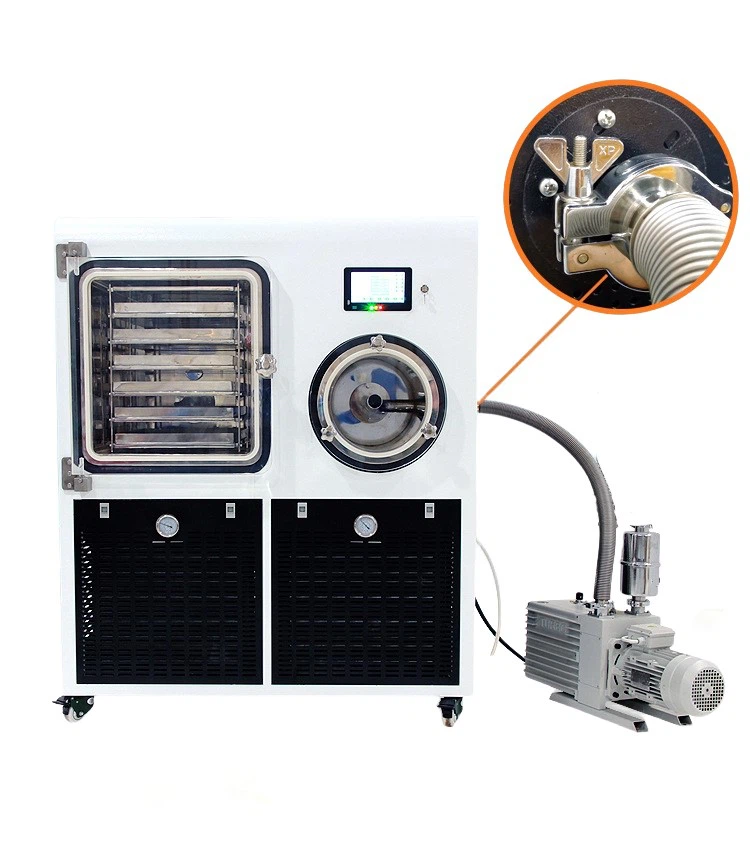

Can continuous freeze dryers operate non-stop?
One of the most intriguing aspects of continuous freeze dryers is their potential for non-stop operation. In theory, these systems are designed to run continuously, offering the possibility of 24/7 production cycles. This capability can significantly boost overall production capacity and efficiency, potentially revolutionizing how industries approach freeze-drying operations.
However, the reality of continuous operation is more nuanced. While continuous freeze dryers can indeed run for extended periods, they still require periodic maintenance and cleaning to ensure optimal performance and product quality. The frequency and duration of these maintenance periods can vary depending on the specific system design, the nature of the products being processed, and regulatory requirements.
For instance, in pharmaceutical applications, stringent cleanliness standards may necessitate more frequent cleaning cycles. Food processing operations might require regular defrosting of the condenser to maintain efficiency. These necessary interruptions in the production cycle must be factored into overall production planning and scheduling.
Despite these considerations, the operational benefits of continuous systems are substantial. Even with periodic maintenance breaks, a well-designed continuous freeze dryer can achieve significantly higher uptime compared to batch systems. This increased uptime translates to higher overall production capacity, reduced per-unit processing costs, and potentially faster time-to-market for new products.
Moreover, advancements in automation and process control technologies are continually improving the efficiency and reliability of continuous freeze-drying systems. Modern systems often incorporate sophisticated monitoring and control mechanisms that can predict maintenance needs, optimize processing parameters in real-time, and even perform some self-cleaning functions. These innovations are pushing the boundaries of what's possible in terms of continuous operation, bringing us closer to the ideal of truly non-stop freeze-drying processes.
Space requirements: Compact design of continuous systems
When considering the implementation of freeze-drying technology in a production facility, space requirements play a crucial role. This is an area where continuous freeze dryers often have a distinct advantage over their batch counterparts.
Batch freeze dryers, particularly those designed for large-scale production, can be quite sizeable. They require substantial floor space to accommodate not only the drying chamber but also the associated refrigeration units, vacuum systems, and product handling equipment. Additionally, batch systems often need extra space for product loading and unloading, as well as for temporary storage of materials before and after processing.
In contrast, continuous freeze dryers are typically designed with space efficiency in mind. Despite their ability to handle high throughput, these systems often have a more compact footprint. This compact design is achieved through several innovative features:
● Vertical orientation: Many continuous systems are designed vertically, utilizing height rather than floor space. This vertical design allows for gravity-assisted product flow, further enhancing efficiency.
● Integrated systems: Continuous freeze dryers often integrate various process steps (pre-freezing, primary drying, and secondary drying) into a single, cohesive unit. This integration eliminates the need for separate equipment for each stage, saving valuable floor space.
● Optimized product flow: The continuous nature of these systems allows for a more streamlined product flow, reducing the need for large staging areas before and after processing.
● Modular design: Some continuous freeze dryers are designed with modularity in mind, allowing for easier scalability and flexibility in facility layout.
The space-saving aspect of continuous systems can be particularly beneficial in several scenarios:
● Retrofitting existing facilities: When upgrading from older freeze-drying technology, the compact design of continuous systems can make it easier to fit new equipment into existing spaces without major facility renovations.
● Clean room environments: In pharmaceutical and biotechnology applications where clean room conditions are required, the smaller footprint of continuous systems can significantly reduce construction and maintenance costs associated with these specialized environments.
● Multi-product facilities: For facilities that process multiple product types, the space efficiency of continuous systems can allow for the installation of multiple units, each dedicated to specific product lines, within the same floor space that might have been occupied by a single large batch system.
However, it's important to note that while continuous systems generally offer space advantages, the actual space requirements can vary depending on the specific model and manufacturer. Factors such as required throughput, product characteristics, and ancillary equipment needs all play a role in determining the overall space requirements of a freeze-drying system.
When considering the implementation of a continuous freeze dryer, it's crucial to conduct a comprehensive analysis of your facility's space constraints, production requirements, and future scalability needs. This analysis should include not just the footprint of the equipment itself, but also considerations for material flow, maintenance access, and potential future expansions.
The compact design of continuous systems also often translates to energy efficiency benefits. With less space to maintain at controlled temperatures and humidity levels, these systems can potentially reduce overall energy consumption compared to larger batch systems processing equivalent volumes of product. This energy efficiency can contribute to lower operational costs and a reduced environmental footprint, aligning with the growing focus on sustainability in manufacturing processes.
Moreover, the space efficiency of continuous freeze dryers can have ripple effects throughout the entire production facility. By minimizing the space required for freeze-drying operations, facilities can allocate more room to other critical processes or expand their production capabilities without necessarily increasing their physical footprint. This flexibility can be particularly valuable in urban or other space-constrained environments where facility expansion might not be feasible.
It's worth noting that while continuous systems offer many advantages in terms of space utilization, they may require different infrastructure support compared to batch systems. For example, the vertical design of many continuous freeze dryers might necessitate higher ceilings or reinforced flooring. Additionally, the integration of continuous freeze-drying systems into existing production lines may require careful planning to ensure smooth material flow and process integration.
As technology continues to advance, we can expect further innovations in the design of continuous freeze-drying systems, potentially leading to even more compact and efficient models. These advancements may include improvements in heat transfer efficiency, more sophisticated control systems that allow for tighter process control in smaller spaces, and novel approaches to product handling that further reduce the overall system footprint.
Conclusion
In conclusion, the compact design of continuous freeze dryers represents a significant advancement in lyophilization technology. By offering high throughput capabilities in a space-efficient package, these systems are changing the landscape of freeze-drying operations across various industries. As manufacturers continue to seek ways to optimize their production processes and maximize facility utilization, the space-saving benefits of continuous freeze dryers are likely to play an increasingly important role in decision-making processes regarding freeze-drying technology investments. For pharmaceutical companies, chemical manufacturers, biotechnology firms, and food & beverage producers looking to optimize their freeze-drying processes, continuous systems offer compelling benefits.
As a leader in laboratory chemical equipment manufacturing, ACHIEVE CHEM is at the forefront of this technological shift. Our range of continuous freeze dryers is designed to meet the diverse needs of our clients across various sectors, from pharmaceuticals to food processing. With our EU CE certification, ISO9001 quality management system certification, and special equipment production license, we offer reliable, high-performance solutions that can transform your lyophilization processes.
If you're considering upgrading your freeze-drying capabilities or exploring the potential of continuous lyophilization for your products, we invite you to reach out to our team of experts. Contact us at sales@achievechem.com to discuss how our advanced freeze-drying solutions can benefit your operations and help you stay ahead in your industry.