


How Do You Use A Rotovap Step By Step
Jul 11, 2024
Leave a message
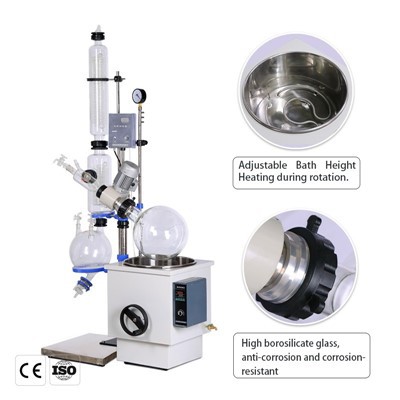
Understanding the Components of a Rotovap

Before diving into the step-by-step instructions, it's important to familiarize yourself with the main components of a rotovap:
Rotating Flask: Holds the sample and rotates to increase the surface area for evaporation.
Heating Bath: Heats the sample to promote evaporation.
Condenser: Cools the vapor back into a liquid, which is collected in the receiving flask.
Vacuum Pump: Reduces the pressure to lower the boiling point of the solvent.
Receiving Flask: Collects the condensed solvent after evaporation.
If you know these parts, it will be easier for you to follow the instructions and ensure that everything is set up and working properly.
Setting Up the Rotovap
Prepare the Equipment
First, gather all the necessary equipment.
This includes the rotary evaporator unit, a vacuum pump, a heating bath, and a chiller or cooling system.
Make sure all components are clean and in good working condition.
Check for any cracks or damage, especially in the glassware, as this can cause leaks or accidents.
01
Assemble the Glassware
Carefully assemble the glassware. Start by attaching the rotating flask to the rotovap unit.
Secure it firmly but gently to avoid breakage.
Connect the condenser to the rotating flask, ensuring a tight seal. Attach the receiving flask to the bottom of the condenser to collect the evaporated solvent.
02
Connect the Vacuum Pump and Chiller
Attach the vacuum pump to the appropriate port on the product. Ensure all connections are secure to maintain the vacuum.
Connect the chiller to the condenser.
This will cool the vapor and condense it back into a liquid.
Set the chiller to the desired temperature, typically around 0-10°C, depending on the solvent being used.
03
Fill the Heating Bath
Fill the heating bath with water or another suitable heating fluid.
The level of the fluid should be sufficient to submerge the rotating flask but not so high that it overflows when the flask is inserted.
Set the temperature of the heating bath.
For most solvents, a temperature range of 40-60°C is effective.
04
Check the System
Before starting, check the entire system for any leaks or loose connections.
Ensure that all components are securely in place.
Turn on the vacuum pump and chiller to verify that they are functioning correctly.
Once everything is confirmed to be in working order, you are ready to begin the evaporation process.
05
Performing the Evaporation
Insert the Sample
Carefully pour the sample into the rotating flask.
Do not fill the flask more than halfway to prevent spillage during rotation.
If the sample contains any solids or particulates, it is advisable to filter them out beforehand to avoid clogging the system.
01
Adjust the Vacuum
Turn on the vacuum pump and gradually increase the vacuum level.
The aim is to reduce the pressure inside the flask, lowering the boiling point of the solvent.
Be cautious and increase the vacuum slowly to prevent bumping, which occurs when the sample boils violently.
02
Start the Rotation
Begin rotating the flask at a moderate speed.
The rotation increases the surface area of the liquid, promoting faster evaporation.
The ideal speed will depend on the viscosity of the sample and the desired evaporation rate.
Generally, a rotation speed of 100-150 rpm is effective for most samples.
03
Heat the Sample
Turn on the heating bath and set it to the desired temperature.
The heat will accelerate the evaporation process.
Monitor the temperature closely to ensure it stays within the optimal range for the solvent being evaporated.
Adjust the heating bath settings if necessary.
04
Monitor the Condensation
As the solvent evaporates, it will travel through the condenser and be cooled back into a liquid.
Ensure that the chiller is maintaining the correct temperature for efficient condensation.
The condensed solvent will collect in the receiving flask.
Periodically check the flask to monitor the amount of solvent collected.
05
Finalizing the Process
End the Evaporation
Once the desired amount of solvent has been evaporated, gradually reduce the heating bath temperature and slow down the rotation of the flask.
Slowly release the vacuum to bring the system back to atmospheric pressure.
This should be done carefully to avoid sudden pressure changes that could cause bumping or splashing.
Remove the Sample
Carefully detach the rotating flask from the rotovap unit.
If there is any residual solvent in the flask, pour it into an appropriate container for disposal or further processing.
Clean the flask thoroughly before using it for another sample.
Collect the Condensed Solvent
Transfer the condensed solvent from the receiving flask to a suitable storage container.
Label the container with the solvent type and any relevant information.
Dispose of any waste solvent according to your laboratory's safety and environmental protocols.
Clean and Maintain the Equipment
After use, clean all components of the product thoroughly.
This includes the rotating flask, condenser, receiving flask, and any other parts that came into contact with the sample or solvent.
Standard support will expand the existence of the hardware and guarantee dependable execution.
Safety Considerations
Use Protective Equipment
Always wear appropriate personal protective equipment (PPE) when operating the product.
This includes safety goggles, gloves, and a lab coat.
Handling solvents and operating under vacuum can present various hazards, so it's important to protect yourself.
Work in a Well-Ventilated Area
Ensure that the it is used in a well-ventilated area or under a fume hood.
Evaporating solvents can release fumes that may be harmful if inhaled.
Proper ventilation will help to mitigate this risk.
Be Cautious with Hazardous Solvents
When working with hazardous solvents, take extra precautions.
Use secondary containment to catch any spills, and have emergency equipment such as eyewash stations and fire extinguishers readily available.
Follow all safety data sheet (SDS) guidelines for the solvents being used.
Troubleshooting Common Issues
Bumping
Bumping can be a common issue when using a rotovap. It occurs when the sample boils too rapidly, causing it to splash or bump. To prevent bumping, gradually increase the vacuum and temperature. You can also add boiling stones or an anti-bumping agent to the sample.
Poor Vacuum Performance
If the vacuum pump is not performing well, check for leaks in the system. Ensure all connections are secure and that the seals and gaskets are in good condition. If the vacuum pump is old or malfunctioning, it may need to be serviced or replaced.
Inefficient Condensation
If the solvent is not condensing efficiently, check the temperature settings of the chiller. Ensure that the cooling fluid is circulating properly and that the condenser is free from blockages. Adjust the chiller settings as needed to maintain effective condensation.
Slow Evaporation Rate
If the evaporation rate is slower than expected, verify that the heating bath and vacuum settings are correct. Ensure that the sample is rotating at an appropriate speed. If the sample is highly viscous, consider preheating it slightly to reduce viscosity and improve evaporation.
Applications of Rotary Evaporators in Small Laboratories
Sample Concentration
Revolving evaporators are usually utilized for concentrating tests by eliminating overabundance dissolvable. This is especially useful in preparatory science, where specific preparations for additional tests or responses are required.
Solvent Recovery
Solvents can be recovered and used again in many laboratory procedures. The product effectively separates the sample from the solvent, making it possible to collect and reuse the sample. This decreases waste and brings down the expense of buying new solvents.
Purification of Compounds
Rotary evaporators are also used for purifying compounds by removing impurities that are soluble in the solvent. When high purity is required, this is especially helpful in organic synthesis and natural product isolation.
Crystallization
The product can be used to get a solute from a solvent to crystallize by carefully controlling the evaporation process. High-immaculateness glasslike mixtures can be created involving this helpful technique in the drug business.
Conclusion
From setting up the equipment to carrying out the evaporation and wrapping up the process, using a rotary evaporator in a small laboratory requires a series of specific steps.
You might achieve proficient and fruitful dissolvable dissipation for a scope of utilizations by observing these rules and best practices.
To get the most out of using a rotovap, it's important to know how to use the parts, the equipment, and how to keep the workplace safe.