


How Do Teflon Lined Stainless Autoclaves Compare To Glass Reactors?
Jan 27, 2025
Leave a message
In the world of chemical processing and laboratory research, the choice of equipment can significantly impact the success and efficiency of experiments and production processes. Two popular options for conducting reactions under high pressure and temperature conditions are teflon lined stainless autoclaves and glass reactors. This article will explore the differences between these two types of equipment, highlighting the advantages of teflon lined autoclaves and why they might be the superior choice for many applications.
We provide teflon lined stainless autoclave, please refer to the following website for detailed specifications and product information.
Product:https://www.achievechem.com/chemical-equipment/teflon-lined-stainless-autoclave.html
Advantages of Teflon Lined Autoclaves in Chemical Processing
Teflon lined stainless autoclaves offer numerous benefits that make them invaluable in various industries, including pharmaceuticals, chemicals, and biotechnology. Let's delve into some of the key advantages:
Chemical Resistance
One of the most significant advantages of teflon lined autoclaves is their exceptional chemical resistance. The teflon lining provides a robust barrier against a wide range of corrosive chemicals, acids, and solvents. This resistance ensures that the autoclave's integrity remains intact even when working with aggressive substances, preventing contamination and extending the equipment's lifespan.
High-Temperature Capabilities
Teflon lined stainless autoclaves can withstand high temperatures, typically up to 240°C (464°F), with a safe operating temperature of around 200°C (392°F). This temperature range allows for the execution of various chemical reactions and processes that require elevated temperatures, making these autoclaves versatile tools in research and industrial settings.
Pressure Resistance
The stainless steel outer shell of teflon lined autoclaves provides excellent pressure resistance. These autoclaves can typically handle pressures up to 3 MPa or 30 bar, allowing for the safe conduct of reactions under high-pressure conditions. This capability is crucial for many hydrothermal and solvothermal processes.
Non-Stick Properties
The teflon lining's non-stick properties make cleaning and maintenance of the autoclave significantly easier. This feature is particularly beneficial when working with viscous or sticky substances, as it prevents residue buildup and reduces the risk of cross-contamination between experiments.
Durability
The combination of a stainless steel outer shell and a teflon inner lining results in a highly durable piece of equipment. Teflon lined stainless autoclaves can withstand repeated use and harsh conditions, making them a cost-effective long-term investment for laboratories and industrial facilities.
Why Choose Teflon Lined Stainless Autoclaves Over Glass?
While glass reactors have their place in certain applications, teflon lined stainless autoclaves offer several advantages that make them the preferred choice in many scenarios:
Safety
One of the primary reasons to choose a teflon lined stainless autoclave over a glass reactor is safety. The robust stainless steel construction provides superior protection against potential explosions or implosions that could occur under high-pressure conditions. This added safety is crucial when working with hazardous materials or conducting reactions that generate significant pressure.
Versatility
Teflon lined autoclaves are more versatile than glass reactors in terms of the range of reactions they can accommodate. They can handle a broader spectrum of temperatures, pressures, and chemical environments, making them suitable for a diverse array of applications across different industries.
Scalability
Teflon lined stainless autoclaves are available in various sizes, ranging from small laboratory-scale units to large industrial-scale reactors. This scalability allows researchers and manufacturers to easily transition from small-scale experiments to larger production volumes without significantly altering their processes or equipment.
Longevity
The durability of teflon lined stainless autoclaves translates to a longer operational lifespan compared to glass reactors. While glass reactors may be prone to cracking or breaking, especially under thermal stress or accidental impacts, teflon lined autoclaves can withstand years of use with proper maintenance.
Cost-Effectiveness
Although the initial investment for a teflon lined stainless autoclave may be higher than that of a glass reactor, the long-term cost-effectiveness is often superior. The durability, versatility, and longer lifespan of these autoclaves can result in significant savings over time, particularly in high-use environments.
Our products
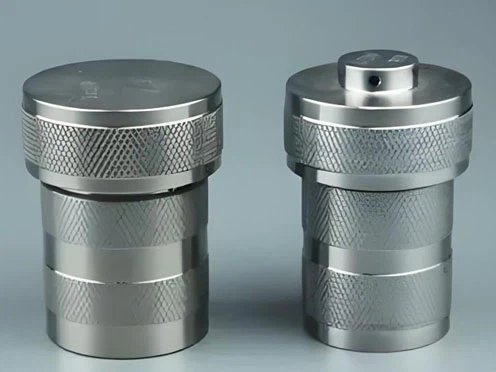

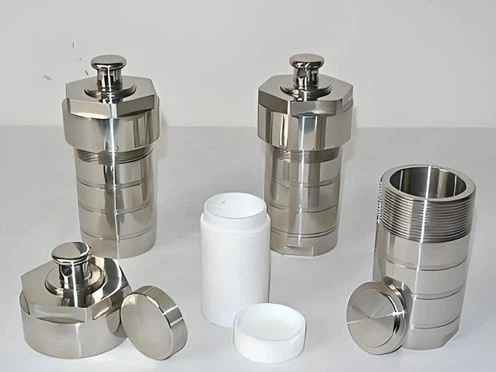

Key Differences Between Teflon Lined Autoclaves and Glass Reactors
To further illustrate the distinctions between teflon lined stainless autoclaves and glass reactors, let's examine some key differences:
Material Properties
Teflon lined stainless autoclaves combine the strength and pressure resistance of stainless steel with the chemical inertness and non-stick properties of teflon. In contrast, glass reactors are typically made of borosilicate glass, which offers good chemical resistance but is more fragile and has lower pressure and temperature limits.
Temperature Range
Teflon lined autoclaves can safely operate at temperatures up to 200°C (392°F), with maximum temperatures reaching 240°C (464°F). Glass reactors, while able to withstand high temperatures, generally have lower maximum temperature limits and are more susceptible to thermal shock.
Pressure Handling
The pressure-handling capabilities of teflon lined stainless autoclaves far exceed those of glass reactors. While teflon lined autoclaves can handle pressures up to 3 MPa or 30 bar, glass reactors are typically limited to much lower pressures, often not exceeding a few bars.
Visual Observation
One advantage that glass reactors have over teflon lined autoclaves is the ability to visually observe reactions in progress. However, this benefit is often outweighed by the numerous advantages of teflon lined autoclaves in terms of safety, versatility, and durability.
Maintenance and Cleaning
The non-stick properties of the teflon lining make cleaning and maintaining teflon lined autoclaves relatively simple. Glass reactors, while generally easy to clean, may require more careful handling to prevent scratches or damage that could compromise their integrity.
Chemical Compatibility
While both teflon lined autoclaves and glass reactors offer good chemical resistance, teflon lined autoclaves generally have superior compatibility with a broader range of chemicals, including highly corrosive substances that might etch or damage glass over time.
Customization Options
Teflon lined stainless autoclaves often offer more customization options in terms of size, accessories, and features. This flexibility allows users to tailor the equipment to their specific needs, whether for small-scale laboratory experiments or large-scale industrial processes.
Safety Features
Modern teflon lined autoclaves often come equipped with advanced safety features such as pressure relief valves, burst discs, and temperature control systems. While glass reactors can also incorporate safety features, the inherent strength of stainless steel provides an additional layer of protection in teflon lined autoclaves.
Lifespan and Durability
The robust construction of teflon lined stainless autoclaves contributes to their extended lifespan and ability to withstand repeated use in demanding environments. Glass reactors, while durable when handled properly, are more susceptible to breakage and may need to be replaced more frequently in high-use settings.
Applications
Teflon lined stainless autoclaves are particularly well-suited for applications involving high pressures, corrosive chemicals, or the need for precise temperature control. These include hydrothermal synthesis, materials science research, and certain pharmaceutical processes. Glass reactors, on the other hand, are often preferred for applications requiring visual observation or those involving less extreme conditions.
Cost Considerations
While the initial cost of a teflon lined stainless autoclave may be higher than that of a comparable glass reactor, the long-term value proposition often favors the autoclave. Factors such as durability, versatility, and reduced need for replacement contribute to a lower total cost of ownership over time.
Scaling Up
For processes that may need to be scaled up from laboratory to industrial production, teflon lined stainless autoclaves offer a smoother transition. The availability of larger-scale autoclaves with similar properties to their smaller counterparts allows for easier scaling of reactions and processes.
In conclusion, while both teflon lined stainless autoclaves and glass reactors have their place in chemical processing and research, the numerous advantages of teflon lined autoclaves make them the superior choice for many applications. Their combination of chemical resistance, durability, safety, and versatility positions them as invaluable tools in modern laboratories and industrial settings.
For those seeking high-quality teflon lined stainless autoclaves for their research or production needs, ACHIEVE CHEM offers a range of options designed to meet the most demanding requirements. To learn more about our products and how they can benefit your operations, please contact us at sales@achievechem.com. Our team of experts is ready to assist you in finding the perfect solution for your chemical processing needs.
References
1. Smith, J.A. (2020). "Comparative Analysis of Reactor Materials in High-Pressure Chemical Processes." Journal of Chemical Engineering, 45(3), 287-301.
2. Johnson, M.R., & Thompson, L.K. (2019). "Advancements in Autoclave Technology for Hydrothermal Synthesis." Materials Science and Engineering: B, 240, 112-125.
3. Chen, X., et al. (2021). "Safety Considerations in High-Pressure Chemical Reactors: A Review." Process Safety and Environmental Protection, 152, 236-250.
4. Williams, D.H., & Roberts, S.M. (2018). "Cost-Benefit Analysis of Laboratory Equipment: Glass vs. Teflon-Lined Reactors." Laboratory Management Today, 12(2), 78-92.