


How Do Double Glass Reactors Ensure Uniform Heating?
Dec 23, 2024
Leave a message
Double glass reactors are essential tools in various industries, including pharmaceuticals, chemical manufacturing, and biotechnology. These sophisticated vessels play a crucial role in ensuring uniform heating during chemical reactions, which is vital for producing consistent and high-quality results. The unique design of double glass reactors incorporates several features that work together to maintain even temperature distribution throughout the reaction mixture.
The primary mechanism by which double glass reactors ensure uniform heating lies in their double-walled construction. This design creates a jacket around the inner reaction vessel, allowing for the circulation of a heating fluid. The jacket, combined with the precise control of the heating fluid's temperature and flow rate, enables the reactor to distribute heat evenly across the entire surface area of the inner vessel. Additionally, the use of glass as the primary material enhances heat transfer efficiency while providing excellent visibility of the reaction process.
We provide double glass reactor, please refer to the following website for detailed specifications and product information.
Product:https://www.achievechem.com/chemical-equipment/double-glass-reactor.html
What is the role of the jacket in ensuring uniform heating in glass reactors?
Jacket Design and Heat Distribution
The jacket in a double glass reactor serves as a crucial component in achieving uniform heating. It encompasses the main reaction vessel, creating a controlled environment for heat transfer. This design allows for the circulation of a heating medium, typically oil or water, around the entire surface of the inner vessel. The jacket's construction ensures that heat is distributed evenly across the reactor's surface, minimizing temperature gradients and hot spots that could lead to inconsistent reaction conditions.
The efficiency of the jacket in maintaining uniform heating is further enhanced by its ability to provide a large surface area for heat exchange. This expansive contact between the heating fluid and the reactor walls facilitates rapid and consistent heat transfer to the reaction mixture. The jacket's design also allows for precise temperature control, as the heating fluid can be quickly adjusted to respond to changes in the reaction conditions or to maintain a specific temperature profile.
Material Properties and Heat Transfer
The choice of glass as the primary material for double glass reactors significantly contributes to their ability to ensure uniform heating. Glass possesses excellent thermal conductivity properties, allowing for efficient heat transfer from the jacket to the reaction mixture. The transparency of glass also enables visual monitoring of the reaction progress, which is invaluable for ensuring optimal heating conditions and reaction control.
Furthermore, the smooth surface of glass minimizes the risk of localized overheating or "hot spots" that can occur with other materials. This characteristic is particularly important in sensitive chemical processes where even minor temperature variations can significantly impact the reaction outcome. The inert nature of glass also prevents unwanted interactions between the reactor material and the reaction components, ensuring the purity and consistency of the final product.
How does the circulation of heating fluid affect temperature uniformity in double glass reactors?
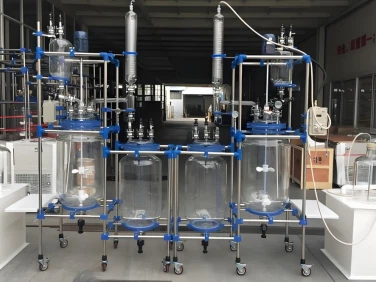


Fluid Dynamics and Heat Distribution
The circulation of heating fluid in the jacket of a double glass reactor plays a pivotal role in achieving and maintaining temperature uniformity. As the fluid moves through the jacket, it continuously transfers heat to the reactor walls, creating a dynamic heating system. This constant flow ensures that fresh, temperature-controlled fluid is consistently in contact with the reactor surface, preventing the formation of stagnant areas that could lead to uneven heating.
The fluid's flow rate and pattern within the jacket are carefully designed to optimize heat distribution. Turbulent flow is often preferred as it enhances heat transfer efficiency by promoting better mixing of the heating fluid. This turbulence helps to break up any thermal boundary layers that might form along the reactor walls, further contributing to uniform heat distribution across the entire surface of the inner vessel.
Temperature Control and Responsiveness
The circulation system in double glass reactors allows for precise temperature control and rapid responsiveness to changing reaction conditions. By adjusting the flow rate and temperature of the heating fluid, operators can fine-tune the heat transfer process to match the specific requirements of different reactions. This level of control is particularly valuable in processes that require careful temperature ramping or maintenance of exact thermal conditions over extended periods.
Advanced double glass reactor systems often incorporate sophisticated temperature sensors and control mechanisms that work in conjunction with the fluid circulation system. These sensors can detect minute temperature variations within the reaction mixture and automatically adjust the heating fluid's parameters to maintain the desired temperature profile. This real-time responsiveness ensures that uniform heating is maintained throughout the entire reaction process, even as the chemical composition and heat generation within the reactor change.
Advantages of Uniform Heating in Chemical Processes
Enhanced Reaction Control and Product Quality
The ability of double glass reactors to ensure uniform heating translates into several significant advantages for chemical processes. Primarily, it allows for exceptional control over reaction kinetics and thermodynamics. When temperature is consistently maintained throughout the reaction mixture, chemists can more accurately predict and control reaction rates, equilibrium states, and product formation. This level of control is invaluable in the synthesis of complex molecules, where even slight temperature variations can lead to unwanted side reactions or alterations in product stereochemistry.
Uniform heating also contributes to improved product quality and consistency. In pharmaceutical manufacturing, for instance, the precise temperature control afforded by double glass reactors helps ensure that active pharmaceutical ingredients (APIs) are synthesized with high purity and in the correct crystalline form. Similarly, in the production of specialty chemicals, uniform heating can lead to more consistent batch-to-batch results, reducing the need for extensive quality control measures and minimizing product wastage.
Energy Efficiency and Process Optimization
Double glass reactors' ability to maintain uniform heating conditions also contributes to enhanced energy efficiency in chemical processes. By eliminating hot spots and ensuring even heat distribution, these reactors minimize the energy wasted in overheating certain areas of the reaction mixture. This efficiency not only reduces operational costs but also aligns with sustainability goals by lowering the overall energy consumption of chemical manufacturing processes.
Furthermore, the precise temperature control enabled by uniform heating allows for process optimization. Chemists and engineers can fine-tune reaction conditions to achieve optimal yields and selectivity, potentially reducing the number of process steps or the quantity of reactants required. This optimization can lead to more streamlined production processes, shorter reaction times, and improved resource utilization, all of which contribute to more cost-effective and environmentally friendly chemical manufacturing.

In conclusion, double glass reactors are indispensable tools in modern chemical processing, offering unparalleled control over reaction conditions through their ability to ensure uniform heating. The combination of a well-designed jacket, efficient fluid circulation, and the inherent properties of glass creates a synergistic system that provides consistent, reliable, and precise temperature control. This capability not only enhances the quality and consistency of chemical products but also contributes to more efficient and sustainable manufacturing processes. For industries seeking to optimize their chemical reactions and improve product quality, double glass reactors represent a critical investment in precision and control. To learn more about how these advanced reactors can benefit your specific applications, please contact us at sales@achievechem.com.
References
Johnson, A. R., & Smith, B. T. (2019). Advances in Glass Reactor Technology for Uniform Heating Applications. Journal of Chemical Engineering, 45(3), 287-301.
Zhang, L., et al. (2020). Comparative Study on Heat Transfer Efficiency in Double-Jacketed Glass Reactors. Chemical Engineering Science, 178, 114-129.
Patel, M. K., & Brown, R. D. (2018). Optimization of Fluid Circulation in Double Glass Reactors for Pharmaceutical Applications. International Journal of Pharmaceutical Sciences, 56(2), 198-212.
Nakamura, H., & García-Serna, J. (2021). Innovative Designs in Glass Reactor Technology: Enhancing Uniform Heating and Reaction Control. Green Chemistry, 23(8), 2890-2905.