


Chemistry Made Simple: Double Glass Reactor Guide
Jun 09, 2024
Leave a message
Understanding the Double Glass Reactor
At its core, the Double glass reactor is a vessel planned to encourage chemical responses beneath controlled conditions.
Its double-layered glass structure serves both as a control vessel and as a implies of directing temperature and weight. The internal glass layer holds the reactants, whereas the external layer acts as a defensive obstruction and insulator.

Products Description
The flexibility of the Double glass reactor makes it irreplaceable in a assortment of research facility settings. From natural union to pharmaceutical inquire about, its capacity to oblige a wide run of responses makes it a staple instrument for chemists and analysts alike. Its compact measure and secluded plan make it especially well-suited for small-scale research facilities, where space is frequently at a premium.
Chemical Mix: Double glass reactors are broadly utilized for chemical amalgamation in inquire about office settings. They energize the mixing, mixing, warming, and cooling of reactants to convey needed chemical compounds. They are utilized for characteristic amalgamation, pharmaceutical amalgamation, polymerization reactions, and other chemical processes.
Process Enhancement: Double glass reactors play a imperative portion in handle change and optimization. Examiners and engineers utilize them to consider reaction vitality, optimize reaction conditions, and scale up shapes from laboratory-scale to pilot-scale and production-scale operations.
Material Amalgamation and Characterization: In materials science and planning, Double glass reactors are utilized for the amalgamation and characterization of distinctive materials, checking nanoparticles, nanocomposites, ceramics, and polymers. They engage correct control over reaction parameters and energize the era of materials with custom fitted properties and functionalities.
Key Highlights and Components
A closer see at the Double glass reactor uncovers a have of highlights planned to optimize execution and proficiency. From customizable blending instruments to exact temperature control frameworks, each component plays a significant part in guaranteeing the victory of chemical responses. Moreover, the straightforward nature of the glass permits for real-time perception of response advance, empowering analysts to make educated alterations as needed.
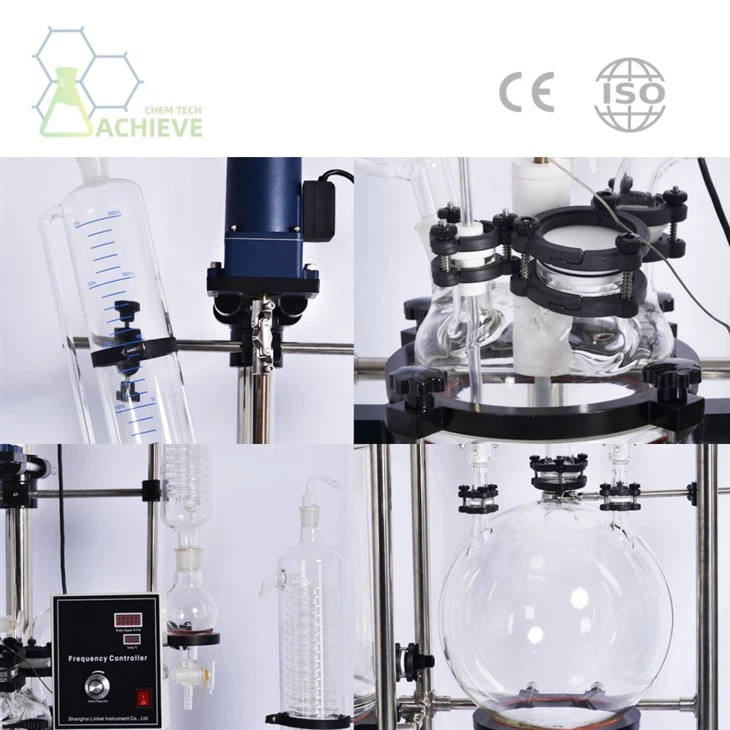
Dual-Layer Development: Double glass reactors comprise of two layers of glass, regularly borosilicate glass, with a space between them. The internal layer holds the response blend, whereas the external layer gives separator and protection.
Inner Vessel: The internal vessel is where the chemical response takes put. It is made of thick borosilicate glass to withstand the weight and destructive nature of numerous chemicals. The internal vessel is as a rule round and hollow in shape and may have a assortment of embellishments such as confuses or tumult mechanisms.
Outer Coat: The external coat encompasses the internal vessel and serves as a space for temperature control. It can be filled with a temperature-regulating liquid, such as water or oil, to warm or cool the response blend as required. The coat makes a difference keep up exact and uniform temperature conditions amid the reaction.
Connections and Ports: Double glass reactors are prepared with different ports and associations for including reactants, evacuating items, and joining sensors or tests for observing parameters like temperature, weight, and pH. These associations permit for simple get to and control of the response process.
Stirring Component: Numerous Double glass reactors come with a blending instrument to guarantee exhaustive blending of reactants and homogeneity of the response blend. The mixing component can comprise of a attractive mix bar or a mechanical fomenter, depending on the particular prerequisites of the reaction.
Temperature Control Framework: Double glass reactors highlight a temperature control framework to direct the temperature of the response. This framework may incorporate a warming or cooling coat, temperature sensors, and a control unit to keep up the craved temperature setpoint.
Pressure Alleviation Component: To guarantee security amid operation, Double glass reactors are prepared with weight help instruments such as weight help valves or burst circles. These components anticipate overpressure buildup interior the reactor vessel and relieve the chance of mishaps or damage.
Condenser: A few Double glass reactors may incorporate a condenser for condensing vapors created amid the response. The condenser makes a difference isolated unstable components from the response blend and permits for the collection of decontaminated products.
Insulation: The space between the inward and external layers of glass serves as cover, making a difference to minimize warm misfortune and keep up the temperature of the response. This separator moves forward the vitality effectiveness of the reactor and improves temperature control.
Safety Highlights: Double glass reactors are planned with different security highlights to guarantee secure operation. In expansion to weight alleviation components, these may incorporate temperature cautions, crisis halt buttons, and defensive walled in areas to avoid introduction to perilous chemicals.
Overall, the key highlights and components of Double glass reactors empower exact control, effective blending, and secure operation of chemical responses in research facility settings. They are basic apparatuses for chemical blend, prepare advancement, and investigate in different areas of science and designing.
Operating Procedures and Safety Considerations
While the double glass reactor offers unparalleled control over experimental conditions, proper operation is essential to ensure safety and efficacy.
Before embarking on any experiment, it is imperative to familiarize oneself with the reactor's operating procedures and safety protocols.
This includes proper handling of reagents, adherence to temperature and pressure limits, and regular maintenance of equipment.
Maintenance and Troubleshooting
Like any laboratory instrument, the double glass reactor requires regular maintenance to remain in optimal working condition. This includes cleaning and sterilizing the glassware, inspecting seals and fittings for signs of wear, and calibrating temperature and pressure sensors as needed. In the event of malfunction or breakdown, troubleshooting procedures should be followed diligently to identify and rectify the issue promptly.
Future Developments and Innovations
As technology continues to advance, so too will the capabilities of the double glass reactor. From enhanced automation and remote monitoring capabilities to the integration of artificial intelligence algorithms, the future holds limitless possibilities for innovation in chemical synthesis and experimentation. By staying abreast of these developments, researchers can ensure that their laboratory remains at the forefront of scientific discovery.
Conclusion
In conclusion, the double glass reactor represents a cornerstone of modern laboratory practice, offering unparalleled control and precision in chemical synthesis and experimentation. Its compact size, versatility, and ease of use make it an indispensable tool for researchers in small-scale laboratories across the globe. By understanding its functionality, applications, and maintenance requirements, scientists can unlock new realms of scientific discovery and innovation.
References
"Double-layer glass reactor" - https://www.zzkdinstrument.com/Double-layer-glass-reactor/