


Can Ethanol Be Rotovap?
Apr 01, 2024
Leave a message
Yes, ethanol can be removed using a rotary evaporator, commonly referred to as a rotovap. A rotary evaporator is a laboratory instrument used to remove solvents from a solution through evaporation under reduced pressure and controlled temperature. Ethanol is a commonly evaporated solvent using this technique, especially in chemistry laboratories when purifying compounds or concentrating solutions.
Understanding Rotary Evaporation
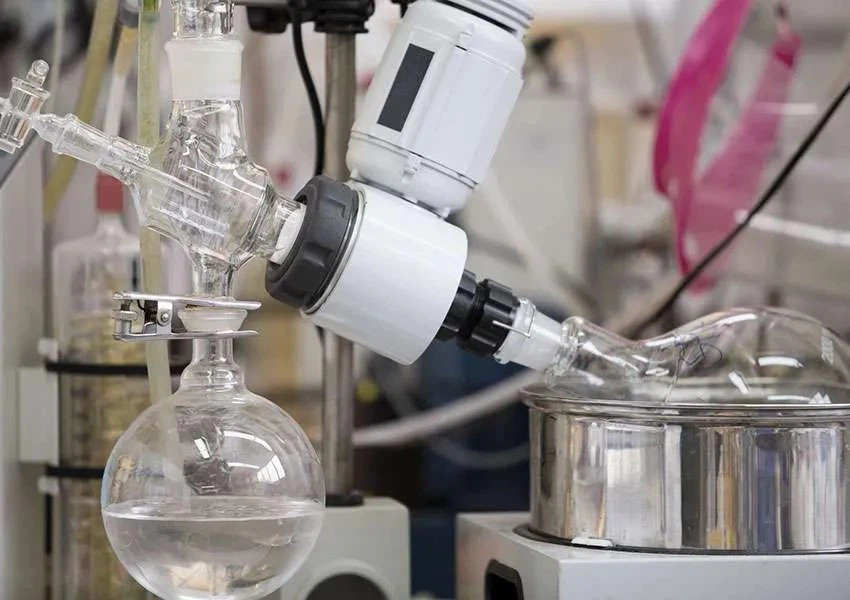
Rotary evaporation,or rotovap, is a method utilized for the tender and productive expulsion of solvents from tests by applying vacuum and warm. It comprises of a rotational evaporator, comprising a vacuum framework, a pivoting jar, a warming shower, and a condenser. The test is set in the pivoting jar, and as it turns, the dissolvable vanishes, condenses in the condenser, and collects in a partitioned carafe. This prepare is broadly utilized in different areas such as chemistry, pharmaceuticals, and nourishment science for concentration, refinement, and dissolvable recovery.
Rotary dissipation is a broadly utilized procedure in chemistry research facilities for isolating solvents from a arrangement.
Setup: The rotary evaporator consists of a vacuum-sealed glass container (rotating flask), a heating bath, a rotating condenser, and a vacuum pump. The solution to be concentrated or purified is placed in the rotating flask.
Evaporation: The solution in the rotating flask is heated gently under vacuum, reducing the pressure inside the flask. This lowers the boiling point of the solvent, facilitating evaporation at lower temperatures compared to atmospheric pressure.
Rotation: The rotating flask is spun rapidly to increase the surface area of the solution exposed to the vacuum, enhancing the evaporation process.
Condensation: As the solvent evaporates, it rises into the condenser, which is typically cooled with a circulating coolant (e.g., water or antifreeze). The solvent vapor condenses back into liquid form and drips into a separate collection flask.
Separation: The solvent-free or concentrated solution remains in the rotating flask, while the solvent is collected in the collection flask.
Recovery: Once the desired level of concentration is achieved, the rotation is stopped, and the concentrated solution is removed from the rotating flask for further processing or analysis.
Feasibility of Ethanol in Rotary Evaporation
Ethanol, being a volatile solvent with a relatively low boiling point of 78.37°C, is well-suited for rotary evaporation. Its compatibility with the rotovap setup makes it an ideal candidate for this technique. During the process, ethanol vaporizes readily under vacuum and is efficiently condensed, allowing for the separation and recovery of the solvent from the sample. However, certain factors need consideration to ensure optimal results and safety.
Considerations for Rotovapping Ethanol
While ethanol is compatible with rotary evaporation, several factors must be taken into account for successful operation. Firstly, the temperature settings must be carefully controlled to avoid excessive heating, which may cause thermal degradation or evaporation of volatile compounds present in the sample. Additionally, proper ventilation is essential to prevent the accumulation of ethanol vapors, which can pose fire hazards. Moreover, the choice of condenser type, whether traditional or cold-trap, can influence the efficiency of ethanol recovery and solvent purity.
Applications of Rotovapping Ethanol
The ability to rotary evaporate ethanol opens up a wide range of applications in laboratory settings. One common use is in the concentration of alcoholic extracts from natural products, such as plant materials or fermentation broths. By removing ethanol under vacuum, researchers can obtain concentrated extracts enriched with bioactive compounds for further analysis or formulation. Furthermore, rotovapping ethanol is instrumental in solvent exchange processes, where it is replaced with a different solvent compatible with subsequent analytical techniques or applications.
Rotary evaporation of ethanol, or "rotovapping," is commonly employed in various laboratory and industrial applications due to ethanol's wide range of uses and properties. Some common applications include:
Solvent Removal: Rotovapping is often used to remove ethanol as a solvent from reaction mixtures or sample preparations. This is especially useful when working with sensitive compounds that may degrade or react with ethanol.
Concentration of Solutions: Ethanol solutions can be concentrated using rotary evaporation, allowing researchers to increase the concentration of desired compounds or analytes in the solution.
Extraction: Ethanol is commonly used as a solvent for extracting compounds from natural sources, such as plant materials or organic samples. Rotovapping can be employed to concentrate and recover the extracted compounds, leaving behind the solvent.
Sample Preparation: In analytical chemistry, rotovapping ethanol is often used in sample preparation techniques, such as solid-phase extraction (SPE) or liquid-liquid extraction (LLE), to prepare samples for analysis by techniques like chromatography or spectroscopy.
Purification: Rotary evaporation can be utilized for purifying ethanol itself or other solvents by removing impurities or contaminants through distillation under vacuum.
Drug Discovery: In pharmaceutical research and development, rotovapping ethanol is commonly used during the synthesis and purification of new drug compounds.
Environmental Analysis: Ethanol is often used as a solvent for analyzing environmental samples, such as water or soil samples. Rotary evaporation can aid in concentrating the sample for subsequent analysis of pollutants or contaminants.
Food and Beverage Industry: Ethanol is commonly used in the food and beverage industry for extraction, preservation, and flavoring purposes. Rotary evaporation can be employed for concentrating extracts or removing ethanol from finished products.
Safety Considerations and Best Practices
While rotary evaporation of ethanol offers numerous benefits, safety should always remain a top priority in laboratory environments. Adequate ventilation, proper equipment maintenance, and adherence to standard operating procedures are essential to minimize risks associated with solvent handling and rotary evaporation. Additionally, personal protective equipment, including safety goggles, gloves, and lab coats, should be worn at all times when working with ethanol and operating rotovap equipment.
Conclusion
In conclusion, ethanol can indeed be subjected to rotary evaporation, offering researchers a versatile tool for solvent removal and concentration in laboratory experiments. Its compatibility with the rotovap setup, coupled with careful consideration of factors such as temperature control, ventilation, and safety measures, ensures efficient and safe operation. By harnessing the capabilities of rotary evaporation, scientists can advance their research in various fields, unlocking new possibilities in sample preparation, extraction, and purification processes.
References:
Rotary Evaporator: Principles of Rotary Evaporation. (https://www.buchi.com/en/knowledge/rotary-evaporator-principles-of-rotary-evaporation)
Rotary Evaporation: Techniques & Applications. (https://www.sigmaaldrich.com/technical-documents/articles/analytical/rotary-evaporation.html)
Ethanol Safety Data Sheet. (https://www.fishersci.com/shop/msdsproxy?productName=BP2818100&productDescription=ETHANOL%2099.9%25%20PURE%20AC%20%28Dehydrated%20Alcohol%29%20Analytical%20Reagent&catNo=BP2818100&vendorId=VN00032119&storeId=10652)
Good Laboratory Practice for Rotary Evaporators. (https://pubs.acs.org/doi/pdf/10.1021/ac60002a001)
Best Practices for Safe Handling of Solvents in Laboratories. (https://www.ncbi.nlm.nih.gov/books/NBK389454/)