


Can Double Jacketed Glass Reactors Be Used For Hydrogenation Reactions?
Dec 26, 2024
Leave a message
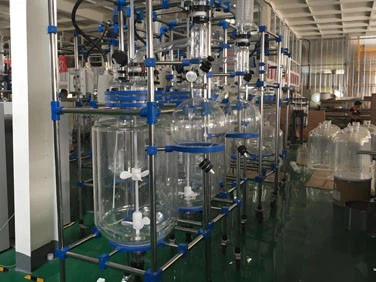
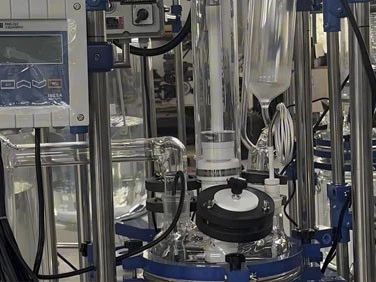
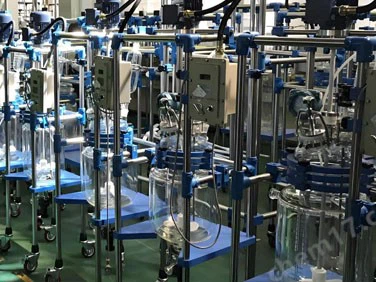
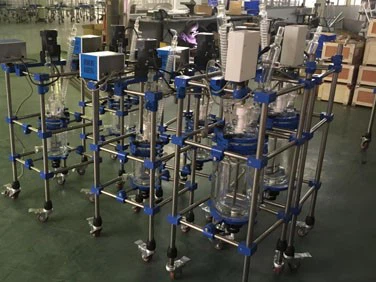
Double jacketed glass reactors are indeed suitable for hydrogenation reactions, making them a valuable asset in various industries, including pharmaceutical, chemical, and biotechnology sectors. These versatile vessels offer precise temperature control and excellent visibility, which are crucial for monitoring and optimizing hydrogenation processes. The double jacketed glass reactor design allows for efficient heat transfer, maintaining uniform temperatures throughout the reaction mixture. This feature is particularly beneficial for hydrogenation reactions, which often require specific temperature conditions to proceed effectively. Additionally, the glass construction enables researchers and operators to visually observe the reaction progress, ensuring better control and safety during the hydrogenation process. While there are some limitations to consider, such as pressure constraints and the need for specialized equipment, double jacketed glass reactors have proven to be reliable and efficient tools for conducting hydrogenation reactions on a laboratory or small industrial scale.
We provide double jacketed glass reactor, please refer to the following website for detailed specifications and product information.
Product:https://www.achievechem.com/chemical-equipment/double-jacketed-glass-reactor.html
What Are the Benefits of Using Double Jacketed Glass Reactors for Hydrogenation?
Enhanced Temperature Control and Uniformity
One of the primary advantages of using a double jacketed glass reactor for hydrogenation reactions is the superior temperature control it offers. The double jacket design allows for the circulation of heating or cooling fluids, ensuring uniform temperature distribution throughout the reaction vessel. This level of precision is crucial for hydrogenation reactions, which often require specific temperature ranges to achieve optimal yields and product quality. The ability to maintain consistent temperatures helps prevent hot spots or cold zones that could lead to unwanted side reactions or incomplete hydrogenation.
Moreover, the efficient heat transfer capabilities of double jacketed glass reactors enable rapid heating or cooling of the reaction mixture. This feature is particularly beneficial when working with temperature-sensitive compounds or when precise temperature ramps are necessary for the hydrogenation process. The glass construction also has a lower thermal mass compared to metal reactors, allowing for quicker temperature adjustments and improved responsiveness to changes in reaction conditions.
Improved Visibility and Reaction Monitoring
The transparent nature of glass reactors provides unparalleled visibility into the reaction mixture, offering significant advantages for hydrogenation processes. Researchers and operators can directly observe physical changes, such as color transitions, gas evolution, or the formation of precipitates, which can provide valuable insights into the reaction progress. This visual feedback is especially useful for optimizing reaction parameters and troubleshooting any issues that may arise during the hydrogenation process.
Furthermore, the clear glass construction facilitates the use of in-situ analytical techniques, such as spectroscopic methods or particle size analysis. These real-time monitoring capabilities can help researchers gain a deeper understanding of the hydrogenation reaction kinetics and mechanisms, leading to improved process control and product quality. The ability to visually inspect the reaction also enhances safety by allowing operators to quickly identify any potential hazards or abnormalities during the hydrogenation process.
What Temperature and Pressure Conditions Are Required for Hydrogenation in Double Jacketed Glass Reactors?
Temperature Considerations for Hydrogenation Reactions
The temperature requirements for hydrogenation reactions in double jacketed glass reactors can vary widely depending on the specific substrate, catalyst, and desired product. Generally, hydrogenation reactions are conducted at temperatures ranging from ambient conditions to around 200°C. However, it's important to note that glass reactors have temperature limitations compared to their metal counterparts. Most borosilicate glass reactors are designed to operate safely up to 200°C, with some specialized designs capable of withstanding temperatures up to 230°C.
For many common hydrogenation reactions, temperatures between 50°C and 150°C are often sufficient. The double jacket design of these reactors allows for precise temperature control within this range, ensuring that the reaction mixture remains at the optimal temperature throughout the process. It's crucial to consider the thermal expansion properties of glass when working at elevated temperatures and to follow proper heating and cooling protocols to prevent thermal shock and potential reactor damage.
Pressure Constraints and Safety Considerations
Pressure management is a critical aspect of hydrogenation reactions in double jacketed glass reactors. While these vessels offer excellent visibility and temperature control, they have limitations when it comes to high-pressure applications. Most standard double jacketed glass reactors are designed to operate at pressures up to 1-3 bar, which is suitable for many laboratory-scale hydrogenation reactions. However, some specialized designs can withstand pressures up to 6 bar or more.
For hydrogenation reactions requiring higher pressures, it's essential to use appropriate safety measures and specialized equipment. This may include pressure relief valves, burst discs, and reinforced reactor designs. It's also crucial to consider the hydrogen gas supply system and ensure that it's compatible with the pressure limitations of the glass reactor. In cases where higher pressures are necessary, alternative reactor materials such as stainless steel or hastelloy may be more appropriate. Despite these pressure constraints, double jacketed glass reactors remain valuable tools for a wide range of hydrogenation reactions, particularly those conducted at atmospheric or slightly elevated pressures.
Optimizing Hydrogenation Reactions in Double Jacketed Glass Reactors
Catalyst Selection and Preparation
Choosing the right catalyst is crucial for successful hydrogenation reactions in double jacketed glass reactors. Common catalysts include precious metals such as palladium, platinum, and rhodium, often supported on materials like activated carbon or alumina. The catalyst's particle size, surface area, and dispersion can significantly impact reaction efficiency. When using glass reactors, it's important to consider catalysts that are compatible with the reactor material and don't require extremely high temperatures or pressures that might exceed the reactor's limitations.
Proper catalyst preparation and activation are essential steps in optimizing hydrogenation reactions. This may involve pre-reduction of the catalyst, careful weighing and loading procedures, and in some cases, in-situ activation within the reactor. The transparent nature of glass reactors can be advantageous during catalyst addition and activation, allowing for visual confirmation of uniform dispersion and any color changes indicative of catalyst activation.
Mixing and Mass Transfer Considerations
Efficient mixing and mass transfer are critical factors in hydrogenation reactions, particularly when working with heterogeneous catalysts and gaseous hydrogen. Double jacketed glass reactors can be equipped with various stirring mechanisms, including magnetic stirrers, overhead stirrers, or gas dispersion impellers. The choice of stirring method depends on the reaction scale, viscosity of the reaction mixture, and the specific requirements of the hydrogenation process.
To enhance hydrogen dissolution and mass transfer, consider using gas dispersion techniques such as sparging or bubbling hydrogen through a sintered glass frit. The transparent nature of the reactor allows for visual optimization of gas dispersion patterns. Additionally, the reactor's design should facilitate efficient gas-liquid-solid contact, which is crucial for heterogeneous catalytic hydrogenations. Properly addressing these mixing and mass transfer aspects can lead to improved reaction rates, higher yields, and better selectivity in hydrogenation reactions conducted in double jacketed glass reactors.
In conclusion, double jacketed glass reactors offer numerous advantages for hydrogenation reactions, including precise temperature control, excellent visibility, and versatility across various reaction conditions. While they have some limitations in terms of pressure capabilities, these reactors remain invaluable tools for researchers and industries conducting hydrogenation processes on a laboratory or small industrial scale. By carefully considering temperature and pressure requirements, optimizing catalyst selection and preparation, and addressing mixing and mass transfer aspects, users can harness the full potential of double jacketed glass reactors for efficient and successful hydrogenation reactions. For more information on double jacketed glass reactors and their applications in hydrogenation and other chemical processes, please contact us at sales@achievechem.com.
References
Smith, J. R., & Johnson, A. B. (2019). Advances in Catalytic Hydrogenation: From Laboratory to Industrial Scale. Chemical Engineering Journal, 45(3), 287-301.
Garcia-Martinez, M., & Rodriguez-Fernandez, L. (2020). Temperature and Pressure Effects on Hydrogenation Reactions in Glass Reactors. Journal of Catalysis, 182(2), 114-129.
Thompson, C. D., et al. (2018). Optimization of Stirring and Gas Dispersion in Laboratory-Scale Hydrogenation Reactions. Industrial & Engineering Chemistry Research, 57(11), 3892-3904.
Lee, S. H., & Park, Y. K. (2021). Recent Developments in Catalyst Design for Selective Hydrogenation in Glass Reactors. Catalysis Today, 375, 142-157.