


SS 316 Reactor: Understanding Its Applications, Characteristics, and Operation
Oct 25, 2024
Leave a message
In the realm of industrial and scientific equipment, the SS 316 reactor stands out due to its versatility, durability, and wide range of applications. This article aims to provide a comprehensive guide to understanding the SS 316 reactor, covering its characteristics, applications, operational principles, and the latest advancements in this field. With a focus on both practical and theoretical aspects, this guide will be invaluable for professionals, researchers, and students alike.

We provide Stainless Steel Reactor, please refer to the following website for detailed specifications and product information.
Product: https://www.achievechem.com/chemical-equipment/stainless-steel-reactor.html
Introduction to SS 316 Reactor
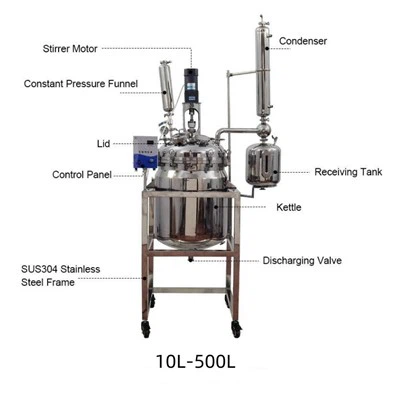
The SS 316 reactor, constructed primarily from stainless steel grade 316, is a crucial piece of equipment in various industries. Grade 316 stainless steel is renowned for its corrosion resistance, especially against chloride ions, making it ideal for applications involving harsh chemicals and high temperatures. This reactor's design and construction are tailored to meet the demands of various processes, including chemical reactions, synthesis, catalysis, and more.
Characteristics of SS 316 Reactor
|
The SS 316 reactor boasts several characteristics that make it suitable for diverse applications. These include: ◆ Corrosion Resistance: Grade 316 stainless steel has excellent corrosion resistance, particularly in environments with high chloride concentrations. This ensures the reactor's longevity and reduces the risk of leaks or failures. ◆ High Temperature Tolerance: SS 316 can withstand high temperatures, making it suitable for processes that require elevated operational temperatures. ◆ Strength and Durability: The material's strength ensures that the reactor can handle high pressures and mechanical stresses, ensuring safe and reliable operation. ◆ Ease of Fabrication and Maintenance: SS 316 is relatively easy to fabricate into various shapes and sizes, and its smooth surface facilitates easy cleaning and maintenance. |
|
Applications of SS 316 Reactor
|
|
The SS 316 reactor finds applications in numerous industries, including but not limited to: ◆ Chemical Industry: Used in the production of chemicals, polymers, and other synthetic materials. ◆ Pharmaceutical Industry: Essential for the synthesis and purification of drugs and pharmaceutical ingredients. ◆ Food and Beverage Industry: Utilized in processes such as fermentation, pasteurization, and sterilization. ◆ Petrochemical Industry: Involved in refining processes and the production of fuels and lubricants. ◆ Environmental Industry: Used in wastewater treatment and other environmental remediation processes. |

Operational Principles of SS 316 Reactor
The operational principles of the SS 316 reactor are based on fundamental chemical and physical processes. Here's a closer look at how these reactors work:
◆ Reaction Kinetics: The reactor's design takes into account the kinetics of the chemical reactions taking place inside. This ensures optimal reaction rates and yields.
◆ Mass and Heat Transfer: Efficient mass and heat transfer mechanisms are crucial for maintaining the reactor's performance. This includes proper mixing of reactants, control of temperature gradients, and removal of heat generated during the reaction.
◆ Pressure and Temperature Control: Precise control of pressure and temperature is essential for ensuring the reactor operates within safe and efficient parameters. This is achieved through the use of pressure relief valves, temperature sensors, and controllers.
◆ Reactor Configuration: The reactor's configuration (e.g., batch, semi-batch, continuous) is tailored to the specific process requirements. Batch reactors are suitable for reactions that require precise control of reactant proportions and reaction times, while continuous reactors are better suited for processes that need to run continuously over extended periods.
Design Considerations for SS 316 Reactor
When designing an SS 316 reactor, several factors need to be considered to ensure optimal performance and safety:
|
◆ Material Selection: Grade 316 stainless steel is the primary material of choice due to its corrosion resistance and high temperature tolerance. However, other materials may be considered for specific components, such as linings or gaskets, based on the process requirements. ◆ Reactor Geometry: The reactor's geometry, including its shape, size, and internal configuration, affects the mixing and heat transfer processes. Proper design ensures efficient operation and reduces the risk of process bottlenecks. ◆ Pressure and Temperature Ratings: The reactor must be designed to withstand the maximum operating pressure and temperature without failing. This involves using thicker walls, reinforcement, and pressure relief devices where necessary. ◆ Safety Features: Safety features such as pressure relief valves, temperature sensors, and emergency shutdown systems are crucial for ensuring the reactor operates safely under all conditions. ◆ Process Control Systems: Advanced process control systems, including automation and monitoring, enhance the reactor's efficiency and safety. These systems allow for real-time monitoring and adjustment of process parameters, ensuring optimal performance and minimizing downtime. |
|

Advancements in SS 316 Reactor Technology
Recent advancements in SS 316 reactor technology have significantly improved their performance, efficiency, and safety. Here are some of the latest developments:
◆ High-Pressure and High-Temperature Reactors: New materials and design techniques have enabled the development of reactors that can operate at higher pressures and temperatures, expanding their application range.
◆ Enhanced Mixing and Heat Transfer: Improved mixing technologies, such as impeller designs and static mixers, have enhanced the reactor's ability to mix reactants efficiently. Similarly, advanced heat transfer systems have improved the reactor's ability to manage heat generation and maintain optimal temperatures.
◆ Automation and Monitoring Systems: The integration of automation and monitoring systems has significantly improved the reactor's safety and efficiency. These systems allow for real-time monitoring and adjustment of process parameters, reducing the risk of operator error and enhancing process control.
◆ Modular and Scalable Design: Modular and scalable reactor designs have made it easier to customize reactors for specific applications. This approach allows for the easy addition of components or the expansion of reactor capacity as needed.
Case Studies: Practical Applications of SS 316 Reactor
To illustrate the practical applications of SS 316 reactors, here are a few case studies:
◆ Pharmaceutical Production: In the pharmaceutical industry, SS 316 reactors are used for the synthesis and purification of drugs. For example, a continuous reactor system can be used to produce active pharmaceutical ingredients (APIs) with high yields and purity. The reactor's ability to handle harsh chemicals and high temperatures makes it suitable for this application.
◆ Chemical Synthesis: In the chemical industry, SS 316 reactors are used for various synthesis processes, such as polymerization and esterification. A batch reactor, for instance, can be used to produce polymers with specific properties by controlling the reaction conditions and reactant proportions.
◆ Food and Beverage Processing: In the food and beverage industry, SS 316 reactors are used for processes such as fermentation and pasteurization. A continuous reactor system can be used to produce fermented products, such as yogurt or beer, with consistent quality and taste. The reactor's corrosion resistance ensures that it can handle acidic and alkaline environments without degradation.
◆ Wastewater Treatment: In the environmental industry, SS 316 reactors are used for wastewater treatment processes, such as anaerobic digestion and aerobic oxidation. These reactors help remove contaminants from wastewater, making it safe for disposal or reuse. The reactor's durability and ease of maintenance make it suitable for this demanding application.