


ACHIEVE CHEM - Steam Distillation Machine
Aug 16, 2024
Leave a message
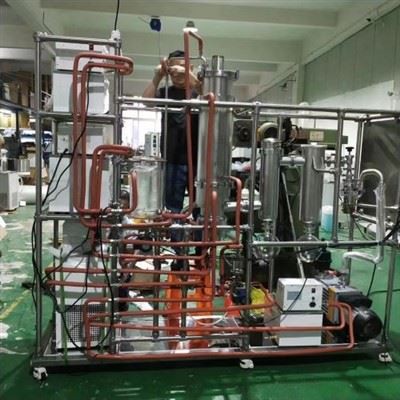
In the world of aromatherapy, perfumery, and various industrial processes, the steam distillation machine stands as a cornerstone technology. This versatile piece of equipment harnesses the power of steam to extract essential oils and other volatile compounds from plants, herbs, spices, and even some synthetic materials. By combining the principles of distillation with the gentle yet effective nature of steam, the steam distillation machine offers a unique and highly efficient method for isolating and purifying valuable compounds.
Introduction
Steam distillation is a process that utilizes the vapor pressure difference between water and the volatile compounds present in a given material. At its core, the technique involves passing steam through the material to be distilled, causing the volatile compounds to vaporize and mix with the steam. This mixture is then condensed back into a liquid, typically through cooling, allowing the heavier water molecules to separate from the lighter volatile compounds. The resulting condensate, now enriched with the extracted essential oils or other volatiles, can then be further processed to isolate and purify the desired compounds.
Overview

The steam distillation machine is a specialized apparatus designed to facilitate the steam distillation process. It typically consists of several key components, each playing a vital role in the efficient and effective extraction of volatile compounds.
◆ Steam Generator
The steam generator is the heart of the steam distillation machine. This component is responsible for producing the steam that will be used to vaporize the volatile compounds in the material being distilled. In most cases, the steam generator operates by heating water to its boiling point, converting it into steam. The steam is then directed into the distillation chamber through a series of pipes or other delivery systems.
◆ Distillation Chamber
The distillation chamber is where the magic happens. This sealed, pressure-resistant vessel is designed to hold the material being distilled and the incoming steam. As the steam passes through the material, it vaporizes the volatile compounds, which mix with the steam and form a vaporous mixture. The chamber is typically equipped with a means of stirring or agitating the material to ensure even distribution of the steam and maximize the efficiency of the distillation process.
◆ Condenser
Once the vaporous mixture exits the distillation chamber, it enters the condenser. The condenser is responsible for cooling the mixture, causing the steam to condense back into water and allowing the heavier water molecules to separate from the lighter volatile compounds. The resulting condensate, now enriched with the extracted essential oils or other volatiles, flows out of the condenser and into a collection vessel for further processing.
◆ Collection Vessel
The collection vessel is where the final product of the steam distillation process is collected. This vessel is typically made of glass or other inert materials to prevent contamination of the extracted compounds. As the condensate flows out of the condenser, it collects in the vessel, ready for further processing or use.
Advantages

Steam distillation offers several advantages over other methods of extraction, making it a popular choice in a wide range of industries.
◆ Gentle Extraction
One of the primary advantages of steam distillation is its gentle nature. Unlike some other extraction methods, which can involve harsh chemicals or high temperatures that can damage or degrade the extracted compounds, steam distillation relies solely on the power of steam to vaporize and extract the volatile compounds. This gentle approach helps to preserve the integrity and purity of the extracted essential oils and other volatiles.
◆ High Efficiency
Steam distillation is also highly efficient, allowing for the extraction of large quantities of volatile compounds in a relatively short period of time. The use of steam to vaporize the compounds ensures that the extraction process is both rapid and effective, resulting in a higher yield of extracted material.
◆ Versatility
Another advantage of steam distillation is its versatility. This method can be used to extract a wide range of volatile compounds from a variety of materials, including plants, herbs, spices, and even some synthetic materials. This versatility makes steam distillation an essential tool in a wide range of industries, from aromatherapy and perfumery to food processing and pharmaceutical manufacturing.
Applications of Steam Distillation
Steam distillation (steam distillation) is a separation technique widely used in many fields such as chemistry, pharmaceuticals, and flavor extraction. The basic principle is to co-distill plant material containing volatile components with water, so that the volatile components are distilled along with water vapor, and then collect these volatile components by condensation. Here are some of the main applications of steam distillation:
1) Extract natural botanicals
Steam distillation is one of the most commonly used methods to extract natural botanicals. Due to the low cost, large yield, relatively simple equipment and operation, the method is very suitable for large-scale extraction of volatile essential oils and fragrance components from plants. For example, essential oils are extracted from plants such as peppermint, lavender, and citrus peel, often using steam distillation technology.
2) Separate and purify specific compounds
Steam distillation can also be used to separate and purify certain compounds with specific volatility and vapor pressure. These compounds are usually insoluble or slightly soluble in water, and can be steamed at a certain temperature by forming an azeotrope with water vapor. By adjusting the distillation conditions (such as temperature, pressure, etc.), the effective separation and purification of the target compounds can be achieved.
3) Pharmaceutical field
In the pharmaceutical sector, steam distillation technology is also used to extract the active ingredients in drugs. Some drug raw materials contain a large number of volatile ingredients that may be pharmacologically active or serve as precursors for drugs. By steam distillation, these components can be efficiently extracted to provide raw materials for subsequent drug synthesis or preparation.
4) Environmental protection and resource recovery
In terms of environmental protection and resource recovery, steam distillation technology also has certain application potential. For example, when treating certain wastewater or exhaust gases containing volatile organic pollutants, steam distillation technology can be used to separate the pollutants and conduct subsequent treatment. In addition, steam distillation technology can also play an important role in recovering certain valuable volatile solvents.
5) Education and research
In the field of education and research, steam distillation technology is often used in experimental teaching and scientific research. Through the practical operation of steam distillation equipment, students can intuitively understand the principle and process of distillation; At the same time, researchers can also use this technology for the extraction, separation and purification of new compounds.