



Lab Scale Lyophilizer
(a)10 series
Lab Scales Desktop(Freeze-dried material 1.5-2KG)
(b)12 series
Lab Scales Vertical(Freeze-dried material 2KG)
(c)18 series
Scientific Research Scales(Freeze-dried material 3KG)
2.Pilot Freeze Dryer:
0.2m²/0.3m²/0.5m²/1m²/2m²/---Pilot Scales(Freeze-dried material 3KG-20KG)
3.Industrial Freeze Dryer:
5㎡/10㎡/20㎡/30㎡/50㎡/100㎡/200㎡/300㎡(Freeze-dried Weight 5T~60T)
4.Customization: set up the specifications you need
(a)Freeze-dried Area
(b)Freeze-dried Weight
(c)Freeze-dried Material
(d)Interlayer Quantity/Size
(e)Cold Trap Temperature
Description
Technical Parameters
Lab scale lyophilizer,The laboratory scale freeze-drying machine is a miniaturized and high-precision freeze-drying equipment widely used in scientific research,pharmaceuticals,biotechnology and other fields.The working principle is based on the three-phase variation of water.Under vacuum conditions,the sample is frozen at low temperature to convert moisture into solid ice,which is then directly sublimated in a vacuum environment,i.e. from solid to gas,in order to achieve the purpose of removing moisture.Throughout the process,parameters such as temperature,vacuum degree,and time are precisely controlled to ensure the drying effect.The initial design purpose was to simulate the freeze-drying process in industrial production in a laboratory environment,providing flexible,adjustable,efficient,safe,and reliable equipment support for the processing and research of small batch samples,in order to quickly and effectively dry small amounts of samples.
We provide Lab scale lyophilizer, please refer to the following website for detailed specifications and product information.
Product: https://www.achievechem.com/freeze-dryer/laboratory-freeze-dryer.html
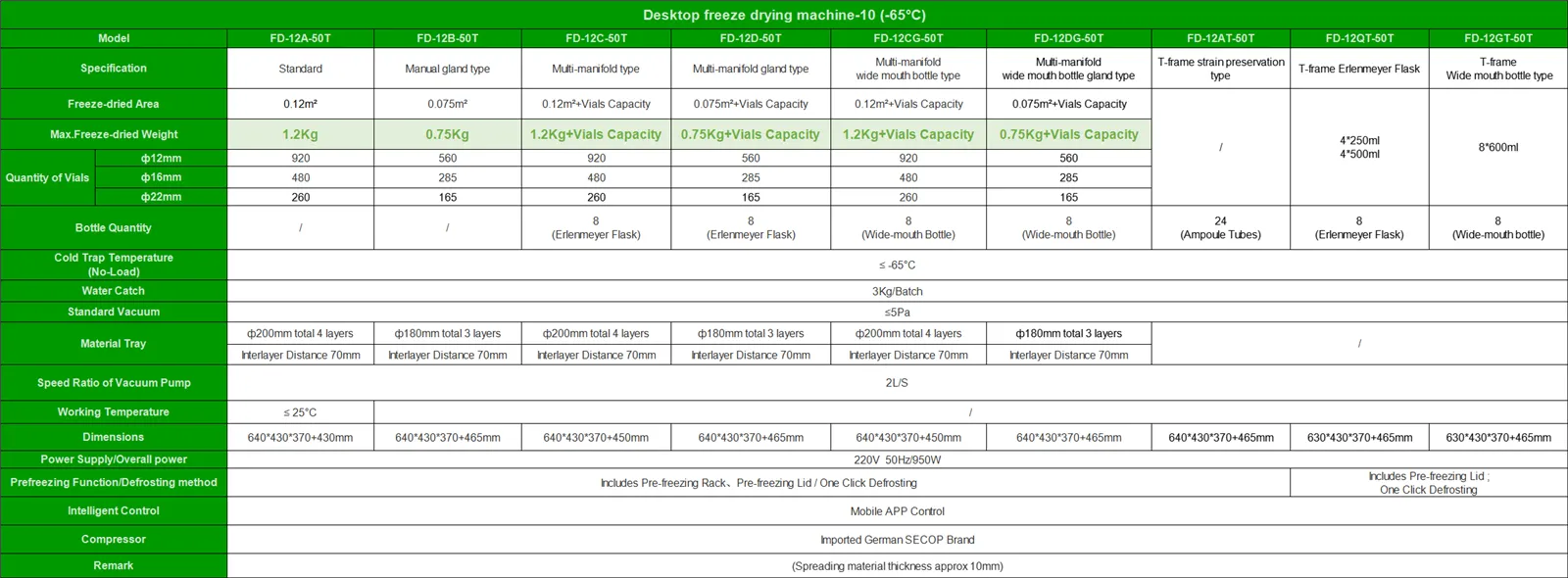
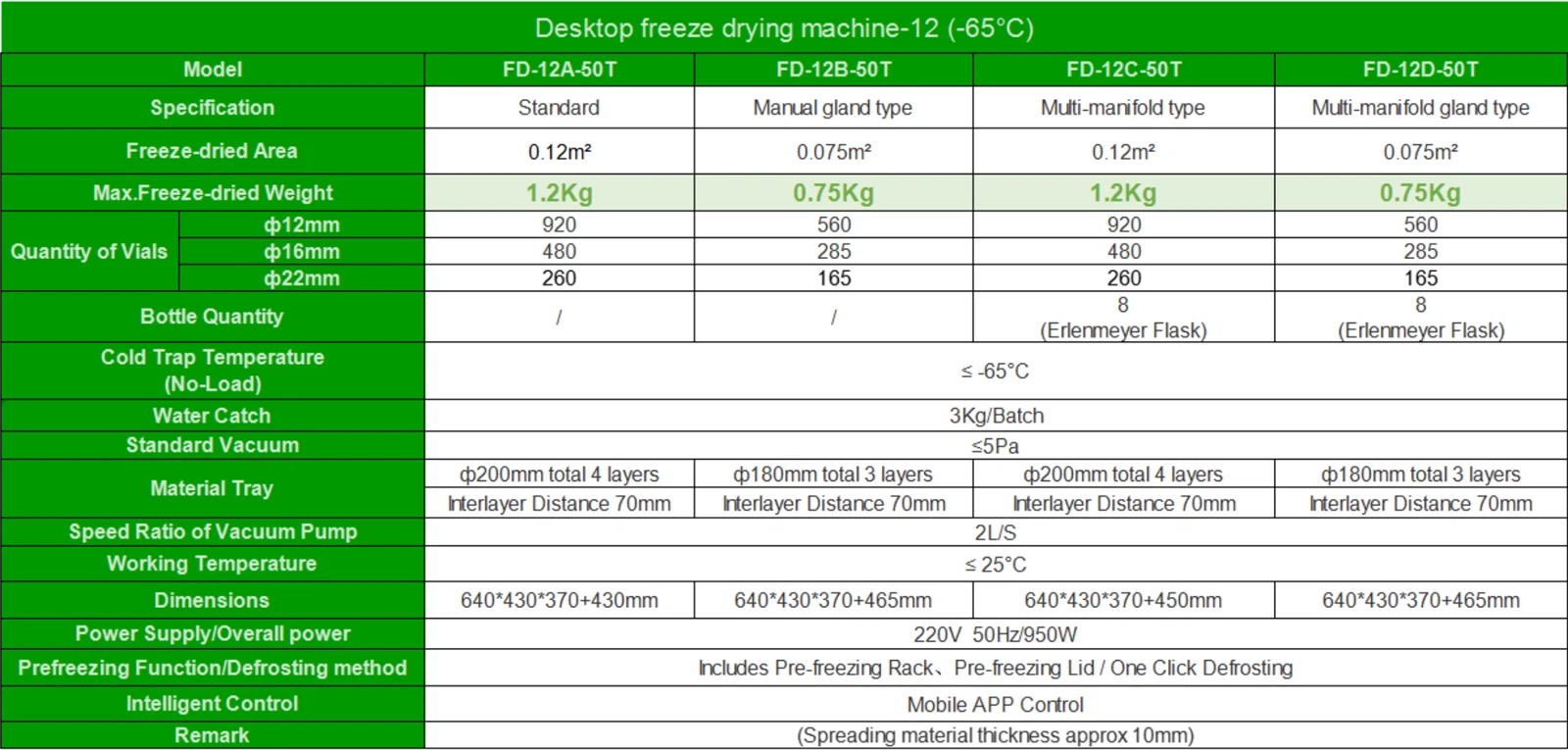
Product Structure & Model
10 Series Laboratory Freeze Dryer
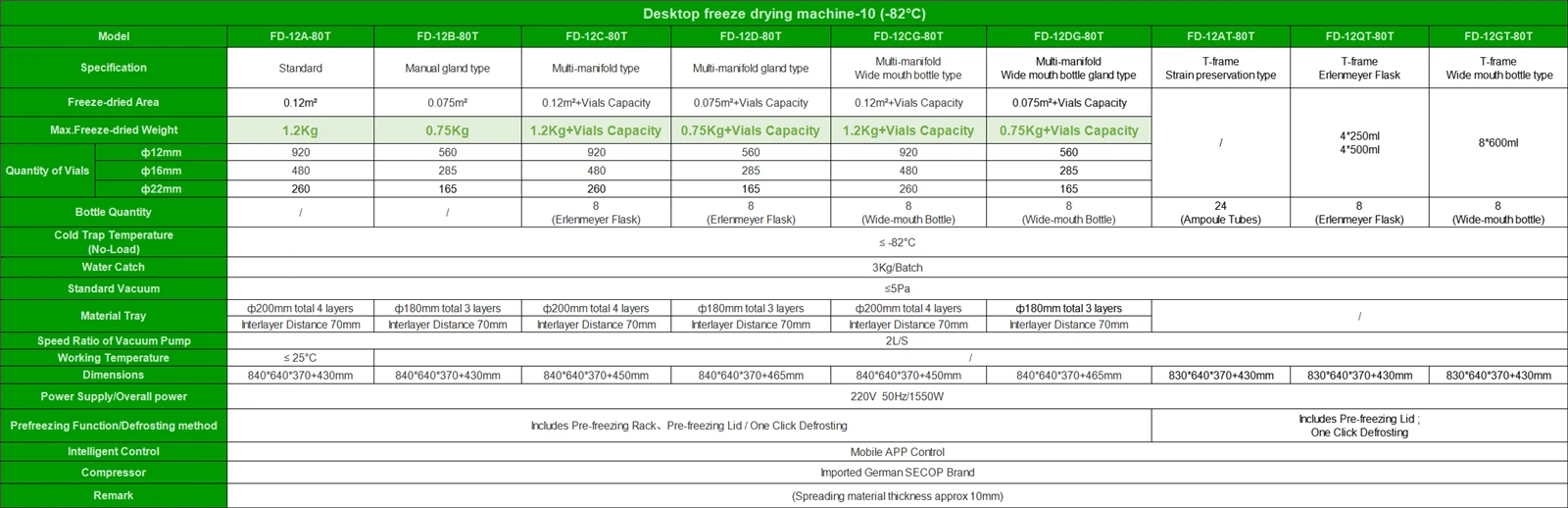
12 Series Laboratory Freeze Dryer
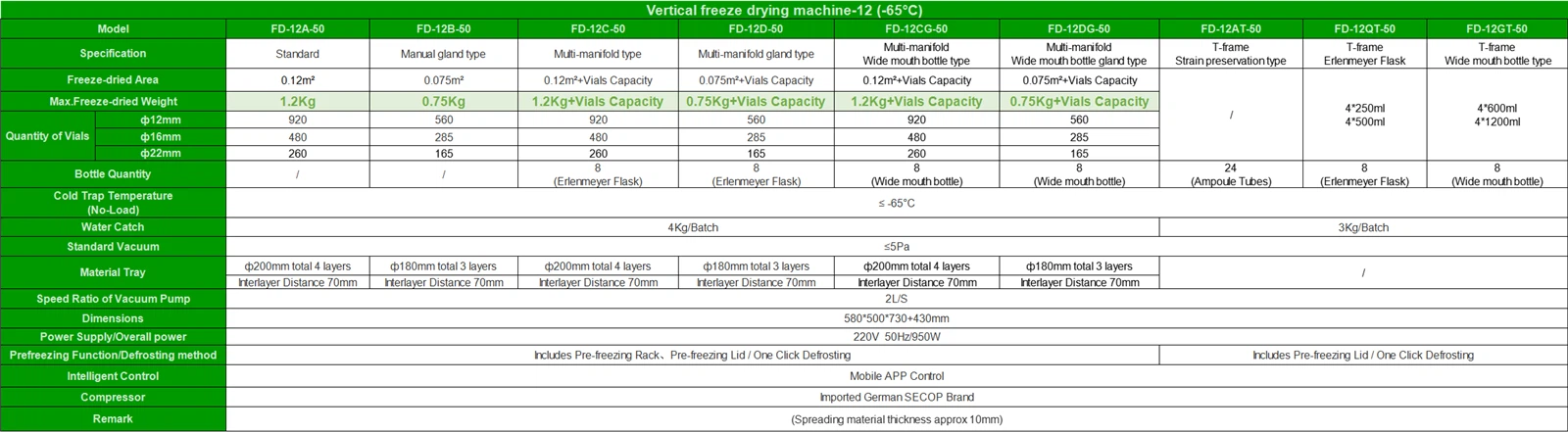
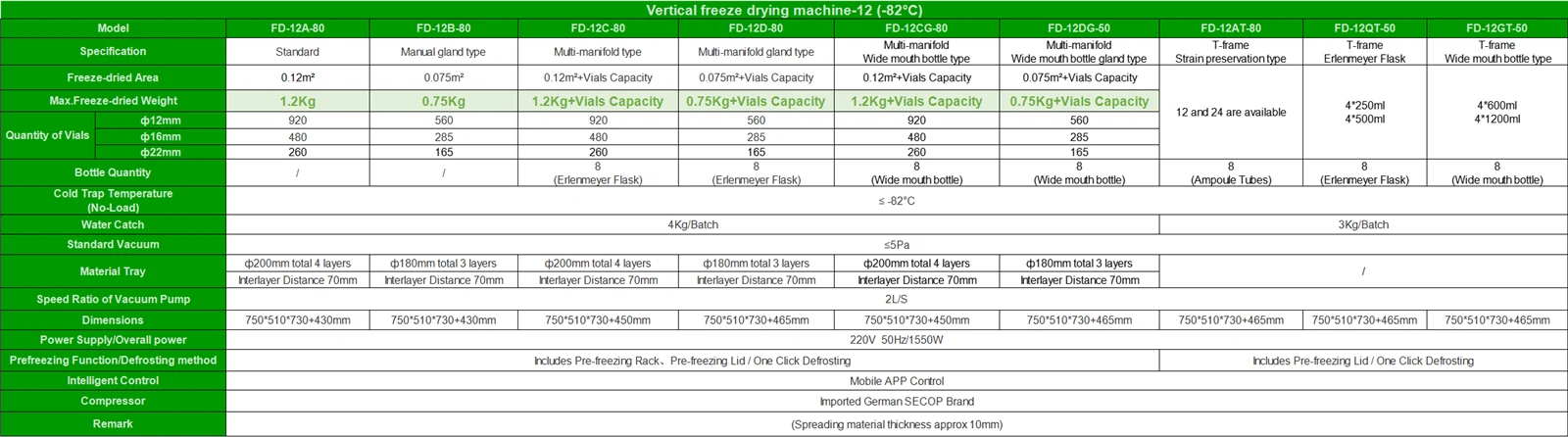

18 Series Laboratory Freeze Dryer
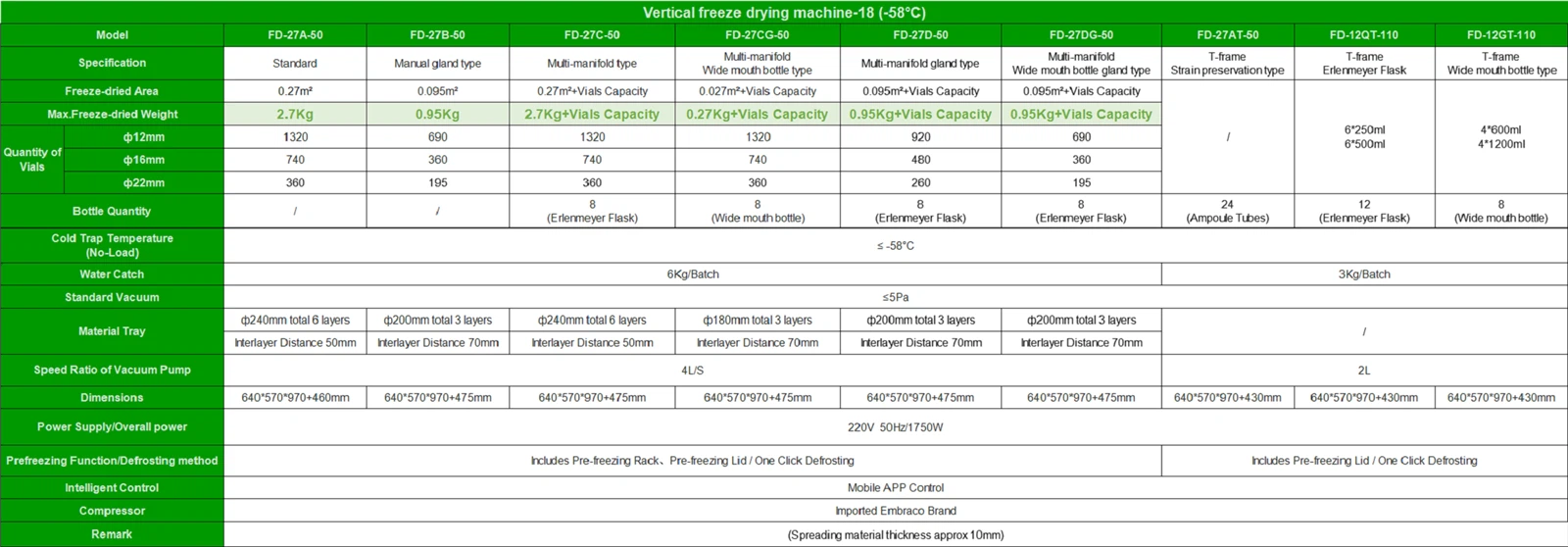

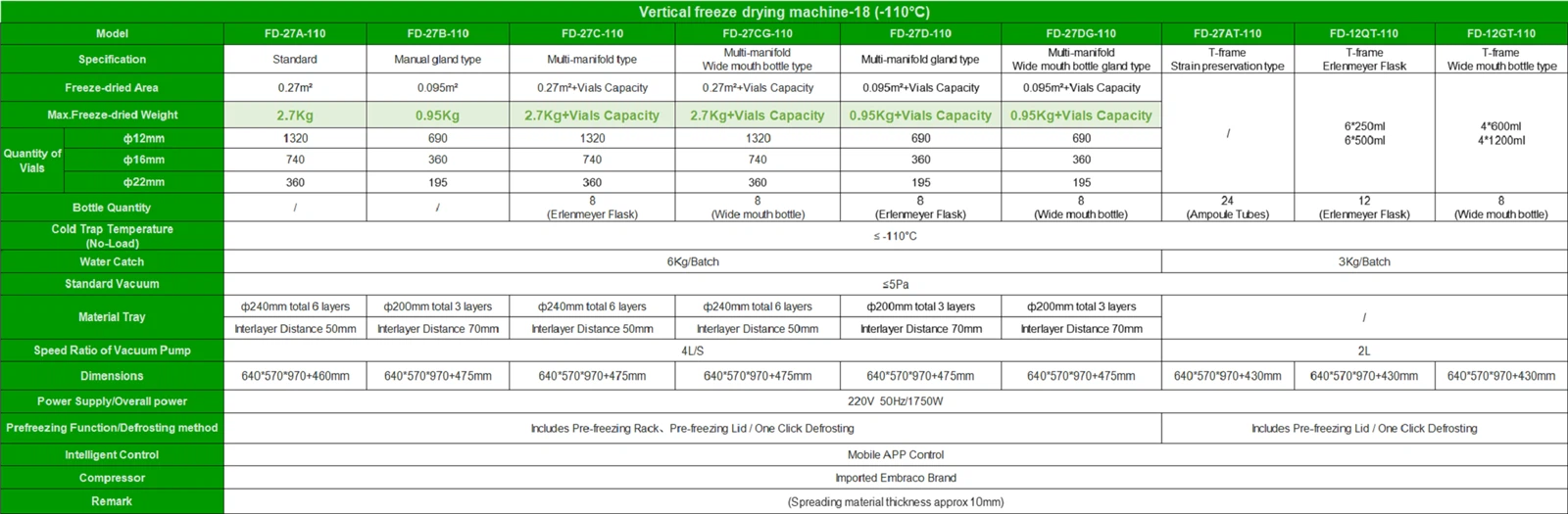
Technical Parameter


The technical parameters of product may vary depending on different models and manufacturers,but the following are some common technical parameters that are crucial for understanding and selecting equipment suitable for experimental needs:
(1) Temperature range:
Condenser temperature:usually up to -80 ℃ or lower,used to capture sublimated water vapor.
Drying room temperature:Depending on the equipment model and purpose,the temperature range of the drying room can be adjusted between -80 ℃ and+50 ℃ to meet the freeze-drying requirements of different substances.
(2) Vacuum degree:Vacuum degree is one of the important indicators for measuring equipment performance,usually reaching a vacuum degree of 0.1 mbar (10 Pa) or lower to ensure effective sublimation of water at low temperatures.
(3) Sample capacity:The sample capacity varies depending on the device model,ranging from a few milliliters for small desktop devices to several liters or more for large devices.Choose an appropriate sample capacity to meet experimental requirements.
(4) Cold trap capacity:Cold traps are used to capture sublimated water vapor,and their capacity determines the equipment's ability to continuously process samples.The larger the capacity of the cold trap,the more samples the equipment can continuously process.
(5) Heating/cooling rate:The heating and cooling rate determine the speed at which the equipment reaches the set temperature,which is crucial for controlling the freeze-drying process.Faster heating/cooling rates can improve experimental efficiency.
(6) Vacuum pump:The type and power of vacuum pump can affect the vacuum degree and operational stability of the equipment.Common types of vacuum pumps include rotary vane vacuum pumps,oil-free vacuum pumps,etc.
(7) Control system:The control system is the core part of the equipment,responsible for monitoring and controlling various parameters of the equipment,such as temperature,vacuum degree,time,etc.Modern devices are usually equipped with touch screen operation interfaces and advanced control systems,providing an intuitive and easy-to-use operating experience.
(8) Power requirements:Equipment usually needs to be connected to an AC power source,and the voltage and frequency may vary depending on the region and manufacturer's requirements.Usually powered by 220V/50Hz or 110V/60Hz.
(9) Size and weight:The size and weight of the equipment can affect its layout and mobility in the laboratory.Choose the appropriate size and weight based on the available space and mobility needs of the laboratory.
(10) Noise level:The noise level of the equipment is also one of the factors that needs to be considered.Choosing equipment with lower noise levels can improve the working environment and comfort of the laboratory.
Please note that the above technical parameters are for reference only and may vary depending on the device model,manufacturer,and purpose. When choosing Lab Scale Lyophilizer,please be sure to refer to the technical specifications and performance data provided by the manufacturer to ensure that the equipment can meet your experimental needs.
Application
The application fields of product are very extensive,mainly including scientific research,pharmaceuticals,biotechnology,and other industrial fields.

Research field
◆ Bioscience:In biological research,it is used to preserve and study various biological samples,such as cells,microorganisms,tissues, etc.Its low temperature and vacuum environment can effectively remove moisture while maintaining the activity and stability of biological samples.
◆ Chemical research:In chemical research,this equipment is used to dry and preserve various chemical reagents and samples for subsequent analysis and research.
The pharmaceutical industry
◆ Drug production:In the pharmaceutical industry,it is widely used to produce various lyophilized drugs,such as vaccines,antibiotics,enzyme preparations,etc.By freeze-drying,these drugs can maintain long-term stability and activity.
◆ Development stage:In the drug development stage,this equipment is used for the preparation and testing of small batch samples,in order to quickly evaluate and optimize the freeze-drying process.

Biotechnology
◆ Biological product production:In the field of biotechnology,it is used to produce biological products such as cytokines,growth factors, genetically engineered products,etc.These products have high requirements for activity and stability,and freeze-drying technology can meet these requirements.
Other industrial sectors
◆ Food industry:In the food industry,freeze-drying technology is used to produce various freeze-dried foods,such as freeze-dried vegetables,freeze-dried fruits,freeze-dried meat,etc.These products can maintain their original nutritional content and taste,while extending their shelf life.
◆ Materials Science:In the field of materials science,Lab Scale Lyophilizer is also used to prepare various new materials and composite materials.By freeze-drying,the microstructure and properties of materials can be controlled.

Material drying
Soil samples:Laboratory freeze-drying machines offer significant advantages in drying soil samples.It is able to completely remove water from the soil while maintaining the original structure and properties of the soil,which is essential for soil science research.
Biological products and drugs:Such as antimicrobials,vaccines,blood products,enzyme hormones and other biological products,as well as traditional Chinese medicine such as ginseng,deer antler,etc.,are suitable for laboratory freeze-drying.Freeze-drying technology can extend the shelf life of these products while maintaining their activity and potency.
Microorganisms and algae:A variety of bacteria,yeast,enzymes,protozoa,micro-algae,etc.,can be preserved for a long time by the laboratory freeze-drying machine.Freeze-dried microorganisms and algae can maintain their biological activity and reproduction ability.
Biological specimens and tissues:Laboratory freeze-drying machines are also suitable for the production of various animal and plant specimens,as well as the drying and preservation of animal xenograft or allograft skin,bone,aorta,heart valves and other peripheral tissues.These specimens and tissues retain their original shape and structure after lyophilization.
Food and nutrition:Coffee,tea,meat,fish and eggs,seaweed,fruits,vegetables,spices,tofu and other foods,as well as royal jelly,honey,pollen and other advanced nutrition,can be dried by the laboratory freeze-drying machine.Freeze-dried foods and nutrients retain their original flavor and nutritional value while being easy to store and transport.
Soil pollutant detection
► Apply
Extraction of pollutant
Freeze-drying machines can completely remove water from soil samples,making it easier to extract and detect contaminants in the soil.By freeze-drying treatment,the water in the soil sample is sublimed directly into gas in the form of solid,which avoids the interference of water on the detection results,thus improving the accuracy and reliability of the detection.
Microbial community analysis
Freeze-drying machines can also be used to analyze microbial communities in soil.After freeze-drying a soil sample,microbial DNA or RNA can be extracted from it and subsequent analysis can be performed to understand the types and numbers of microorganisms in the soil.It is of great significance to study the structure and function of soil ecosystems,assess soil health and formulate soil management measures.
Keep the soil pristine
The freeze-drying machine can maintain the original structure and composition of the soil while removing water,avoiding the deterioration or loss of activity that may be caused by traditional drying methods.This is essential to accurately reflect soil pollution,develop treatment measures and assess the effectiveness of ecological restoration projects.
► Advantages
Efficient and fast
The laboratory scale freeze-drying machine is simple and fast to operate,which can greatly shorten the processing time of soil samples and improve the detection efficiency.This is particularly important for large-scale soil inspection work,which can significantly shorten the inspection cycle and reduce the inspection cost.
Versatility
In addition to soil samples,laboratory-scale freeze-drying machines can also be used to process other types of samples,such as water samples, plant tissue,etc.This makes the freeze-drying machine a versatile and efficient sample handling device that can meet the research needs of different fields.
Environmental protection and sustainability
The laboratory scale freeze-drying machine does not produce waste water,waste gas and other pollutants during the drying process,which meets the requirements of environmental protection.At the same time,by optimizing energy efficiency,reducing waste generation and promoting resource recycling,lyophilization technology can help promote environmentally sustainable development in the field of soil testing.
► Operation process
Collection of soil samples
Collect soil samples in non-metallic sealed containers and ensure that the samples are representative.
Sample placement
The collected soil samples are placed in separate material trays for freeze-drying.
Low temperature prefreezing
The material tray containing the soil sample is placed in the laboratory lyophilizer and pre-frozen at low temperature.The pre-freezing time depends on the moisture content and temperature requirements of the sample.
Drying stage
After the end of pre-freezing,the laboratory freeze-drying machine automatically enters a drying stage to remove most of the displaced water.Then, the analytical drying stage is entered and the remaining bound water is removed.
Take out sample
After freeze-drying,samples were removed and sealed for subsequent testing and analysis.
Operation process
The operation process of a lab scale lyophilizer mainly includes preparatory work, pre-freezing operation, drying operation, and final treatment, etc. The following is a detailed introduction:



Preparatory work
Make sure to have the necessary safety knowledge and understand how to deal with possible emergencies.
Check and clean all the equipment and tools that are needed.
Make sure the power cord is connected to a stable and reliable socket. Turn on the refrigeration system as instructed in the manual to lower the temperature, and preheat the equipment at an appropriate temperature based on the nature of the sample.
Pre-freezing operation
Turn on the refrigeration machine for pre-cooling: Pre-cool the equipment. Once the temperature of the cold trap drops below -40℃, the materials can be pre-frozen.
Place the materials: Put the materials into the material tray. Pour the liquid directly into the material tray, and evenly place the solid or bottled materials on the material tray.
Place the probe and the pre-freezing rack: Put the probe into the material tray to ensure full contact with the material, thereby reducing the error between the sample temperature and the actual temperature. Place the material tray into the pre-freezing rack, then put the pre-freezing rack into the cold trap and cover it with the insulation cover.
Pre-freezing to an appropriate temperature: After the temperature of all parts of the material drops below the eutectic point of the material and is maintained for about 1 hour, the pre-freezing process can be completed and it is ready to enter the drying stage.
Drying operation
Remove the pre-freezing rack and materials: Take the pre-freezing rack out of the cold trap and place the pre-frozen materials on the drying rack.
Place the drying rack and cover it with a glass cover: Put the drying rack on top of the cold trap, and after checking that the sealing ring is intact and free of debris, cover it with an "organic glass cylinder".
Start the vacuum pump and vacuum gauge: Turn on the "vacuum pump" and the "vacuum gauge". When the vacuum degree drops, it is generally considered normal if the vacuum degree value is less than 20Pa during the drying process.
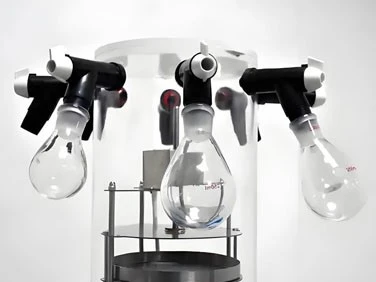
Drying and removing the flasks: Hang the flasks one by one and open the multi-manifold valves; After the substances in the flask have dried, close the multi-manifold valve and remove the flask.
Finish processing
Stop the vacuum pump and remove the glass cover: After the drying process is completed, first open the "water release (air intake) valve", then turn off the vacuum pump, remove the acrylic cover, and collect the dried material.
Equipment defrosting and drainage: Close the "water release (air intake) valve", and the equipment will defrost. After defrosting is completed, open the "water release (Air intake) valve" to drain the water and wipe the equipment clean.
Close the exhaust hole of the vacuum pump: When the vacuum pump is not in operation, please cover the exhaust hole to prevent dust from entering.
Hot Tags: lab scale lyophilizer, China lab scale lyophilizer manufacturers, suppliers, factory
Previous
Professional Freeze DryerNext
Home LyophilizerSend Inquiry


