



Cold Drying Machine
(a)10 series
Lab Scales Desktop(Freeze-dried material 1.5-2KG)
(b)12 series
Lab Scales Vertical(Freeze-dried material 2KG)
(c)18 series
Scientific Research Scales(Freeze-dried material 3KG)
2.Pilot Freeze Dryer:
0.2m²/0.3m²/0.5m²/1m²/2m²/---Pilot Scales(Freeze-dried material 3KG-20KG)
3.Industrial Freeze Dryer:
5㎡/10㎡/20㎡/30㎡/50㎡/100㎡/200㎡/300㎡(Freeze-dried Weight 5T~60T)
4.Customization: set up the specifications you need
(a)Freeze-dried Area
(b)Freeze-dried Weight
(c)Freeze-dried Material
(d)Interlayer Quantity/Size
(e)Cold Trap Temperature
Description
Technical Parameters
Cold drying machine,A refrigerated dryer or freeze-drying machine is a modern drying equipment that integrates refrigeration systems,vacuum systems,heating systems,and electrical instrument control systems.It is a device that uses sublimation principle for drying.It can directly sublimate the moisture in pre frozen materials into water vapor under low temperature and high vacuum conditions,thereby achieving the purpose of drying.In the fields of food processing,pharmaceutical manufacturing,chemical industry,etc.,drying treatment of products has always been an important link.
Although traditional drying methods meet production needs to a certain extent,they have many shortcomings in handling heat sensitive substances and maintaining their original properties.Therefore,as a new type of drying technology,it has gradually received widespread attention and application.It mainly consists of refrigeration system,vacuum system,heating system,electrical instrument control system,etc.Its core components include drying oven,condenser,refrigeration unit,vacuum pump,heating/cooling device,etc.
With its unique working principle and wide application fields, cold dryer plays an irreplaceable role in modern industrial production. With the continuous progress of science and technology and the growing market demand, cold dryers will certainly show their huge potential and value in more fields.

Product Structure & Model
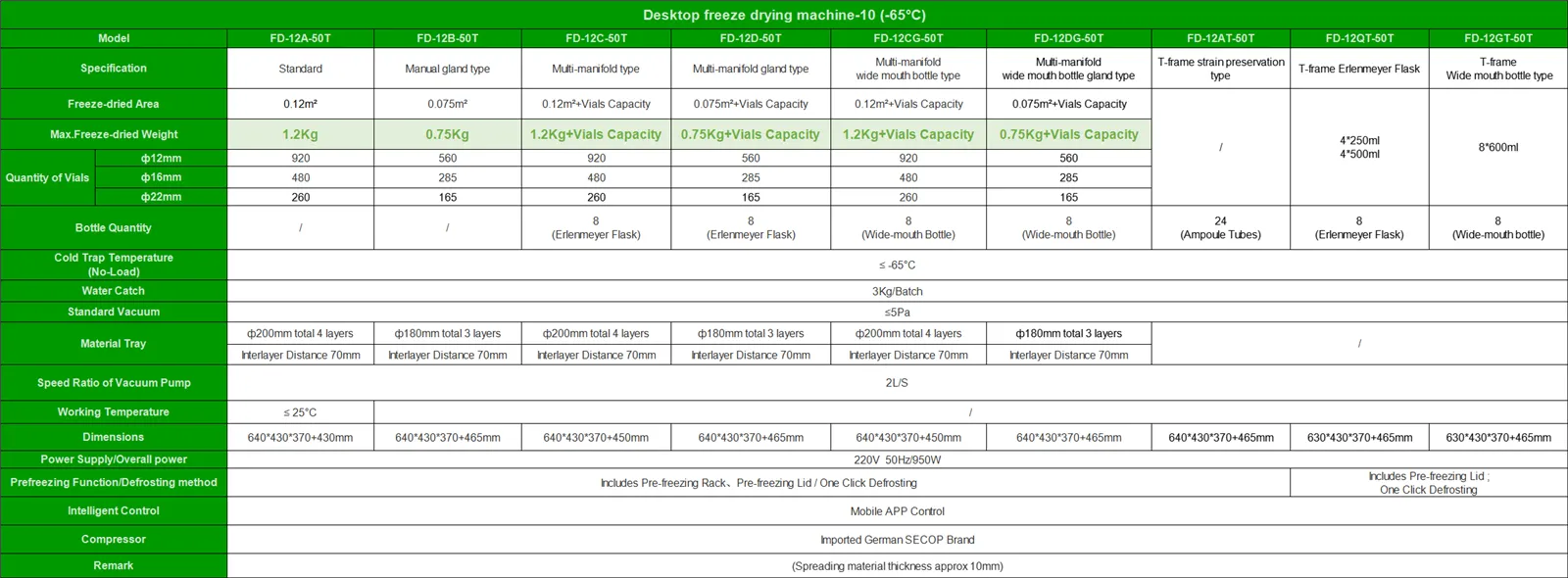
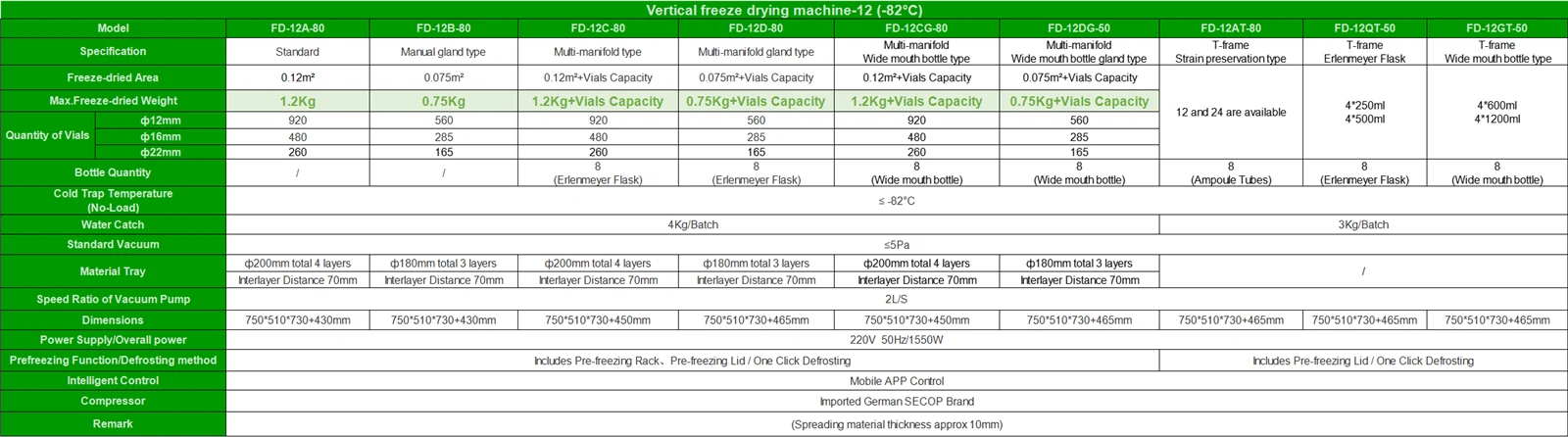
10 Series Laboratory Freeze Dryer
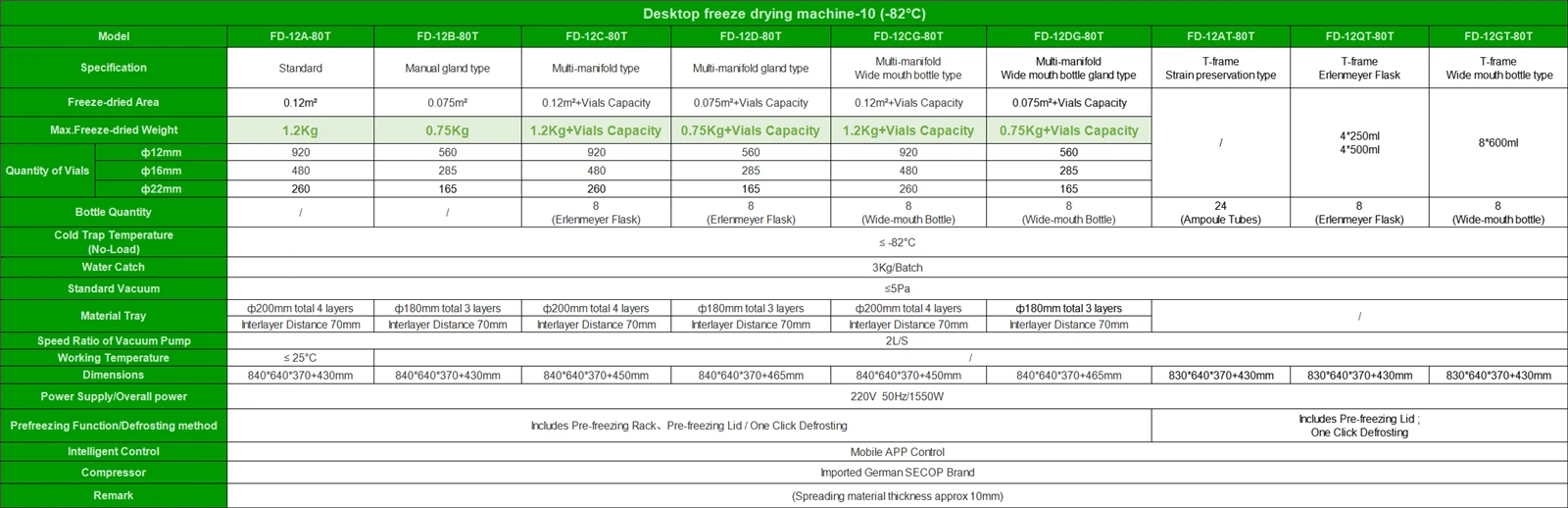
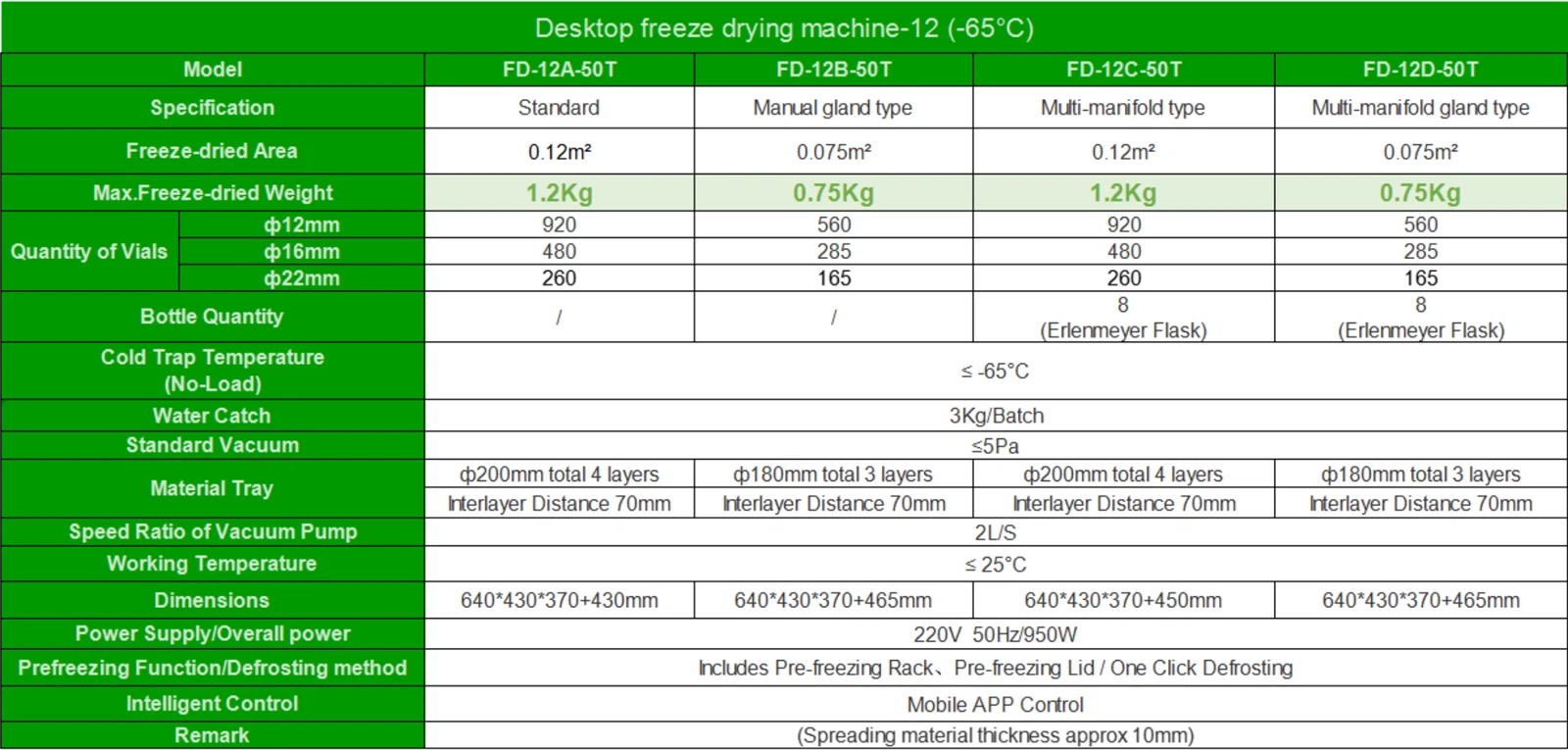
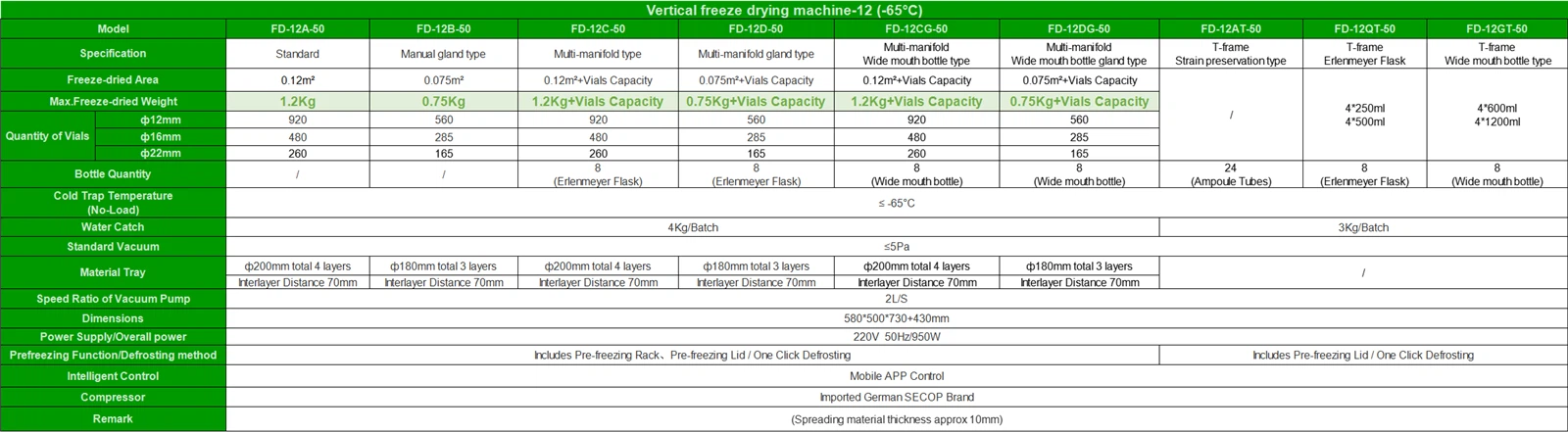
12 Series Laboratory Freeze Dryer

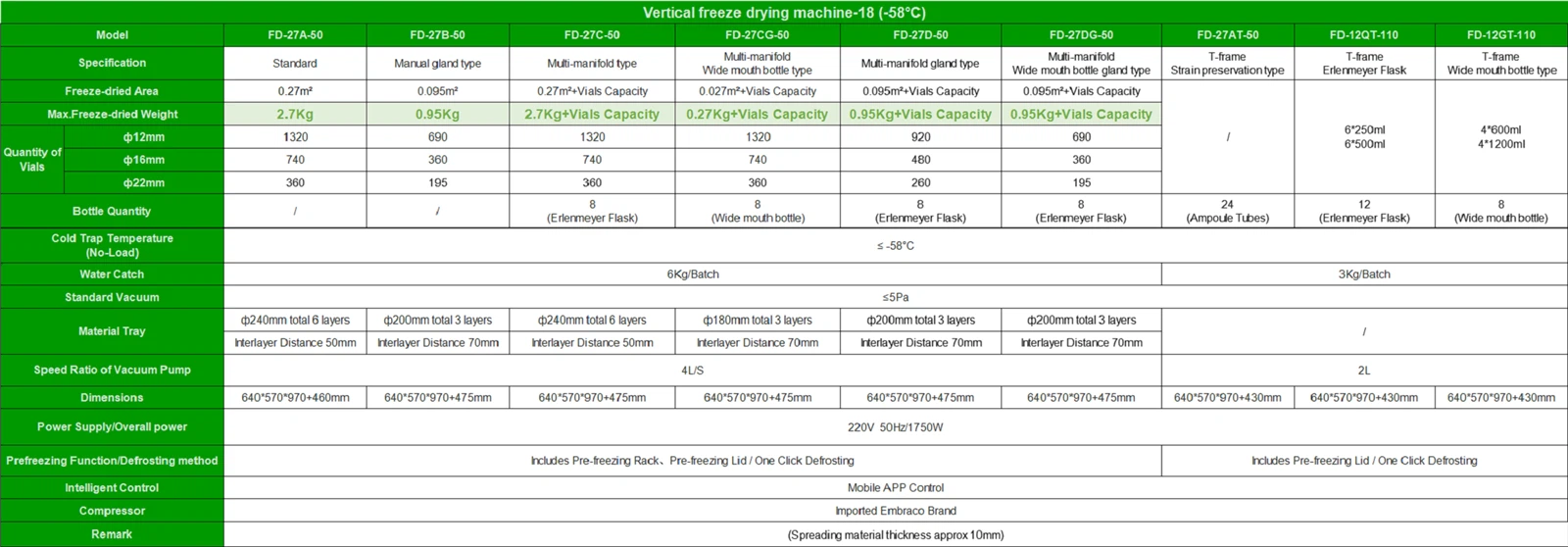
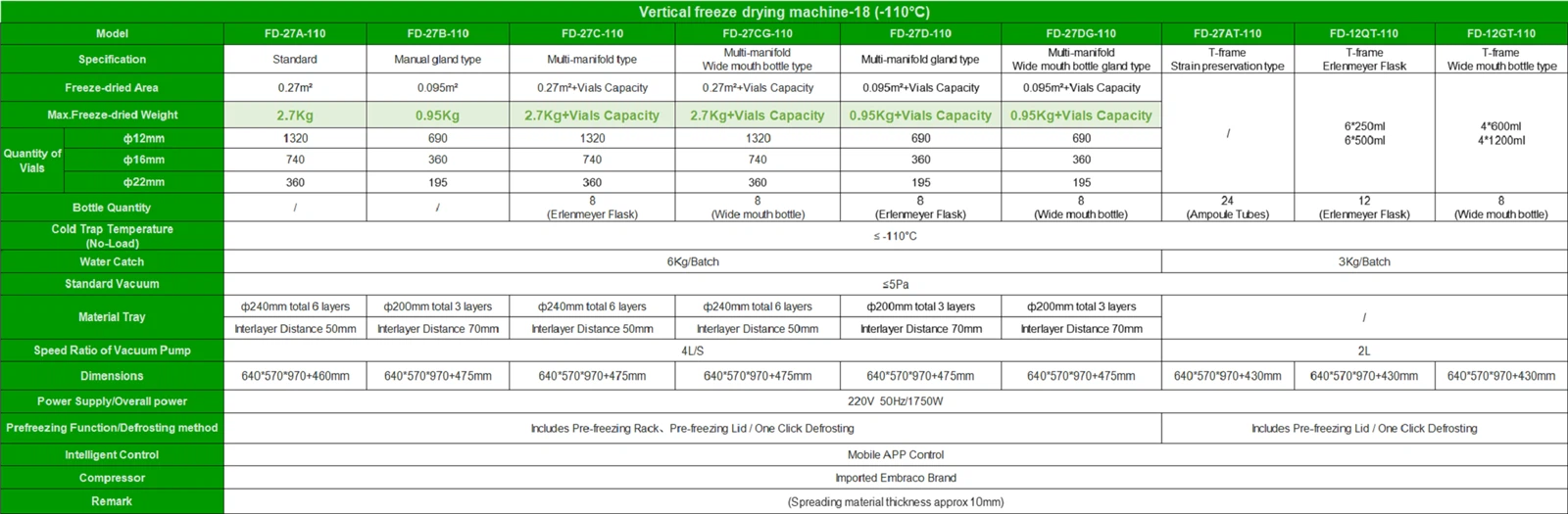
18 Series Laboratory Freeze Dryer

Advantages and disadvantages analysis
(1) Advantages of product
Low temperature drying:
The cold dryer dries at low temperatures,avoiding the damage of high temperatures to the thermosensitive components in the material,and ensuring the biological activity and stability of the material.
01
Low material loss:
When drying at low temperatures,the loss of volatile components in the material is minimal,which is beneficial for maintaining the original characteristics of the material.
02
Maintaining material properties:
During the cold drying process,the growth of microorganisms and the action of enzymes cannot be carried out,so the original properties and structure of the material can be maintained without concentration.
03
Easy to dissolve after drying:
The dried substance is loose,porous,and sponge like.After adding water,it dissolves quickly and completely,almost immediately restoring its original properties.
04
Energy saving and environmental protection:
The refrigerated dryer adopts advanced energy-saving technology to reduce energy consumption and carbon emissions,meeting environmental requirements.
05
(2) Disadvantages of product
High equipment cost:
The refrigerated dryer integrates multiple functions such as refrigeration system,vacuum system,heating system,etc.,resulting in high equipment cost.
Long drying time:
Compared to traditional drying methods,the drying time of a refrigerated dryer is longer,which may affect production efficiency.
High operational requirements:It requires professional operators and maintenance personnel,with high operational requirements.
(3) The advantages of traditional drying methods
Low cost:
Traditional drying methods have simple equipment,low cost,and are easy to popularize.
Easy to operate:
Traditional drying methods are easy to operate and master.
Wide applicability:
Traditional drying methods are suitable for drying various materials and have a wide range of applications.
(4) The drawbacks of traditional drying methods
High temperature destructive substances:
Traditional drying methods that use high temperature drying may result in the loss of thermosensitive components in the material.
Large loss of volatile components:
When drying at high temperatures,the loss of volatile components in the material is significant.
Changes in material properties after drying:
Traditional drying methods may lead to problems such as reduced volume and harder texture of the material after drying.
Cold drying machines and traditional drying methods each have their own advantages and disadvantages.A cold dryer can dry materials at low temperatures,maintaining their biological activity and stability,reducing the loss of volatile components.However,it has higher equipment costs,longer drying times,and higher operational requirements.Traditional drying methods have simple equipment,low cost,simple operation,and wide applicability,but they may lead to the loss of thermosensitive components in the material and changes in the material properties after drying.In practical applications,suitable drying methods can be selected based on material characteristics and production needs.
The process of dew point detection
Preparatory phase
Determine the purpose of detection
Clarify the purpose of dew point detection,is to verify the drying effect of the cold drying machine,troubleshoot,or perform regular maintenance.
Select testing instrument
According to the type and performance requirements of the cold and dry machine,select the appropriate dew point instrument for testing.Ensure that the accuracy and stability of the dew point meter meet the detection requirements.
Calibrate the test instrument
Before use,calibrate the dew point instrument to ensure the accuracy of its measurement results.Calibration usually includes zero point calibration and full scale calibration.
Preparation before testing
Check the status of the cold dryer
Ensure that the cold dryer is in normal operation,no fault alarm.
Connect the test instrument
Correctly connect the dew point instrument to the exit of the cold and dry machine to ensure that the connection is tight without leakage.At the same time,connect the temperature,humidity and other sensors to measure the relevant parameters at the same time.
The detection process
Start the dry machine
After connecting the detection instrument,start the dry machine and let it run for a period of time to achieve a stable state.
Start measuring
After stable operation of the cold dryer,start measuring the dew point temperature.Ensure that the operating parameters (such as temperature,pressure,etc.) of the dryers remain stable during the measurement process.
Record data
Record dew point temperature data and related temperature,humidity and other parameters in a timely manner for subsequent analysis and comparison.
Data analysis and evaluation
Comparison standard value
The measured dew point temperature is compared with the design standard value or industry standard value of the cold and dry machine to assess whether it meets the requirements.
Analyze the cause
If the dew point temperature is too high,analyze the possible causes,such as freezing inside the cold dryer,refrigeration system failure,filter blockage,etc.
Formulate measures
According to the analysis results,formulate corresponding measures to improve,such as adjusting the operating parameters of the cold dryer,replacing the damaged parts,cleaning the filter,etc.
End and record
Organize data
Organize the measured data,including dew point temperature,temperature,humidity and other parameters,and analyze the results of evaluation.
Preparation of test report
According to the collated data and the results of analysis and evaluation,preparation of test report,record the test process,data,analysis results and improvement measures.
Archiving
Archiving the test report for subsequent tracking and evaluation of the performance of the dryer.
Precautions for dew point detection
Inspection environment control

Keep the ambient temperature stable
The dew point test should be carried out at a stable ambient temperature to avoid the impact of ambient temperature fluctuations on the test results.
Ensure dry environment
The test environment should be kept dry to avoid excessive humidity resulting in inaccurate dew point test results.

Equipment preparation and calibration

Choose the right dew point meter:
According to the type and performance requirements of the cold drying machine,choose the right dew point meter for detection.

Periodic calibration of the dew point meter:
The dew point meter is calibrated regularly before and during use to ensure the accuracy of its measurement results.
Detection methods and steps
Connect the device correctly
Connect the dew point meter to the outlet of the cold and dry machine correctly to ensure that the connection is tight and without leakage.
Stable measurement
After the normal operation of the cold dryer for a period of time,the dew point temperature is measured to ensure that the measurement results are stable and reliable.
Record data
Record dew point temperature data in time for subsequent analysis and comparison.
► Precautions and safety measures
1) Avoid contamination:During the detection process,avoid contamination or damage to the sensor of the dew point meter to ensure the accuracy of the measurement results.
2) Pay attention to the operation specification:When the operator conducts the dew point detection,it should operate according to the operating procedure to avoid inaccurate measurement results or equipment damage caused by operation errors.
3) Take safety measures:During the testing process,necessary safety measures should be taken,such as wearing protective glasses,gloves,etc.,to prevent accidents.
► Follow-up treatment and analysis
1) Analysis of test results:According to the dew point test results,analyze whether the drying effect of the cold dryer meets the requirements.
2) Adjust equipment parameters:If the dew point temperature is too high,it may be necessary to adjust the operating parameters of the cold dryer or perform maintenance to improve its drying effect.
3) Record and report:Record the dew point test results,and prepare test reports for follow-up and evaluation of the performance of the cold dryer.
Daily maintenance


External and Daily Cleaning
External cleaning: Regularly wipe the exterior of the cold drying machine with a damp cloth and then dry it with a dry cloth. Avoid directly spraying water or using volatile oil or chemical substances to scrub, as this may damage the electrical components or cause the casing to fade, deform or peel off the paint.
Internal and component cleaning: When shutting down the equipment, regularly evacuate the air and clean the internal components.
Maintenance of Key Components
Automatic drain: Check the drainage condition of the automatic drain every day and clean the drainage filter screen regularly to prevent clogging and loss of drainage function. Clean the drain pipe with soapy water or detergent. Do not use corrosive reagents.
Air-cooled condenser: The surface of the air-cooled condenser is prone to accumulate dust, ash, fibers and other dirt. It is necessary to regularly blow it with compressed air as needed to prevent the fins of the condenser from being affected by pressure. Ensure there is sufficient space around for ventilation and heat dissipation, and do not operate under direct sunlight.
Water-cooled water filter: The filter should be cleaned regularly to prevent insufficient water circulation and poor heat dissipation. The cooling water should be kept clean. The Y-type filter should be cleaned once every half a month, and once a month if the water quality is good. The water condenser should be cleaned once a year (depending on the water quality).
System Inspection and Maintenance
Cooling water and compressed air system: Regularly monitor the inlet temperatures of the cooling water system and the compressed air system to ensure that all values are normal. The water temperature of the cooling water should be between 2 and 32℃, and the water pressure should be between 0.15 and 0.3MPa. The intake temperature of compressed air should generally be ≤45℃ (it is advisable that the intake pipe is not hot when touched by hand).
Refrigeration system: Regularly observe the refrigeration system. Touch the compressor with your hand at least once a day. It should be cold and frosty. Every week, feel the temperature difference on both sides of the drying filter by hand. The temperature difference should not be too large (if the inlet is hot and the outlet is cold, it needs to be replaced).
Drainage and sewage system: Regularly observe the drainage and sewage system. The float ball drain should be cleaned approximately once a week, and the sewage pipe should be drained once a week. When cleaning the electronic drain valve, it is necessary to close the ball valve at the front of the automatic drain valve, loosen the upper fixed nut, take out the timing coil, unplug the hose, loosen the valve body of the drain valve, release the compressed air inside the drain valve, remove the valve core and wipe it clean, then screw the valve body back to its original position, gently open the front ball valve a little, use the compressed air to drain the impurities, water and oil in the drainage system, and wipe the valve body clean with a cloth. Finally, reinstall the valve core and timing coil in their original positions, and then install the hose to open the front ball valve.
Operating Environment and Operating Specifications
Ambient temperature: It is not advisable to use the refrigerated dryer when the ambient temperature is below 2℃. When the ambient temperature is high, check if it exceeds 40℃. If it does, improvements are needed.
Operating Specifications: Conduct regular inspection Tours to check the supply conditions of power, water and gas sources, and pay attention to observing and recording the pressure indication values on the panel of the refrigerated dryer. Observe and record the instrument values of the refrigerated dryer four times per shift to ensure that the pressure difference between the inlet and outlet of the compressed air does not exceed 0.035MPa, the evaporation pressure gauge is between 0.4MPa and 0.5MPa, and the high-pressure pressure gauge is between 1.2MPa and 1.6MPa.
Safety Inspection
Electrical control system: Regularly inspect the electrical control system, blow off the dust, and tighten the wiring terminals (this must be done without electricity).
Safety devices: Before starting up, check whether the safety devices are reliable.
Hot Tags: cold drying machine, China cold drying machine manufacturers, suppliers, factory
Previous
Fruit Freeze Dryer MachineSend Inquiry


