



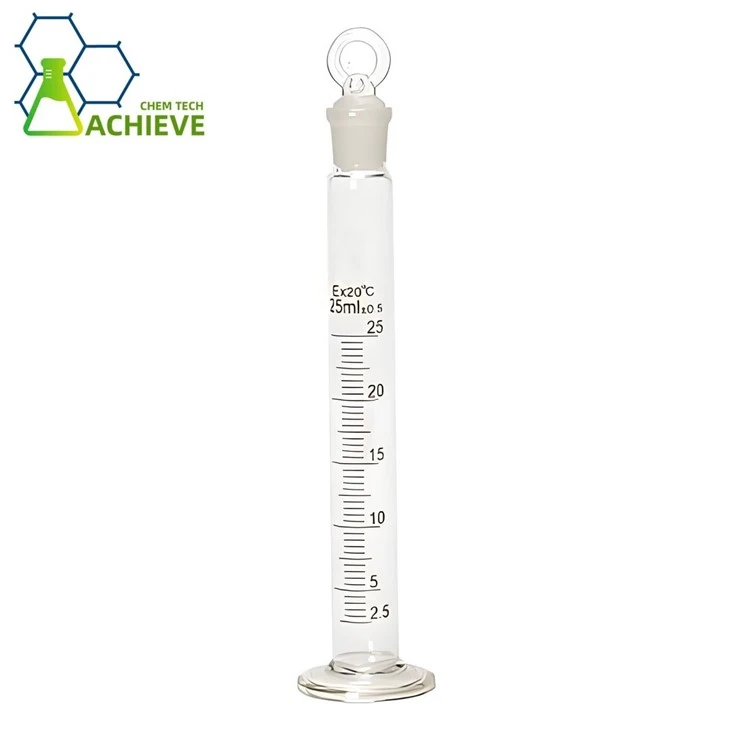
Stainless Steel Graduated Cylinder
Capacity(ml):5/10/25/50/100/250/500/1000/2000/5000
2.Stoppered measuring cylinder
Capacity(ml):5/10/25/50/100/250/500/1000/2000
***Price List for whole above, inquire us to get
Description
Technical Parameters
A stainless steel graduated cylinder is a durable and precise laboratory instrument designed for measuring and dispensing liquid volumes accurately. Unlike traditional glass cylinders, stainless steel variants offer superior resistance to breakage, corrosion, and chemical reactions, making them ideal for industrial, laboratory, or harsh environments where safety and longevity are critical.
Constructed from high-grade stainless steel, these cylinders feature etched or engraved graduation marks that remain legible even after prolonged use. Their sturdy build ensures they withstand impacts, temperature fluctuations, and exposure to aggressive chemicals without degrading. Stainless steel cylinders are also easy to clean and sterilize, reducing cross-contamination risks.
Commonly used in quality control, manufacturing, and research, they are available in various capacities (e.g., 10 mL to 1000 mL) to suit different applications. While slightly heavier than glass, their robustness compensates for the added weight, especially in settings where portability is secondary to reliability. Some models include pouring lips or handles for convenience.
In summary, they blend precision with durability, offering a reliable alternative to glass for professionals prioritizing safety, chemical resistance, and long-term performance.
Specifications
|
|


applications in Hydrogenation Reactions
Hydrogenation is a fundamental chemical process in which molecular hydrogen (H₂) is added to unsaturated organic compounds, typically containing carbon-carbon double or triple bonds (alkenes, alkynes) or carbon-oxygen double bonds (aldehydes, ketones). This reaction is widely used in industries such as petroleum refining, pharmaceuticals, and food production. The process typically requires a catalyst-commonly transition metals like palladium (Pd), platinum (Pt), or nickel (Ni)-to lower the activation energy and facilitate bond formation. Hydrogenation reactions are often carried out under elevated pressure and temperature to increase reaction rates and yields. In petroleum refining, hydrogenation converts unsaturated hydrocarbons into saturated ones, improving fuel stability and reducing sulfur content. In food chemistry, it is used to harden vegetable oils (e.g., margarine production). Pharmaceuticals employ hydrogenation for synthesizing active ingredients with specific stereochemistry. The reaction's selectivity can be controlled by adjusting catalyst type, solvent, and reaction conditions. While beneficial, hydrogenation requires careful handling of hydrogen gas, which is flammable and explosive, necessitating robust safety protocols. Advances in heterogeneous and homogeneous catalysis continue to enhance efficiency, reduce waste, and enable greener processes, making hydrogenation a cornerstone of modern organic synthesis and industrial chemistry.
- Hydrogenation reactions often require precise volumes of solvents (e.g., ethanol, hexane) or catalysts (e.g., palladium on carbon, Raney nickel).
- Stainless steel graduated cylinders are ideal for measuring these reagents due to their resistance to corrosion from organic solvents and acidic/basic catalysts.
- Example: In the hydrogenation of benzene to cyclohexane, a stainless steel cylinder ensures accurate addition of cyclohexane solvent or palladium catalyst.
- While hydrogen gas is typically introduced via pressurized systems, stainless steel cylinders can be used to measure liquid hydrogen carriers (e.g., formic acid, ammonia borane) in catalytic hydrogen transfer reactions.
- Their inertness prevents contamination of reactive hydrogenation systems.
- During hydrogenation, stainless steel cylinders can be used to withdraw aliquots for in-process analysis (e.g., GC/HPLC to monitor conversion).
- Their non-reactive surface minimizes interference with reaction intermediates.
- In pilot-scale hydrogenation, stainless steel cylinders (typically 500 mL to 2 L) are used to measure larger volumes of reagents, ensuring consistency when scaling up from laboratory to industrial settings.
|
|
|


Advantages
Stainless steel graduated cylinders are precision laboratory instruments designed for measuring and dispensing liquids with high accuracy. Compared to traditional glass or plastic cylinders, stainless steel variants offer a range of distinct advantages that make them particularly suitable for demanding industrial, research, and specialized laboratory environments. Below is a detailed exploration of their key benefits:
Exceptional Durability and Resistance to Breakage
- Rugged Construction: Stainless steel is renowned for its strength and toughness, making them highly resistant to impacts, drops, and mechanical stress. Unlike glass cylinders, which are fragile and prone to shattering, stainless steel cylinders can withstand rough handling, reducing the risk of breakage and associated safety hazards.
- Longevity: The inherent durability of stainless steel ensures a longer service life, even in harsh working conditions. This makes stainless steel cylinders a cost-effective choice for applications where frequent replacement of glassware would be impractical or expensive.
Superior Chemical Resistance
- Corrosion Resistance: Stainless steel, particularly grades like 316L, is highly resistant to corrosion from a wide range of chemicals, including acids, bases, and solvents. This property is crucial in environments where the cylinder may come into contact with aggressive or corrosive substances, ensuring the integrity of the measurements and the longevity of the instrument.
- Inertness: Stainless steel does not react with most chemicals, which prevents contamination of the liquid being measured and ensures the accuracy of results. This is especially important in analytical chemistry and other precision applications.
Thermal Stability and Temperature Resistance
- High-Temperature Tolerance: They can withstand higher temperatures than glass or plastic cylinders without deforming or cracking. This makes them suitable for use in applications involving heated liquids or in environments where temperature fluctuations are common.
- Thermal Shock Resistance: Unlike glass, which can crack or shatter when exposed to sudden temperature changes, stainless steel is less susceptible to thermal shock, further enhancing its durability in variable conditions.
Enhanced Precision and Accuracy
- Clear and Permanent Graduations: Stainless steel cylinders often feature laser-etched or engraved graduations that are highly visible and resistant to fading or wear. This ensures long-term accuracy and readability, even with repeated use and cleaning.
- Reduced Parallax Error: The design of stainless steel cylinders, often with a narrow neck and clear markings, minimizes parallax error, allowing for more precise volume measurements.
Ease of Cleaning and Maintenance
- Non-Porous Surface: The smooth, non-porous surface of stainless steel is easy to clean and sterilize, making it ideal for applications requiring high levels of hygiene, such as in food, pharmaceutical, or biotechnology industries.
- Resistance to Staining: Stainless steel does not stain or absorb residues, ensuring that the cylinder remains free from contaminants and maintaining measurement accuracy over time.
Versatility in Applications
- Wide Range of Sizes: They are available in various sizes, from small volumes for analytical work to larger capacities for industrial applications, providing flexibility in different settings.
- Suitable for Diverse Environments: Their robustness and chemical resistance make stainless steel cylinders suitable for use in laboratories, manufacturing plants, fieldwork, and other environments where durability and reliability are paramount.
Environmental and Safety Benefits
- Reduced Risk of Injury: The break-resistant nature of stainless steel cylinders minimizes the risk of injury from shattered glass, enhancing workplace safety.
- Sustainability: Stainless steel is a recyclable material, aligning with sustainability goals and reducing environmental impact compared to disposable or less durable alternatives.
Aesthetic and Professional Appeal
- Professional Appearance: The sleek, modern look of stainless steel instruments can enhance the professional image of a laboratory or workspace, which may be important in certain settings or for customer-facing applications.
Stainless steel graduated cylinders offer a combination of durability, chemical resistance, thermal stability, precision, and ease of use that makes them a superior choice for many applications. While they may come at a higher initial cost compared to glass or plastic cylinders, their longevity, reliability, and performance in demanding environments often justify the investment. For industries requiring robust, accurate, and safe liquid measurement solutions, they are an excellent choice.
Design Features
Stainless steel graduated cylinders are engineered with design features tailored for durability, precision, and functionality in demanding environments. Constructed from high-grade stainless steel, they offer exceptional strength and resistance to breakage, making them ideal for rough handling or industrial settings. The material's inherent corrosion resistance ensures compatibility with a wide range of chemicals, including acids and solvents, without degradation or contamination. The cylinders typically feature clear, permanent graduations etched or laser-marked into the metal, providing long-term readability and accuracy. Their narrow, tapered spouts minimize dripping and facilitate precise pouring, reducing measurement errors. A stable, flat base ensures the cylinder remains upright during use, enhancing safety and reliability. The non-porous, smooth surface of stainless steel simplifies cleaning and sterilization, crucial for hygiene-sensitive applications. Some models include ergonomic handles or grips for easier handling, especially with larger volumes. Additionally, stainless steel's thermal stability allows the cylinder to withstand high temperatures and thermal shock, unlike glass alternatives. These design elements collectively make them a robust, accurate, and versatile choice for laboratories, manufacturing, and fieldwork where reliability and longevity are essential.
Hot Tags: stainless steel graduated cylinder, China stainless steel graduated cylinder manufacturers, suppliers, factory, Hydrothermal Autoclave Reactor With Teflon Chamber 100ml, High Pressure Lab Reactor, Short Path Distillation Kit, SS316 Reactor, Hydrothermal Autoclave, High Pressure Stirred Reactor
Previous
Graduated Cylinder For HydrometerSend Inquiry


