



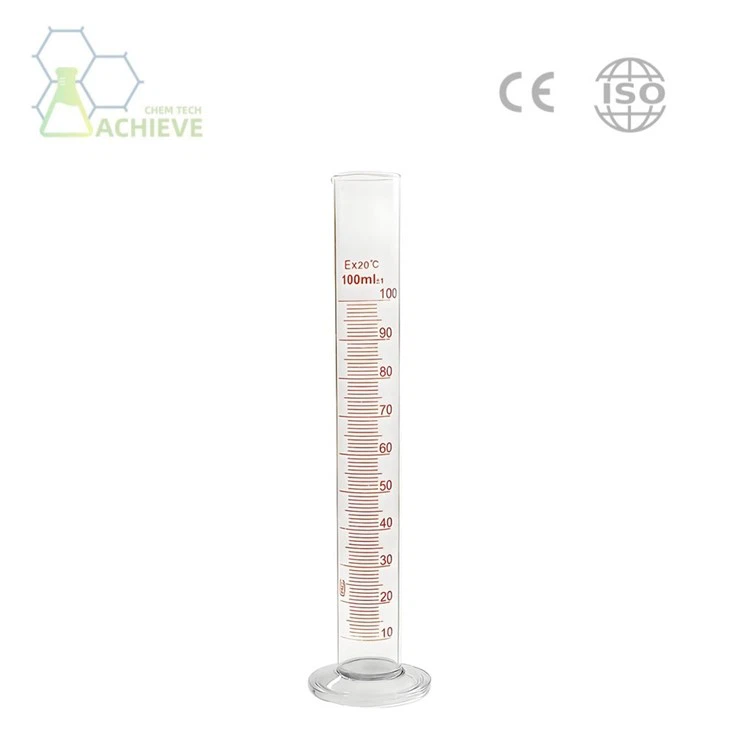


Graduated Cylinder For Hydrometer
Capacity(ml):5/10/25/50/100/250/500/1000/2000/5000
2.Stoppered measuring cylinder
Capacity(ml):5/10/25/50/100/250/500/1000/2000
***Price List for whole above, inquire us to get
Description
Technical Parameters
A graduated cylinder for hydrometer use is a specialized measuring vessel designed to facilitate accurate density or specific gravity measurements with a hydrometer. These cylinders are typically tall, narrow, and made of transparent materials like glass or durable plastics (e.g., polycarbonate) to ensure precision and ease of reading. The tall, slender shape minimizes the surface area of the liquid, reducing meniscus effects and allowing the hydrometer to float upright without touching the sides, which could skew results.
The cylinder features clear, calibrated volume markings (graduations) along its length, often in milliliters (mL), enabling users to measure the displaced liquid volume or confirm sample size. Some models include additional markings for temperature adjustments, as liquid density varies with temperature.
For hydrometer applications, the cylinder must be wide enough to accommodate the hydrometer's bulbous base but narrow enough to keep it centered. A stable, flat bottom prevents tipping, while a spout or pouring lip simplifies transferring liquids.
These cylinders are commonly used in brewing, winemaking, distilling, and industrial quality control to measure alcohol content, sugar concentrations (Brix), or battery electrolyte levels. Their durability, chemical resistance (when plastic), and precision make them indispensable tools for ensuring consistent, reliable hydrometer readings in laboratory or production settings.
Specifications
|
|


significances of hydrometer
A graduated cylinder for hydrometer is a precision instrument crucial for measuring the density or specific gravity of liquids, serving essential functions across scientific research, industrial processes, and quality assurance protocols. Its design features a slender, sealed glass tube equipped with a weighted bulb at the base, commonly filled with a dense material such as lead or mercury. This configuration ensures the hydrometer floats vertically in the liquid, with the weighted end providing stability. The stem of the hydrometer is calibrated with a graduated scale, enabling users to ascertain the liquid's specific gravity or density by observing the point at which the liquid's surface intersects the scale.
The operation of a hydrometer is elegantly grounded in Archimedes' principle of buoyancy, a fundamental concept in fluid mechanics. This principle states that any object submerged in a fluid experiences an upward buoyant force equal to the weight of the fluid displaced by the object. The hydrometer leverages this principle to measure the density or specific gravity of liquids with remarkable simplicity and effectiveness.
When a hydrometer is gently lowered into a liquid, it initially sinks because its weight exceeds the buoyant force exerted by the liquid. As it descends, it displaces an increasing volume of the liquid, thereby increasing the buoyant force acting upon it. The hydrometer continues to sink until the buoyant force precisely balances its weight, at which point it achieves equilibrium and floats at a stable level.
The floating level of the hydrometer is directly influenced by the density of the liquid. In denser liquids, a greater buoyant force is generated with less displacement, causing the hydrometer to float higher on the stem. Conversely, in less dense liquids, the hydrometer must displace more liquid to achieve equilibrium, resulting in a lower floating position.
This intuitive relationship allows users to read the specific gravity or density of the liquid directly from the graduated scale on the hydrometer's stem. By noting the level at which the liquid's surface intersects the scale, one can quickly and accurately determine the liquid's density.
Hydrometers find extensive applications, including monitoring fermentation in brewing and winemaking to determine alcohol content, ensuring accurate concentrations in chemical solutions, and assessing water salinity in environmental studies. Their ease of use, cost-effectiveness, and portability make them indispensable tools for both laboratory and fieldwork. However, accurate measurements necessitate regular calibration and consideration of temperature variations, as liquid density is temperature-dependent. Overall, the hydrometer remains a fundamental and versatile instrument in various fields requiring precise density assessments.
Application in winemaking
In the brewing and winemaking industries, the specific gravity of the liquid is indeed a cornerstone parameter that plays a critical role throughout the fermentation process and significantly impacts the quality and characteristics of the final product. Fermentation, driven by yeast metabolism, involves the conversion of sugars into alcohol and carbon dioxide, a process that is exquisitely sensitive to the initial sugar concentration in the liquid-a factor that is quantitatively measured by specific gravity.

Initial Sugar Assessment
Before fermentation begins, the specific gravity of the wort (in brewing) or must (in winemaking) provides a direct indication of the sugar content. This measurement is pivotal because it allows brewers and vintners to estimate the potential alcohol content of the finished beverage, as the amount of sugar available directly correlates with the amount of alcohol that can be produced.

Monitoring Fermentation Dynamics
As fermentation progresses, yeast consumes the sugars, leading to a decrease in the liquid's specific gravity. Regular measurements using a hydrometer enable producers to track this decline over time, offering valuable insights into the rate and extent of fermentation. A steady decrease in specific gravity indicates active fermentation, while a plateau suggests that fermentation is nearing completion.

Determining Fermentation Completion
A key milestone in the brewing and winemaking process is reaching the endpoint of fermentation, where most of the fermentable sugars have been converted to alcohol. Consistent specific gravity readings over successive measurements signal that fermentation has stabilized, and the product is ready for the next stage, such as clarification, aging, or bottling.
Ensuring Product Quality and Consistency
Quality Control
Maintaining consistency in specific gravity readings across batches is essential for ensuring that the final product meets stringent quality standards. Deviations from expected specific gravity values can indicate problems such as incomplete fermentation, contamination, or variations in raw materials, allowing producers to take timely corrective actions.
Recipe and Process Adjustment
If specific gravity measurements deviate from the desired range, brewers and vintners can adjust their recipes or processes. This might involve adding more sugar to increase alcohol potential, pitching additional yeast to accelerate fermentation, or modifying temperature conditions to optimize yeast activity.
Predicting & Managing Flavor Profiles
The specific gravity also influences the flavor profile of the final product. Higher initial sugar concentrations can lead to sweeter, fuller-bodied beverages with higher alcohol content, while lower sugar levels may result in drier, lighter products. By carefully monitoring and adjusting specific gravity, producers can tailor the flavor and mouthfeel of their beverages to meet consumer preferences.
A hydrometer is a simple yet effective tool for measuring specific gravity. It consists of a weighted glass bulb attached to a calibrated stem. When placed in a liquid, the hydrometer floats at a level determined by the liquid's density, with the specific gravity read from the scale at the liquid's surface.
Since specific gravity is temperature-dependent, it's crucial to measure it at a consistent temperature or use a temperature-compensated hydrometer to ensure accuracy. Many hydrometers are calibrated at a standard temperature (e.g., 20°C or 68°F), and adjustments may be necessary if measurements are taken at different temperatures.
In summary, the specific gravity of the liquid is a vital parameter in brewing and winemaking, influencing fermentation dynamics, product quality, and consistency. By carefully monitoring and adjusting specific gravity throughout the production process, brewers and vintners can optimize fermentation, ensure product quality, and create beverages that meet the highest standards of taste and craftsmanship.
Design Features
A graduated cylinder for hydrometer designed for use with a hydrometer combines precision, durability, and functionality to facilitate accurate density or specific gravity measurements. Typically constructed from high-quality glass or clear plastic, it features a narrow, cylindrical shape that minimizes surface tension effects and allows the hydrometer to float freely without interference. The cylinder's tall, slender profile ensures sufficient depth for the hydrometer to reach equilibrium, accommodating variations in liquid density. Its walls are calibrated with a clear, graduated scale, often in milliliters or specific gravity units, enabling precise volume or density readings. The markings are etched or printed to resist fading and ensure long-term legibility. The cylinder's smooth, uniform interior prevents the hydrometer from sticking, while its stable base reduces the risk of tipping during measurements. A spout or pouring lip may be included to facilitate easy and spill-resistant transfer of liquids. Additionally, the material is chosen for chemical resistance, ensuring compatibility with a wide range of solutions. This design ensures that the graduated cylinder provides a reliable and user-friendly platform for hydrometry, supporting consistent and accurate results in scientific, industrial, and quality control applications.
Hot Tags: graduated cylinder for hydrometer, China graduated cylinder for hydrometer manufacturers, suppliers, factory, High Pressure Stirred Lab Autoclaves, Rotovap Machine, Jacketed Glass Reactor Vessel, 500ml Short Path Distillation Kit, Rotary Distillation, High Pressure Chemical Reactor
Previous
Liquid Measuring CylinderSend Inquiry


