



Fixed Bed Multitube Reactor
Description
Technical Parameters
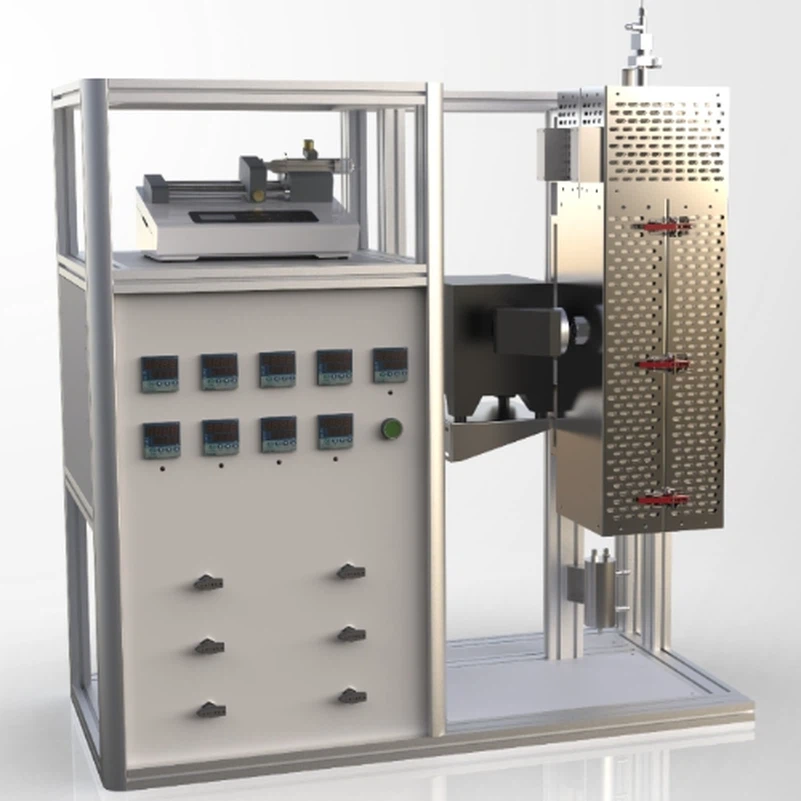
Fixed bed multitube reactors consist primarily of multiple reaction tubes that are filled with catalyst. In addition, some of the reaction tubes are equipped with catalyst thermometers for measuring the temperature in the vicinity of the catalyst in the reaction tubes. The measuring positions of these meters are different in the length direction of the reaction tube, so that the temperature monitoring of different positions can be realized.
In a fixed bed multi-tube reactor, the reactants pass through the reaction tube, come into contact with the catalyst inside the tube and undergo a chemical reaction. Due to the presence of catalyst, the reactants are converted into desired products. At the same time, a catalyst thermometer monitors the temperature changes during the reaction in real time to ensure that the reaction takes place within the appropriate temperature range.
Principle of the reaction
The Fischer-Tropsch synthesis reaction is a typical catalytic hydrogenation and reduction reaction. In this process, the carbon atoms in a carbon monoxide molecule are reduced to hydrocarbons by obtaining hydrogen atoms. Specifically, the carbon monoxide molecules are first adsorbed on the surface of the catalyst and then react with the hydrogen molecules to form intermediates such as formaldehyde. These intermediates are further converted to hydrocarbon compounds and release water vapor. Eventually, the hydrocarbon compounds desorb from the catalyst surface and leave the reaction system.
It should be noted that the Fischer-Tropsch synthesis reaction is a complex reaction process involving multiple steps and intermediate products. Therefore, in practical applications, it is necessary to improve the reaction efficiency and product selectivity by optimizing the reaction conditions, selecting a suitable catalyst and improving the reactor design.
Applications
Mixtures of carbon monoxide and hydrogen can be converted to liquid fuels such as diesel, gasoline, etc. in a fixed-bed multi-tubular reactor, which is usually achieved by the Fischer-Tropsch Synthesis (FTS) reaction. The following is an example of the process and principle of this reaction:
|
|
► Reaction Process 2) Catalyst Selection: Select the appropriate catalyst, such as iron or cobalt-based catalysts, which have high activity in the Fischer-Tropsch synthesis reaction. 3) Reaction Condition Setting: Heating the fixed-bed multi-tube reactor to a suitable reaction temperature, typically between 200°C and 350°C, and setting an appropriate reaction pressure, typically between 1 MPa and 5 MPa. These conditions help to promote adsorption and conversion of reactants and desorption of products. 4) Reaction Proceeds: In the presence of a catalyst, carbon monoxide and hydrogen undergo a Fischer-Tropsch synthesis reaction in a fixed-bed multi-tubular reactor. Carbon atoms in the carbon monoxide molecule are converted into hydrocarbon compounds by obtaining hydrogen atoms (i.e. reduction). These hydrocarbon compounds can be straight-chain alkanes, branched-chain alkanes, olefins or cycloalkanes, etc., depending on the reaction conditions and the choice of catalyst. 5) Separation and purification of products: At the end of the reaction, the hydrocarbon compounds produced are converted into the desired liquid fuels, such as diesel, gasoline, etc., through separation and purification steps. |
Application Advantages
High efficiency:
The multi-tube design allows the reactor to process a large number of reactants simultaneously, improving production efficiency.
Stability:
The fixed-bed structure allows the catalyst to exist stably in the reaction tubes and is not easy to be lost or clogged.
Controllability:
The real-time monitoring of the catalyst thermometer allows precise control of the temperature during the reaction process, thus optimizing the reaction conditions and improving product quality.
advantages in industrial production
Fixed bed multi-tube reactor has significant advantages in industrial production, the following is a detailed analysis of its characteristics:
◆ The catalyst performance is stable and high utilization rate
In the fixed bed multi-tube reactor, the catalyst is fixed in the reaction tube, which avoids the catalyst wear caused by fluid erosion and prolongs the service life of the catalyst. At the same time, the contact between the reaction material and the catalyst is more sufficient, which improves the utilization rate and reaction efficiency of the catalyst. This is a significant advantage for reaction processes that require frequent catalyst changes.
◆ High reaction efficiency and stable product quality
The fixed bed multitube reactor has high mass and heat transfer efficiency, which is conducive to rapid reactant conversion and product generation. At the same time, because the reaction conditions are stable and easy to control, products with stable quality and uniform properties can be produced. This is crucial for industrial production, which requires high-quality products.
Catalyzed liquid-phase reactions
Catalyzed liquid-phase reactions, such as hydrogenation, esterification, and oxidation, using a Fixed Bed Multitube Reactor (FBMR) are common operations in the chemical industry. The following are examples of these reactions:
|
► Hydrogenation Reactions 1) Reaction principle: the double bond in the propylene molecule reacts with hydrogen in an addition reaction to produce propane.
1) Reaction principle: carboxylic acid and alcohol in the catalyst under the action of esterification reaction, the generation of ester compounds and water. |
|

► Oxidation Reaction
Oxidation of alcohols
1) Reaction principle: alcohol is oxidized to aldehyde or ketone under the action of catalyst.
2) Catalyst: commonly used copper, silver and other metal catalyst or metal oxide catalyst.
3) Reaction conditions: usually under the conditions of heating and oxygen.
4) Application of products: The aldehyde or ketone generated is an important raw material for the synthesis of other compounds, such as spices and drugs.
It should be noted that although all the above reactions are possible in fixed-bed multi-tubular reactors, the specific reaction conditions, catalyst selection and product collection methods may vary depending on the reactants. Therefore, in practical application, optimization and adjustment are required according to specific reaction needs and conditions.
In addition, fixed-bed multi-tubular reactors have many advantages in catalyzing liquid-phase reactions, such as high efficiency, stability, and controllability. These advantages make the reactor have a wide range of application prospects in the chemical industry.
Which is better, fixed bed multitube reactor or conventional reactor
► Catalyst performance and utilization rate
1) Fixed bed multi-tube reactor:
The catalyst is fixed in the reaction tube, which avoids the catalyst wear caused by fluid erosion and prolongs the service life of the catalyst.
The contact between the reaction material and the catalyst is more sufficient, which improves the utilization rate and reaction efficiency of the catalyst.
2) Traditional reactor:
Catalysts can be subjected to fluid scour, resulting in wear and performance degradation.
The utilization rate of catalyst may be affected by factors such as uneven mixing of reaction materials.
► Reaction efficiency and product quality
1) Fixed bed multi-tube reactor:
It has high mass and heat transfer efficiency, which is conducive to the rapid conversion of reactants and the generation of products.
Because the reaction conditions are stable and easy to control, products with stable quality and uniform properties can be produced.
2) Traditional reactor:
The reaction efficiency may be affected by factors such as uneven mixing and low heat and mass transfer efficiency.
The product quality may be affected by the fluctuation of reaction conditions and the degradation of catalyst performance.
Conclusion
Fixed Bed Multitube Reactor (FBMR) is a highly efficient and versatile chemical equipment widely used in various catalytic liquid phase reactions. Its multi-tube design enables large-scale parallel processing of reactants, which significantly improves production efficiency. In hydrogenation reactions, the reactor is capable of stably converting unsaturated hydrocarbons such as olefins into saturated hydrocarbons, such as propylene hydrogenation to propane. Meanwhile, in esterification and oxidation reactions, the fixed-bed multi-tubular reactor also demonstrates excellent catalytic performance and product selectivity. By choosing the right catalyst and optimizing the reaction conditions, the reactor is able to efficiently synthesize target products such as esters, aldehydes or ketones. In addition, the fixed-bed multi-tubular reactor has the advantages of stable structure, simple operation and easy maintenance, which provides reliable technical support for chemical production. Therefore, the fixed-bed multi-tubular reactor has a wide range of application prospects and important economic value in the chemical field.
Hot Tags: fixed bed multitube reactor, China fixed bed multitube reactor manufacturers, suppliers, factory, Stainless Steel Jacketed Reactor, Laboratory Rotary Evaporator, Hydrothermal Synthesis Autoclave Reactor, High Pressure High Temperature Reactor, High Pressure Laboratory Reactor, Short Path Distillation System
Previous
Fixed Bed Tubular ReactorSend Inquiry


