



Fungsi Conical Flask
1) Narrow-mouth Bottle: 50ml~10000ml;
2) Big B Bottle: 50ml~3000ml;
3) Horn Mouth: 50ml~5000ml;
4) Wide-mouth Bottle: 50ml/100ml/250ml/500ml/1000ml;
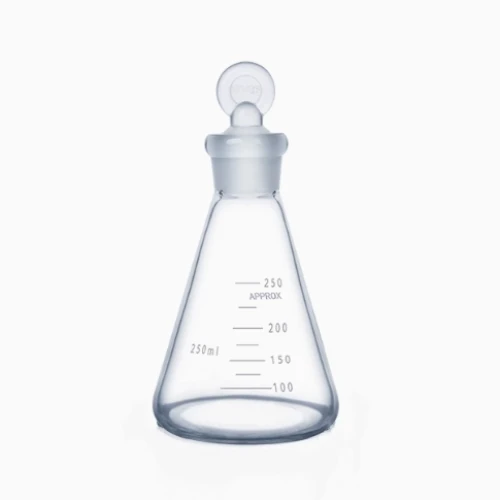
5) Conical Flask With Cover: 50ml~1000ml;
6) Screw Conical Flask:
a. Black Lid (General Sets): 50ml~1000ml
b. Orange Lid (Thickening Type): 250ml~5000ml;
2. Single and Multi-mouth Round Bottom Flask:
1) Single Mouth Round Bottom Flask: 50ml~10000ml;
2) Inclined Three-mouth Flask: 100ml~10000ml;
3) Inclined Four-mouth Flask: 250ml~20000ml;
4) Straight Three-mouth Flask: 100ml~10000ml;
5) Straight Four-mouth Flask: 250ml~10000ml.
***Price List for whole above, inquire us to get
Description
Technical Parameters
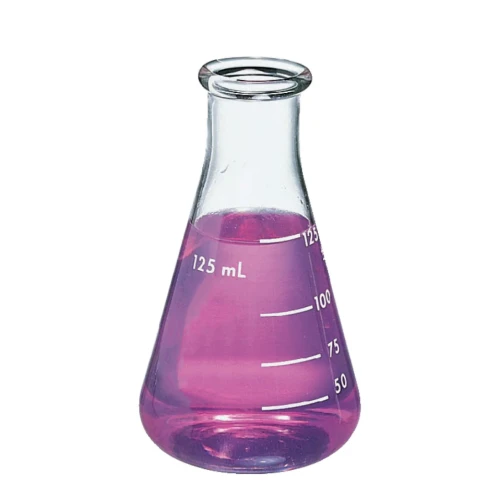
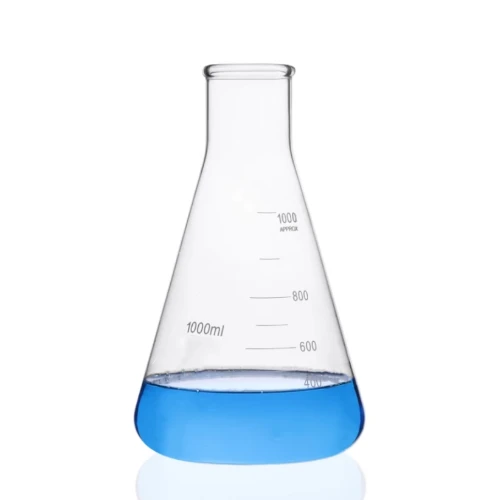
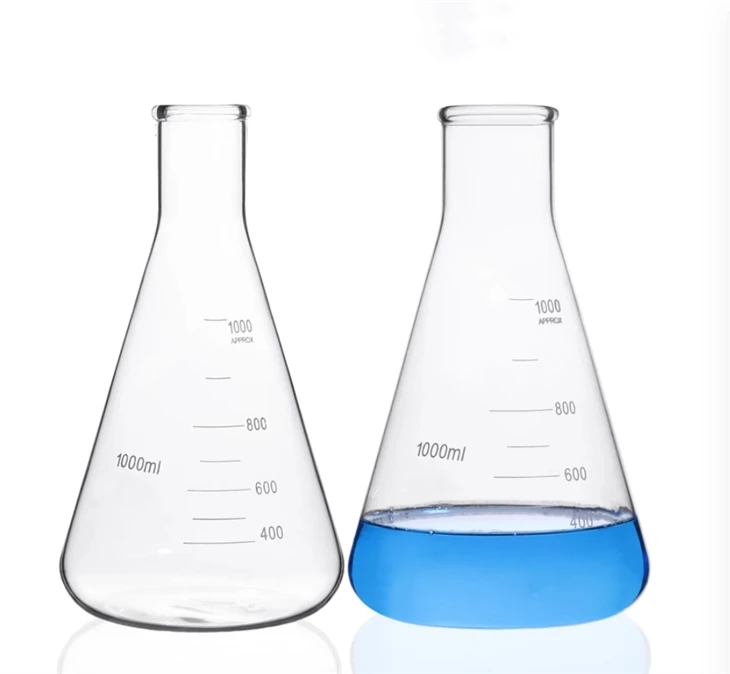
The fungsi conical flask, often referred to simply as a conical flask, is a versatile and essential laboratory tool widely used in microbiology, biotechnology, and chemistry. Its unique design features a cone-shaped body with a broad base tapering to a narrow neck, optimized for various experimental applications.
This flask's conical shape serves multiple purposes. Firstly, it facilitates efficient mixing and stirring of contents due to the gradual reduction in diameter towards the top, which helps to minimize dead spaces where material might settle and not be fully agitated. Additionally, the wide base provides stability, reducing the risk of tipping over during manipulations, especially when handling larger volumes or when using stirrers.
The narrow neck of the conical flask is beneficial for several reasons. It allows for easy insertion and removal of pipettes, spoons, or other instruments without splashing or spilling the contents, which is crucial in sterile environments. Moreover, it aids in reducing evaporation and maintaining the integrity of volatile or sensitive solutions. The neck often features a lip or rim for secure capping with a stopper or lid, further enhancing the flask's ability to maintain sterility and prevent contamination.
Specifications


Applications


The fungsi conical flask plays a pivotal role in fungi-related research and applications, offering a versatile and reliable container for cultivation, experimentation, storage, and transportation of fungal cultures.
- Fungal Cultivation: Conical flasks are frequently used for cultivating fungi, providing an appropriate environment for their growth. The wide base allows for efficient mixing and aeration, while the narrow neck prevents contamination.
- Media Preparation: They are used to prepare and store fungal growth media, ensuring that the nutrients required for fungal growth are adequately mixed and dispensed.
- Sterilization and Aseptic Techniques: Conical flasks are often autoclaved to sterilize them before use, ensuring a sterile environment for fungal experiments. This is crucial in preventing cross-contamination and ensuring accurate results.
- Mixing and Inoculation: The shape of the conical flask facilitates easy mixing of the culture media and inoculation with fungal spores or mycelium.
- Incubation and Observation: After inoculation, conical flasks are typically incubated in a controlled environment to allow fungal growth. The transparent material allows for observation of growth patterns and progress without disturbing the culture.
- Short-term Storage: Conical flasks can be used to store fungal cultures temporarily, especially when experiments or transfers need to be paused.
- Transportation: Their shape and durability make them suitable for transporting small fungal cultures safely between different laboratory areas or even to other institutions for collaboration.
About Fungal Cultivation
Fungi are an essential part of the ecosystem, playing a crucial role in decomposition and nutrient cycling. The process of fungal isolation and cultivation is a fundamental technique in biochemistry, particularly in the study of ecological interactions and the development of bioproducts. Here is an overview of the steps involved in fungal cultivation in biochemical experiments:
Sample Collection: The first step is to collect a sample from the environment where fungi are expected to be present. This could be soil, plant material, or decaying organic matter. Ensure the sample is collected using aseptic techniques to prevent contamination.
Preparation of Media: A suitable growth medium must be prepared for the fungi. Commonly used media include Potato Dextrose Agar (PDA) and Sabouraud Dextrose Agar (SDA), which provide the necessary nutrients for fungal growth. Prepare the medium according to the manufacturer's instructions and ensure it is sterile.
Sterilization: To prevent contamination, the media and all tools used in the process must be sterilized. This is typically done using an autoclave, which applies high pressure and temperature to kill any potential contaminants.
Isolation: The sample is then introduced to the sterile media. This can be done through a variety of methods, including the dilution plating technique or the streak plate method, which helps in isolating individual fungal colonies.
Incubation: The inoculated media are placed in an incubator under controlled conditions of temperature and humidity. Fungi generally prefer temperatures between 20-30°C. Incubation periods can vary depending on the species of fungi being cultivated, but typically range from a few days to several weeks.
Observation and Identification: After a period of incubation, the growth of fungal colonies can be observed. Characteristics such as colony morphology, color, and texture are noted. Microscopic examination may also be performed to observe the microscopic structures of the fungi, such as spores and hyphae.
Subculturing: To purify the fungal isolates and to maintain their viability, subculturing is performed. This involves transferring a small portion of a fungal colony to a new, sterile medium. This step is crucial for long-term preservation and study of the fungi.
Preservation: Fungal strains can be preserved for long-term storage using methods such as freeze-drying, storage in liquid nitrogen, or preservation in a glycerol stock at -80°C. Proper preservation ensures that the fungi can be studied and used in future experiments.
Molecular Characterization: For definitive identification and classification, molecular techniques such as DNA sequencing and polymerase chain reaction (PCR) can be employed. These techniques provide a more accurate and reliable method of identifying fungi species.
In biochemical experiments, fungal cultivation is often used to study the metabolic pathways, enzymatic activities, and other biochemical properties of fungi. It is also important for the isolation and identification of pathogenic fungi, which can cause diseases in humans and animals. The successful isolation and cultivation of fungi require aseptic techniques and careful observation to ensure that the desired species are grown and studied effectively.
Overall, fungal cultivation is a crucial technique in biochemistry that allows researchers to study the biology, biochemistry, and ecology of fungi. By following the steps outlined above, researchers can successfully cultivate and study fungi in a controlled laboratory environment.
Fungal resistance test
Introduction
Fungal resistance experiment is an important part of medical research, it aims to evaluate the sensitivity of fungi to different antifungal drugs, and provide important basis for clinical treatment and drug development. In the experiment, the fungus conical bottle as a commonly used experimental instrument, because of its unique shape and material, provides a strong guarantee for the smooth progress of the experiment. In this paper, the methods, steps and precautions of fungal resistance experiments with fungal conical bottles are introduced in detail.
Experimental materials and methods


Experimental materials
Fungal conical bottle: Used for culture and resistance testing of fungi, its shape and material help to maintain sterility and prevent contamination.
Antifungal drugs: include commonly used antifungal drugs, such as fluconazole, itraconazole, voriconazole, etc., to assess fungal resistance.
Medium: such as RPMI 1640 medium, for the growth and reproduction of fungi.
Fungal strains: The fungal strains required for the experiment, such as Candida albicans, Candida tropicalis, etc., need to be purified and identified in advance.
Aseptic operation tools: such as inoculation rings, straws, pipettes, etc., for aseptic operation to prevent contamination.
Constant temperature incubator: for the cultivation of fungi, providing a suitable temperature and humidity environment.
Experimental methods
Prepare the medium: according to the formula of the medium, accurately weigh each component, add the appropriate amount of distilled water, heat to dissolve and adjust the pH value to the appropriate range. The culture medium was divided into fungal conical bottles, and then sterilized in an autoclave. After sterilization, cool the medium to a suitable temperature and set aside.
Inoculation of fungi: On the sterile operating table, a small number of colonies are selected from the fungal strains using the sterile inoculation ring and inoculated into the sterilized medium. Attention should be paid to aseptic operation during inoculation to avoid contamination.
Drug formulation and dilution: Accurately weigh the desired antifungal drug, dissolve it with the appropriate solvent (such as DMSO), and dilute it to the desired concentration. Dispense the drug solution into sterile test tubes and set aside.
Drug addition and culture: The culture medium of inoculated fungi is separately added with different concentrations of antifungal drug solution, so that the concentration of drug in each conical bottle is different. Then, the conical bottle is placed in a constant temperature incubator, set at the appropriate temperature and humidity, and cultured. During the culture period, the growth of fungi should be observed regularly and the data recorded.
Results Observation and analysis: After culture, the conical bottle was taken out to observe the growth of fungi. The morphology and number of fungi were observed through a microscope and the data were recorded. At the same time, indicators such as the biomass or metabolite content of fungi in the medium can be determined to evaluate the drug resistance of fungi. The data were statistically analyzed to compare the effects of different concentrations of drugs on fungal growth and draw a conclusion of drug resistance.
Experimental results and analysis
During the experiment, it was found through microscope observation that with the increase of the concentration of antifungal drugs, the growth rate of fungi and the number of colonies gradually decreased. When the concentration of the drug reaches a certain level, the growth of the fungus is completely suppressed, and the colony cannot even be observed. This suggests that the fungal strain has some resistance to the drug being tested.
Further analysis showed that the resistance of different fungal strains to different antifungal drugs was different. For example, some strains are more resistant to fluconazole and less resistant to itraconazole. This may be related to the genetic background of the strain, the growth environment and the mechanism of action of the drug.
Discussion
Control of experimental conditions: In the experiment, aseptic operation conditions should be strictly controlled to avoid the influence of pollution on the experimental results. At the same time, it is also necessary to pay attention to the control of culture conditions, such as temperature, humidity, etc., to ensure the normal growth and reproduction of fungi.
Choice of drug concentration: The choice of drug concentration has an important influence on the experimental results. Too high a concentration may cause the fungus to fail to grow, making it impossible to accurately assess its resistance; If the concentration is too low, it may not inhibit the growth of the fungus, resulting in inaccurate experimental results. Therefore, it is necessary to conduct a preliminary experiment before the experiment to determine the appropriate drug concentration range.
Exploration of drug resistance mechanisms: The generation of fungal resistance may be related to a variety of mechanisms, such as drug efflux pumps, drug target mutations, etc. In the experiment, the mechanism of fungal resistance can be further explored, providing a theoretical basis for clinical treatment and drug development.
Conclusion
It is an effective method to carry out fungal resistance experiment by using fungal conical bottle. The sensitivity of fungi to different antifungal agents can be accurately assessed by controlling experimental conditions, selecting appropriate drug concentrations, and observing fungal growth. The results showed that the resistance of different fungal strains to different antifungal drugs was different, which may be related to the genetic background of strains, growth environment and the mechanism of action of drugs. Therefore, in clinical treatment and drug development, appropriate antifungal drugs and treatment programs should be selected according to specific conditions.
Outlook
With the deepening of medical research and the continuous development of technology, the methods and techniques of fungal resistance experiment will be constantly improved. In the future, advanced technologies such as high-throughput sequencing and gene chip can be used to further explore the mechanism of fungal resistance, providing a more accurate and reliable theoretical basis for clinical treatment and drug development. At the same time, new antifungal drugs and treatment strategies can also be developed to address the growing problem of fungal resistance.
The fungsi conical flask, also known as an Erlenmeyer flask, is a widely used piece of laboratory glassware, renowned for its distinctive shape and functional design, particularly the leak-proof characteristics of its neck. The narrow, tapered neck of the conical flask serves multiple purposes, including minimizing the risk of spills and leaks.
One of the key features contributing to its leak-proof nature is the snug fit that can be achieved with a stopper or a rubber bung. The uniform tapering allows for a secure seal when a stopper is inserted, which is crucial for preventing the contents from spilling, especially when the flask is tilted or shaken during experiments. This design is particularly beneficial when handling hazardous or volatile substances, as it ensures containment and safety.
Moreover, the conical shape aids in reducing splashes and aerosols from escaping the flask, further enhancing its leak-resistant properties. When pouring liquids, the angled sides allow for controlled dispensing, minimizing the chance of overflow or drips. Overall, the conical flask's neck design is an essential aspect of its functionality, providing both safety and efficiency in laboratory settings.
Hot Tags: fungsi conical flask, China fungsi conical flask manufacturers, suppliers, factory, High Pressure Stirred Lab Autoclaves, Rotating Evaporator, Lab Rotary Evaporator, 1l Short Path Distillation Kit, Stainless Steel Reactor, Short Path Distillation Equipment
Previous
Inverted Conical FlaskSend Inquiry


