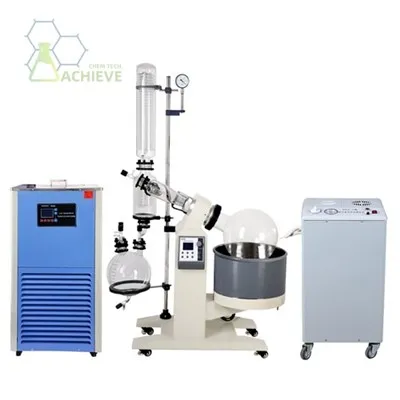
Pilot Glass Reactor
(1)1L/2L/3L/5L---Standard/Liftable
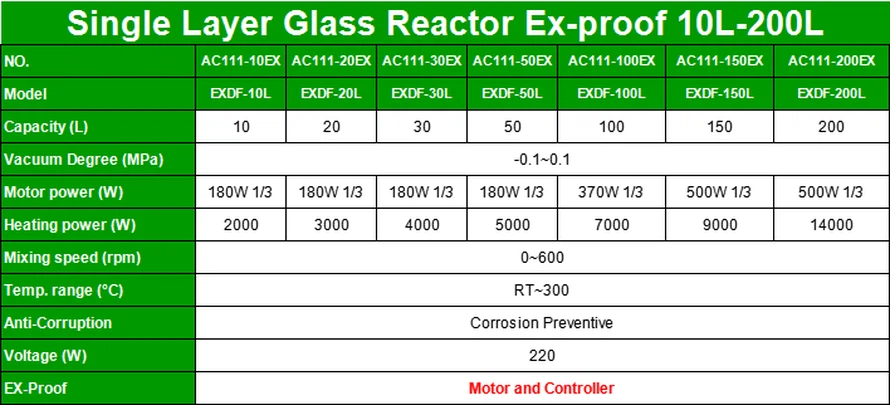
(2)10L/20L/30L/50L/100L/150L/200L---Standard/EX-Proof
***Price List for whole above, inquire us to get
2. Customization:
(1)Design support
(2)Directly supply the Senior R&D organic intermediate, shorten your R&D time and cost.
(3)Share the advanced purifying technology with you
(4)Supply the high quality chemicals and analysis reagent
(5)We want to assist you on Chemical Engineering (Auto CAD, Aspen plus etc.)
3. Assurance:
(1)CE and ISO certification Registered
(2)Trademark: ACHIEVE CHEM(since 2008)
(3)Replacement parts within 1-year for free
Description
Technical Parameters
A pilot glass reactor, also known as a glass pressure reactor, is a specialized laboratory instrument primarily utilized in the fields of biological and pharmaceutical engineering. It belongs to the broader category of glass instrument technology and serves as a scaled-down version of industrial reactors, allowing for the testing and optimization of chemical reactions under controlled conditions.
The use involves many aspects of attention, including installation and inspection, operation specifications, shutdown and cleaning, maintenance and maintenance, and safety protection. Only by strictly following these precautions can we ensure the safety and smooth conduct of the experiment. In the cleaning process, environmental pollution can be effectively avoided by selecting the appropriate cleaning agent and tools, standardizing the cleaning process, properly treating the cleaning wastewater, and strengthening personal protection and laboratory management.These measures not only help protect the environment and human health, but also ensure the accuracy and reliability of experiments.
The market price of the device varies depending on the brand, specifications, material and other factors.In general, domestic brands are relatively cheap,while the price of imported brands is higher. The specific price needs to be selected according to the actual demand and market conditions.



Applications
While a traditional pilot glass reactor is primarily designed for chemical reactions, its concept and capabilities can be adapted or extended to support cell culture and fermentation processes, albeit with modifications and specialized equipment. Here's an overview of how a modified or reactor can be utilized for these purposes:
- Sterility and Cleanliness: Ensure that the reactor and all associated components are sterile and suitable for cell culture. This includes using autoclavable materials and thoroughly cleaning the reactor before each use.
- Gas Exchange: Install gas inlet and outlet ports to facilitate the exchange of oxygen, carbon dioxide, and other gases necessary for cell growth and fermentation.
- Temperature Control: Equip the reactor with a precise temperature control system to maintain the desired culture temperature, typically around 37°C for mammalian cells.
- Agitation: Use a gentle stirring mechanism, such as a magnetic stirrer or a rocking platform, to ensure even distribution of nutrients and oxygen without damaging the cells.
- pH and Dissolved Oxygen Monitoring: Incorporate probes for real-time monitoring of pH and dissolved oxygen levels within the reactor.
- Media Preparation: Prepare sterile, nutrient-rich cell culture media according to the requirements of the specific cell line.
- Cell Inoculation: Inoculate the reactor with the desired cell line at an appropriate initial cell density.
- Nutrient Feed: Develop a feeding strategy to maintain optimal nutrient levels throughout the culture period. This may involve periodic addition of fresh media or concentrated nutrients.
- Oxygenation: Ensure adequate oxygenation of the culture by adjusting the gas flow rates and mixing conditions.
- pH Control: Use buffers or automatic titration systems to maintain the desired pH range within the reactor.
- Monitoring: Continuously monitor cell growth, metabolite production, and other relevant parameters using appropriate analytical techniques.
- Harvesting: Terminate the fermentation process when the desired product concentration or cell density is achieved. Harvest the cells and/or fermentation broth using sterile techniques.
- Downstream Processing: Process the harvested material through separation, purification, and formulation steps to obtain the final product.
- Scale-Up: Adapting a reactor for cell culture and fermentation may require scaling up from smaller laboratory-scale cultures. This can present challenges in terms of maintaining sterile conditions, controlling temperature and pH, and achieving efficient mixing.
- Specialized Equipment: Depending on the specific application, additional specialized equipment such as perfusion systems, cell retention devices, or sensors may be required.
- Contamination Risk: Maintaining sterility throughout the culture and fermentation process is crucial to prevent contamination by bacteria, fungi, or other microorganisms.
 |
 |
In pharmaceutical development, they are crucial for formulating and optimizing drug compounds. They support processes like crystallization, distillation, and extraction, ensuring consistent product quality and yield. The reactors' scalability makes them ideal for transitioning from lab-scale experiments to pilot-scale production, bridging the gap between research and industrial manufacturing.
Moreover, these reactors find applications in material science for synthesizing polymers, nanoparticles, and other advanced materials. Their ability to handle corrosive substances and operate under inert atmospheres (e.g., nitrogen or argon) is vital for sensitive reactions. In academia, they serve as educational tools, helping students grasp fundamental chemical engineering principles through hands-on experiments.
The significance of cell culture and fermentation
Significance of Cell Culture
Fundamental Research:
- Cell culture provides a controlled environment to study cellular processes, such as cell growth, differentiation, metabolism, and signaling pathways. This enables researchers to gain insights into fundamental biological mechanisms.
- It serves as a powerful tool for understanding human diseases at the cellular level, facilitating the development of new therapies and treatments.
Biomedical Applications:
- Cell culture is essential for the production of biological products, including vaccines, therapeutic proteins, and gene therapies. These products are critical for treating a wide range of diseases, from infectious diseases to cancer.
- It is also used in regenerative medicine, where cells are cultured and differentiated into specific cell types for use in tissue repair and replacement.
Drug Development:
- Cell cultures are widely used in drug screening and toxicity testing, allowing researchers to evaluate the efficacy and safety of potential new drugs before they are tested in humans.
- They provide a cost-effective and efficient way to study drug-cell interactions and mechanisms of action.
Education and Training:
- Cell culture techniques are taught in universities and research institutions, providing students and researchers with hands-on experience in cell biology and biotechnology.
Significance of Fermentation
Industrial Production:
- Fermentation is a key process in the industrial production of a wide range of products, including food and beverages (e.g., beer, wine, yogurt), biofuels, and biochemicals.
- It allows for the efficient conversion of raw materials into valuable products, reducing waste and promoting sustainability.
Biotechnology:
- Fermentation is essential for the production of enzymes, antibiotics, vitamins, and other pharmaceutical products. These products are critical for human health and well-being.
- It is also used in the production of biopesticides and other environmentally friendly alternatives to chemical pesticides.
Sustainable Development:
- Fermentation processes can utilize renewable resources, such as agricultural waste and plant-based feedstocks, as raw materials. This reduces dependence on fossil fuels and promotes circular economy principles.
Economic Impact:
- The fermentation industry contributes significantly to global economies, providing jobs and supporting a diverse range of industries.
Why Choose Us

Our pilot glass reactor boasts several key advantages that set it apart in the industry. Firstly, it is designed for maximum diversity and ease of use, allowing for customization with both catalog and custom-designed parts. This flexibility ensures that the reactor can be tailored to meet the specific needs of various research and industrial applications.
Secondly, it is renowned for its high-quality construction. The use of glass, renowned for its excellent chemical resistance and transparency, allows for easy monitoring of reactions and facilitates accurate data collection. Additionally, the reactor is equipped with advanced temperature and stirring control systems, ensuring precise control over reaction conditions.
Thirdly, our reactor offers superior safety features. It is designed to withstand high pressures and temperatures, ensuring safe and reliable operation. Furthermore, the use of high-quality materials and rigorous testing protocols ensure that the reactor meets all relevant safety standards and regulations.
Finally, our company is committed to customer satisfaction. We offer a range of services, including customization, installation, and ongoing support, to ensure that our customers receive the best possible experience with our reactor. Our team of experienced engineers and technicians is always available to provide assistance and answer any questions that may arise.
In summary, our pilot glass reactor combines flexibility, high-quality construction, superior safety features, and exceptional customer service to offer a truly outstanding product for a wide range of research and industrial applications.
Cleaning precautions
Other environmental advice


Promote green cleaning technology
Physical cleaning methods: such as the use of high pressure water gun, ultrasonic cleaning and other physical means to clean, reduce the use of chemical cleaning agents.
Use biodegradable cleaning agents: Choose biodegradable cleaning agents, these cleaning agents can be quickly decomposed in the natural environment, reducing pollution to the environment.
Optimize the cleaning process
Timing your cleaning: Avoid cleaning during peak hours to reduce water and energy consumption.
Recycling cleaning agents: For some cleaning agents that can be recycled, such as some organic solvents, they should be recycled and reused as much as possible.
Reduce waste liquid discharge: Reduce waste liquid generation by improving the cleaning process. For example, the concentration and amount of waste liquid can be reduced by multiple flushing and step-by-step precipitation.
Strengthen waste management
Separate waste collection: Collect the waste generated during the cleaning process, such as solid waste, liquid waste, etc., in order to facilitate subsequent treatment.
Safe disposal of hazardous waste: Waste containing toxic and harmful substances should be handled safely in strict accordance with relevant regulations to avoid pollution to the environment.
Encourage recycling of waste: For certain wastes that can be recycled, such as waste cleaning agent containers, glass fragments, etc., recycling and reuse should be encouraged.
Raise environmental awareness
Strengthen environmental protection training: Regularly conduct environmental protection training for laboratory personnel to improve their environmental awareness and skills.
Establish an environmental protection system: develop and improve the laboratory environmental protection system, and clarify the environmental protection requirements and the division of responsibilities in the cleaning process.
Promote the concept of environmental protection: actively promote the concept of environmental protection inside and outside the laboratory, and encourage everyone to participate in environmental protection actions.
The pilot glass reactor is a sophisticated piece of laboratory equipment designed for conducting chemical reactions under controlled conditions, particularly in research and development settings. Its transparent glass construction allows scientists to observe reactions in real-time, providing invaluable insights into reaction kinetics, color changes, and phase transitions. This visibility is crucial for optimizing reaction parameters and ensuring safety during experimentation.
One of the key features is its versatility. It can be configured with various accessories such as stirrers, heaters, coolers, and pressure regulators, enabling it to handle a wide range of reaction conditions, from low to high temperatures and pressures. This adaptability makes it suitable for numerous applications, including synthesis, crystallization, distillation, and extraction processes.
Safety is another significant aspect The glass material is typically borosilicate, known for its resistance to thermal shock and chemical corrosion, minimizing the risk of breakage or contamination. Additionally, the reactor can be equipped with safety valves and pressure relief systems to prevent over-pressurization, ensuring a secure working environment for researchers.
The compact design also facilitates ease of use and maintenance. Its modular components allow for straightforward assembly, disassembly, and cleaning, reducing downtime between experiments. Furthermore, the reactor's scalability makes it an ideal transition tool from small-scale laboratory experiments to larger industrial processes, bridging the gap between research and production.
In summary, it is an indispensable tool in modern chemical research, offering transparency, versatility, safety, and ease of use. Its ability to provide real-time observation and control over reaction conditions makes it a valuable asset for scientists striving to innovate and optimize chemical processes.
Hot Tags: pilot glass reactor, China pilot glass reactor manufacturers, suppliers, factory, 5l Glass Reactor, Rotovap Machine, Short Path Distillation Kit, Teflon Lined Autoclave, High Pressure Reactor Vessel, Rotary Tablet Press Machine
Previous
Cold Finger CondenserSend Inquiry