



Cold Finger Condenser
(1)150mm/200mm/300mm/400mm/500mm/600mm---19*2
(2)200mm/300mm/400mm/500mm/600mm---24*2
(3)400mm/500mm/600mm---29*2
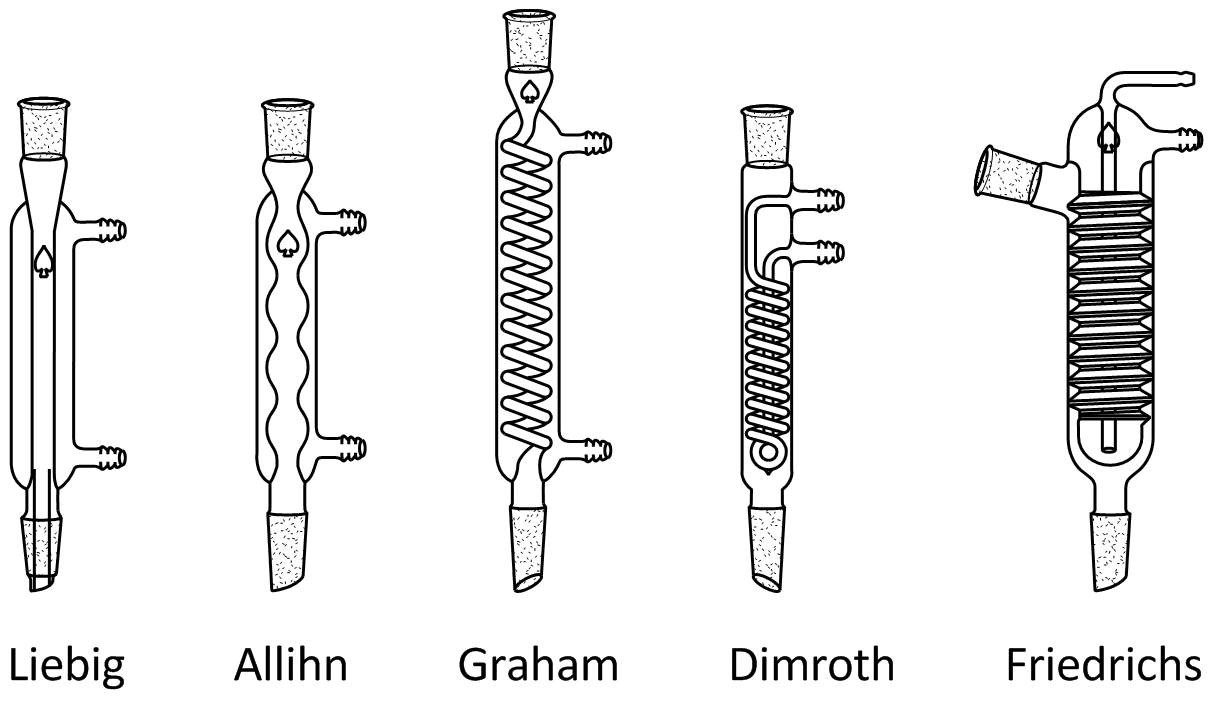
2. Allihn Condenser
(1)150mm/200mm/300mm/400mm/500mm/600mm---19*2
(2)200mm/300mm/400mm/500mm/600mm---24*2
(3)500mm/600mm---29*2
3. Graham Condenser:
(1)150mm/200mm/300mm/400mm/500mm/600mm---19*2
(2)200mm/300mm/400mm/500mm/600mm---24*2
(3)500mm/600mm---29*2
***Price List for whole above, inquire us to get
Description
Technical Parameters
Cold finger condenser, A finger shaped (reflux) condenser, as the name suggests, is a condensing device shaped like a finger. It uses cooling media (such as water, ice, coolant, etc.) to cool and condense high-temperature steam or gas inside the condenser tube into liquid through the outer wall of the condenser tube, thereby achieving material separation and purification. Due to its clever shape design, it is highly favored in experiments that require efficient condensation for more efficient heat exchange. It is a commonly used condensing equipment in chemical laboratories, with unique design and powerful functions, widely used in various experimental processes that require condensation reflux. It mainly consists of condenser tube body, cooling medium circulation system, reflux system, support and fixing devices, as well as other accessories and fittings. These parts work together to achieve effective condensation and reflux of high-temperature steam or gas, providing strong support for experimental research and production practices in fields such as chemistry, chemical engineering, and pharmaceuticals. As an efficient, compact, and corrosion-resistant condensing device, it plays an important role in chemical laboratories. By reasonable selection, correct use, and regular maintenance, its advantages can be fully utilized, providing strong support for experimental research and production practice. At the same time, attention should also be paid to safety precautions and compliance with laboratory regulations to ensure the safety and smooth progress of the experimental process.
Structures
The cold finger condenser is mainly composed of condenser tubes, cooling medium circulation system, support frame, and other parts. The condenser tube is its core component, usually made of high thermal conductivity materials such as stainless steel, glass, etc., to ensure good thermal conductivity performance. The interior of the condenser tube is smooth to reduce resistance during fluid flow and improve condensation efficiency. The cooling medium circulation system is responsible for delivering the cooling medium to the outer wall of the condenser tube, taking away heat through heat exchange, and condensing the high-temperature steam or gas inside the tube. The support frame is used to fix the condenser tube, ensuring its stability and safety during use.

- Core material: The condenser tube body refers to the core part of the reflux condenser tube, usually made of high borosilicate glass, stainless steel, or other corrosion-resistant and high-temperature resistant materials. The selection of these materials is based on considerations such as their stability to chemical substances, thermal conductivity, and mechanical strength.
- Shape design: Although condensation tubes directly referred to as "finger shaped" may not be common, similar designs may include multiple curved or branched tube bodies aimed at increasing condensation area and improving condensation efficiency. In some cases, the condenser tube may contain multiple small balls or specially shaped structures inside to further promote the distribution and reflux of the condensate.
- Function: The condenser tube is responsible for guiding high-temperature steam or gas to the cooling area and condensing it into liquid through heat exchange with the cooling medium. During this process, the material, shape, and structural design of the condenser tube have a significant impact on the condensation efficiency.
- Cooling medium inlet and outlet: Cooling medium inlet and outlet are provided at both ends or appropriate positions of the condenser tube, used to connect the cooling medium circulation system. These imports and exports are usually designed as standard connection interfaces to connect with cooling equipment in the laboratory, such as chillers, ice water mixture containers, etc.
- Cooling medium channel: A channel designed for the circulation of cooling medium outside or inside the condenser tube. These channels allow cooling media (such as water, ice salt water, etc.) to flow through the surface of the condenser tube, absorbing and taking away heat. The design of the channel should ensure that the cooling medium can flow evenly and efficiently across the entire surface of the condenser tube to improve condensation efficiency.
- Function: The cooling medium circulation system reduces the surface temperature of the condenser tube by continuously circulating the cooling medium, thereby achieving effective condensation of high-temperature steam or gas. This system is a key component in achieving the function of condensation reflux.
- Reflux port: A reflux port is provided at the bottom or appropriate position of the condenser tube to reflux the condensed liquid back into the reaction vessel. The reflux port is usually designed as a structure that is easy to connect and disassemble, in order to connect with connectors such as rubber tubes and glass tubes.
- Reflux pipeline: Reflux pipeline is a channel for refluxing condensate from the condenser body to the reaction vessel. These pipelines may be made of glass, rubber, or other corrosion-resistant materials to ensure that impurities are not introduced or chemical reactions occur during the reflux process.
- Function: The reflux system achieves effective recovery and reuse of volatile reactants by refluxing the condensate back into the reaction vessel. This system is of great significance for improving reaction yield, reducing raw material waste, and protecting the experimental environment.
- Support frame: In order to maintain the stability of the condenser tube and prevent it from tilting or shaking during use, a support frame is usually equipped to fix the condenser tube. The design of the support frame should take into account factors such as the length and weight of the condenser tube, as well as the spatial layout of the experimental table.
- Fixed fixtures: In addition to the support frame, fixed fixtures may also be used to further secure the condenser tube body and its connectors. These fixtures can ensure that the condenser tube remains stable during the experimental process, thereby improving the accuracy and reliability of the experiment.
- Function: The supporting and fixing device provides stable support and fixing for the condenser tube, ensuring its stability and safety during the experimental process. This is of great significance for ensuring the accuracy of experimental results and protecting experimental equipment from damage.
- Sealing gasket: In order to ensure the sealing between the condenser tube and the connecting piece, sealing components such as sealing gaskets are usually used. These gaskets are made of corrosion-resistant and high-temperature resistant materials, which can effectively prevent the leakage of cooling medium or reactants.
- Regulating valves and flow meters: In some cases, accessories such as regulating valves and flow meters may be installed in the cooling medium circulation system to accurately control the flow and temperature of the cooling medium. These attachments can achieve precise control over the cooling process, thereby improving the accuracy and reproducibility of the experiment.
- Safety protection device: In order to ensure the safety of experimental personnel, the finger shaped reflux condenser may also be equipped with safety protection devices, such as protective shields, protective nets, etc. These devices can prevent high-temperature steam or corrosive substances from causing harm to experimental personnel.
Advantages
Cold finger condenser, commonly referred to as a specific design of condenser in chemical and laboratory environments, may have different structural characteristics depending on the manufacturer and specific application, but generally speaking, it may refer to an inner tube structure with some kind of "finger shaped" or special arrangement, used to optimize condensation efficiency and reflux operation.
|
|
|


- Special Inner Tube Design: One of the core advantages of the finger shaped reflux condenser tube is its unique inner tube design. This design may include a series of carefully arranged "finger like" structures or similar shaped glass spheres/tube segments, which not only increase the condensation area but also promote uniform distribution and effective reflux of the condensate. Compared to traditional straight or serpentine condenser tubes, finger shaped designs can more effectively capture and condense steam, reduce the accumulation and retention of condensate on the tube wall, and thus improve condensation efficiency.
- Increase in condensation area: The condensation area is one of the key factors affecting condensation efficiency. The finger shaped reflux condenser tube significantly increases the condensation area through its special inner tube structure, allowing more steam to be condensed into liquid in a short period of time. This design is particularly suitable for situations that require efficient condensation, such as distillation or reflux reactions of high boiling point substances.
- Optimization of reflux effect: In the reflux operation, the condenser tube needs to ensure that the condensed liquid can smoothly reflux back into the reaction system to maintain the stability of the reaction environment. The finger shaped reflux condenser tube, with its unique inner tube structure, promotes uniform distribution and rapid reflux of condensate, reducing the risk of condensate accumulation and blockage inside the tube. This helps to maintain the continuity and stability of the reaction system, improve the success rate and reproducibility of the experiment.
- Easy to clean and maintain: After long-term use, impurities or dirt may accumulate inside the condenser tube, affecting the condensation effect. Finger shaped reflux condenser tubes are usually easier to clean and maintain due to their unique inner tube structure. For example, appropriate cleaning agents or solvents can be used to rinse the condenser tube, or mechanical methods such as ultrasonic cleaning can be used to remove stubborn dirt. In addition, some designs may also include detachable components for users to perform more thorough cleaning and maintenance.
- Wide applicability: Finger shaped reflux condenser tubes are suitable for various experimental and industrial production scenarios, including organic synthesis, drug preparation, petrochemicals, and other fields. Its efficient condensation performance and stable reflux effect make it an indispensable experimental tool in these fields. Whether dealing with substances with low or high boiling points, finger shaped reflux condenser tubes can provide reliable condensation and reflux solutions.
- Flexible Configuration and Expansion: In order to meet the needs of different experiments and production, finger shaped reflux condenser tubes can usually be flexibly configured and expanded with other experimental equipment such as distillation flasks, curved nozzles, etc. This flexibility allows users to choose appropriate equipment and configuration plans based on specific experimental needs, thereby achieving the best experimental results and production efficiency.
- Stability under high pressure and high temperature: In chemical experiments, especially distillation and reflux operations under high temperature and pressure conditions, high requirements are placed on the stability and durability of condenser tubes. Finger shaped reflux condenser tubes are usually made of high-quality glass or metal materials, which have good high temperature and high pressure resistance performance. This design ensures the stability and reliability of the condenser tube under extreme conditions, reducing the risk of safety accidents caused by equipment failures.
- Corrosion and Pollution Resistance: When dealing with corrosive or polluting substances, condenser tubes need to have good corrosion resistance and anti pollution performance. The tubes usually use special materials or surface treatment techniques to improve their corrosion resistance and pollution resistance. This design helps to extend the service life of the condenser tube and reduce performance degradation caused by corrosion or contamination.
The cold finger condenser is a highly efficient condensing device widely utilized in various scientific and industrial applications, particularly in vacuum systems and cryogenic environments. This innovative condenser leverages the principles of thermal conduction and gas condensation to achieve exceptional performance in condensing vapors or gases.
At its core, it features a long, slender rod-the "cold finger"-made from a thermally conductive material such as copper or stainless steel. This rod is cooled to extremely low temperatures, often by liquid nitrogen or other cryogens, creating a significant temperature gradient along its length. As gases or vapors come into contact with the cold surface of the finger, they condense into a liquid state, effectively removing them from the gaseous phase.
One of the key advantages lies in its ability to condense even low-concentration vapors efficiently. The large surface area-to-volume ratio of the cold finger enhances heat transfer, facilitating rapid and complete condensation. Additionally, its compact design makes it ideal for integration into space-constrained systems, such as ultra-high vacuum chambers where minimizing volume and maintaining low pressures are crucial.
Moreover, it offers operational flexibility. By adjusting the cooling temperature and flow rates, researchers can fine-tune the condensation process to meet specific experimental or production requirements. This adaptability makes it a versatile tool for applications ranging from materials science and semiconductor manufacturing to analytical chemistry and cryogenics research.
Hot Tags: cold finger condenser, China cold finger condenser manufacturers, suppliers, factory, Laboratory Rotary Evaporator, Double Glass Reactor, Stainless Steel Jacketed Reactor, Hydrothermal Autoclave 100 Ml, 10l Rotovap, High Pressure Autoclave Reactor
Previous
Rotary Evaporator CondenserNext
Pilot Glass ReactorSend Inquiry


