


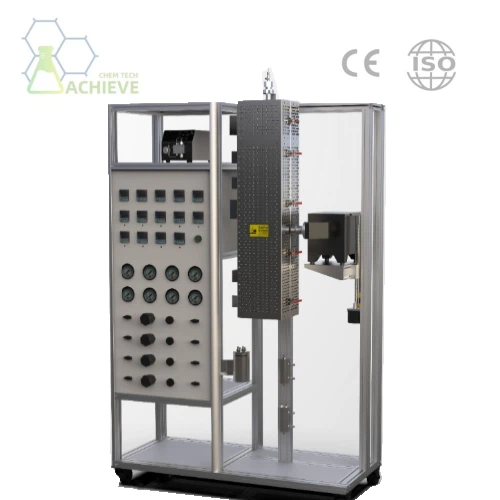
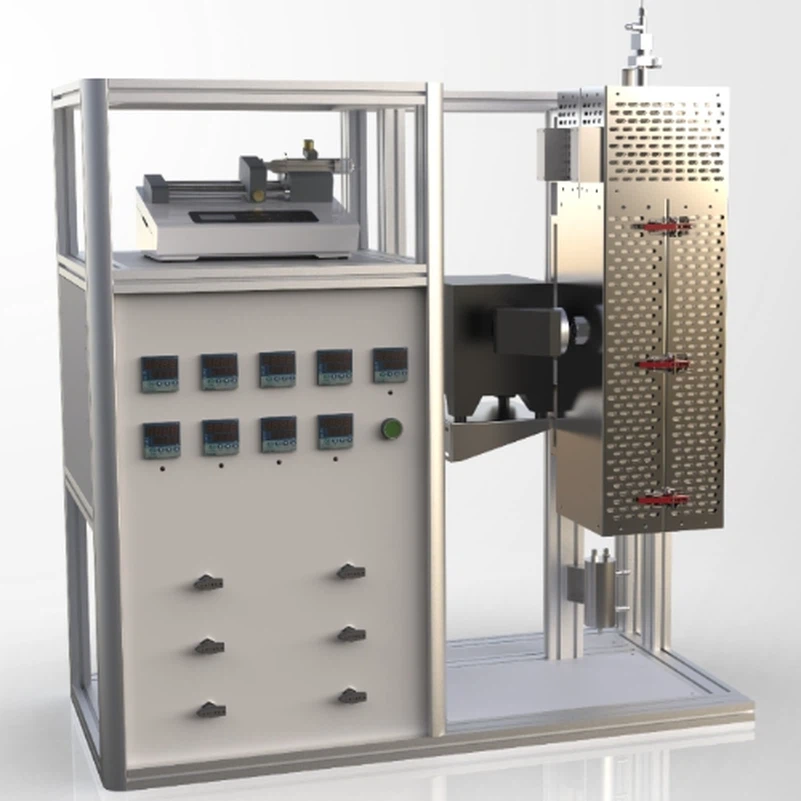
Continuous Fixed Bed Reactor
Description
Technical Parameters
A continuous fixed bed reactor is a type of reactor filled with a solid catalyst or solid reactant to facilitate heterogeneous reactions. The solid material, typically in granular form with a particle size ranging from 2 to 15 mm, is stacked to form a bed of a certain height or thickness. This bed remains stationary while fluids pass through it to undergo chemical transformations.
The design of a continuous fixed bed reactor ensures that reactants flow continuously through the catalyst bed, allowing for a steady-state operation. This reactor configuration offers several advantages, including high conversion rates, minimal by-product formation, and stable product quality. The continuous fixed bed reactor is a cornerstone in the realm of chemical engineering, serving as a vital piece of equipment for achieving various chemical reactions.
Structure and Operation
A continuous fixed bed reactor is a type of reactor filled with a solid catalyst or solid reactant to facilitate heterogeneous reactions. The solid material, typically in granular form with a particle size ranging from 2 to 15 mm, is stacked to form a bed of a certain height or thickness. This bed remains stationary while fluids pass through it to undergo chemical reactions.
The reactor is generally cylindrical, with the catalyst stored in such a way that it touches the inner wall of the reaction vessel. The vicinity of one end of the reactor serves as the inlet for the raw material gas, while the vicinity of the other end serves as the outlet for the generated gas. The catalyst layer, where the catalytic reaction occurs, is located near the inner wall of the reaction vessel. A porous body, composed of a solid that does not react with the raw material gas, fills the center region of the reaction vessel in the thickness direction. This design ensures that there is no continuous gap between the catalyst layer and the porous body.
The catalytic reaction is typically an endothermic reaction, meaning it requires heat to proceed. The reaction does not occur below a prescribed temperature, and a catalyst that increases the reaction rate as the temperature rises is used at or above this temperature. The reaction heat is primarily supplied by the reaction vessel surface. The raw material gas undergoes a catalytic reaction to produce a generated gas, and a solid by-product is formed on the surface of the catalyst.
Applications
Continuous fixed bed reactors are widely used in various industries due to their versatility and efficiency. Some notable applications include:
|
|
● Petrochemicals: In the petrochemical industry, continuous fixed bed reactors are employed for processes such as hydrogenation, alkylation, and isomerization. These reactions are crucial for the production of fuels, lubricants, and chemicals. ● Pharmaceuticals: The pharmaceutical industry relies on continuous fixed bed reactors for the synthesis of drugs and intermediates. The reactors provide a controlled environment for precise chemical transformations, ensuring high product purity and yield. ● Environmental Protection: In environmental protection, continuous fixed bed reactors are used for wastewater treatment and air pollution control. They can effectively remove contaminants from water and air streams, making them suitable for applications in municipal and industrial settings. |
Advantages
The continuous fixed bed reactor offers several advantages that make it an attractive choice for various applications:
|
● High Reaction Selectivity: The catalyst bed can be precisely designed to ensure that reactants have a relatively narrow residence time distribution within the bed. This uniformity in residence time helps control the reaction, enhancing the selectivity of the desired product and minimizing side reactions. ● Stable Product Quality: The reaction process within the fixed bed reactor is relatively stable, with minimal fluctuations in reaction conditions. This stability ensures that the products are of consistent quality and uniform properties, which is particularly advantageous for the synthesis of fine chemicals. ● Low Catalyst Wear: In a fixed bed reactor, the catalyst is fixed in place and does not undergo significant movement or abrasion. This reduces catalyst wear, which is crucial for expensive catalysts, as it lowers costs and extends their useful life. ● Modular Design: Fixed bed reactors are often designed using modular components, which enhances their versatility and ease of installation and maintenance. This modular design also allows for scalability, making it easier to adapt the reactor to different production capacities. ● Effective Temperature and Pressure Control: The reactor can be equipped with systems for automatic and manual control of temperature, pressure, liquid level, and flow rate. This ensures that the reaction conditions remain within the desired range, optimizing reaction efficiency and product quality. |
|

Limitations
Despite their many advantages, continuous fixed bed reactors also have some limitations that need to be considered:
|
|
● Heat Transfer Limitations: Heat transfer within the catalyst bed can be challenging, especially for highly exothermic or endothermic reactions. This can lead to temperature gradients and hot spots within the bed, potentially damaging the catalyst or causing safety issues. ● Catalyst Regeneration Difficulties: Once the catalyst becomes deactivated, it can be difficult to regenerate it within the reactor. This may require the reactor to be shut down and the catalyst to be removed and treated externally, disrupting the production process. ● Pressure Drop: As the reactants flow through the catalyst bed, they encounter resistance, leading to a pressure drop. This can increase energy consumption and require more robust equipment to handle higher pressures. ● Limited Catalyst Life: The catalyst's activity gradually decreases over time due to poisoning, sintering, or physical wear. This necessitates periodic catalyst replacement, adding to operational costs. |

Case Studies and Research Developments
Several case studies and research developments have demonstrated the versatility and efficiency of CFBRs in various industrial settings:
● Methanation Fixed Bed Reactor Simulation:
A study published in the Chemical Engineering Science journal simulated the methanation reaction in a fixed bed reactor using computational fluid dynamics (CFD) software. The results highlighted the importance of considering the reactor's internal pore structure and wall effects for accurate simulation and design.
● Comparison of Fixed Bed and Fluidized Bed Reactors in Heavy Oil and Residue Hydrogenation:
Another study compared the performance of fixed bed and fluidized bed reactors in the hydrogenation of heavy oils and residues. The results indicated that fixed bed reactors offered superior performance in terms of catalyst stability and product quality.
● Synthesis of 2,4-Di-tert-butylphenol Using a Combined Fluidized Bed and Fixed Bed Reactor:
Researchers developed a process for synthesizing 2,4-di-tert-butylphenol using a combination of fluidized bed and fixed bed reactors. The results showed that the combined process offered higher phenol conversion and product yield compared to using a single fluidized bed reactor.
Innovations and Future Directions
To overcome the limitations of traditional continuous fixed bed reactors, researchers and engineers are continuously developing new technologies and methodologies. Some notable innovations include:
● Catalyst Improvement: Advances in catalyst synthesis and modification have led to the development of more robust and selective catalysts. These catalysts offer higher activity, longer lifespan, and better resistance to deactivation.
● Heat Transfer Enhancement: Various techniques, such as the use of heat exchangers, internal cooling fins, and fluidized beds, have been explored to improve heat transfer within the reactor. These methods help maintain uniform temperature distributions and prevent hot spots.
● Reactor Design Optimization: The design of continuous fixed bed reactors is constantly evolving to address operational challenges. Innovations in reactor geometry, catalyst bed configuration, and fluid distribution systems aim to minimize pressure drop, enhance catalyst utilization, and improve product selectivity.
● Hybrid Reactor Systems: The integration of continuous fixed bed reactors with other reactor types, such as fluidized beds or membrane reactors, offers new opportunities for process optimization. These hybrid systems can leverage the strengths of each reactor type to achieve superior performance.
Conclusion
The continuous fixed bed reactor is a fundamental tool in chemical engineering, playing a crucial role in various industries. Its design, operation, and applications demonstrate its versatility and efficiency in achieving high conversion rates, stable product quality, and low catalyst wear. Despite some limitations, ongoing innovations in catalyst technology, heat transfer enhancement, reactor design optimization, and hybrid reactor systems are driving the continuous improvement of this reactor type.
As we look to the future, the continuous fixed bed reactor will continue to evolve, adapting to new challenges and opportunities in the chemical industry. With its robust performance and wide applicability, it will remain a staple in the toolkit of chemical engineers and researchers, contributing to the advancement of science and technology.
In summary, the continuous fixed bed reactor is a powerful reactor type that offers numerous advantages for chemical processes. Its design, operational principles, and applications make it an essential tool in the realm of chemical engineering. With ongoing innovations and improvements, the reactor's future looks promising, promising to deliver even greater efficiency and performance in various industries.
Hot Tags: continuous fixed bed reactor, China continuous fixed bed reactor manufacturers, suppliers, factory, High Pressure Hydrogenation Reactor, Hydrothermal Reactor Autoclave, Glass Lab Reactor, 50l Rotovap, 20l Rotovap, Chemical Equipment
Previous
Peristaltic Pump CapacitySend Inquiry


