


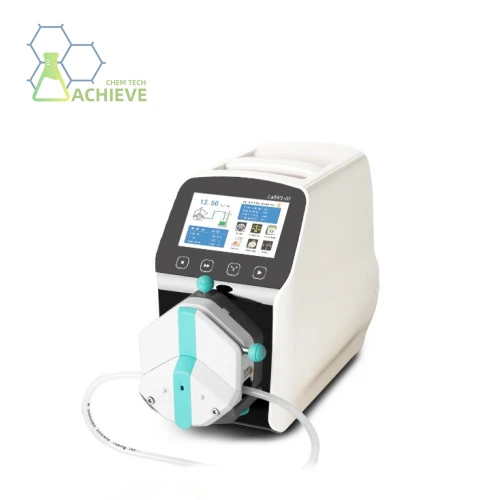

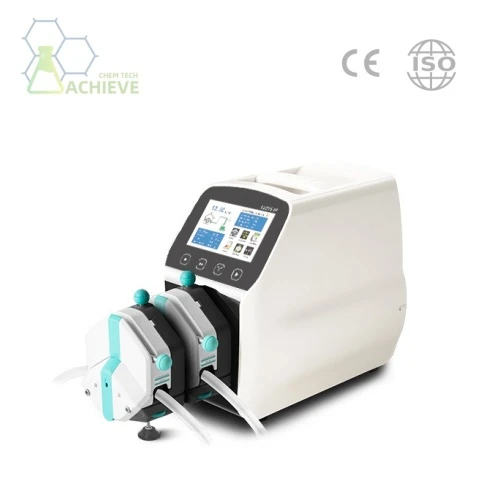

Laboratory Peristaltic Pump
Flow range:0.0053-6000ml/min
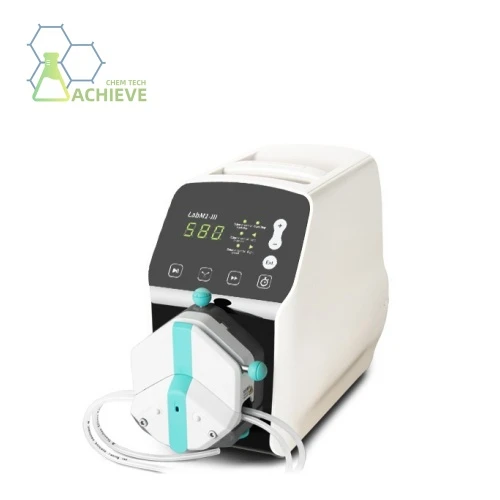
2.Basic peristaltic pump:LabM series
Flow range:0.0053-3100ml/min
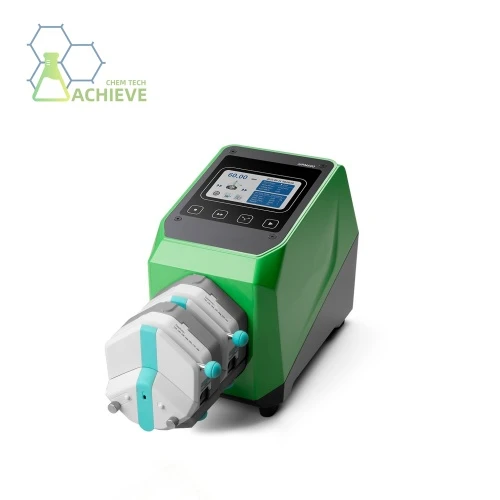
3.Industrial peristaltic pump
Speed range:0.1-600rpm
Description
Technical Parameters
The laboratory peristaltic pump, also known as the peristaltic pump in English, is a crucial device in scientific research and experimental operations. It is specifically designed to accurately control the flow rate of liquids, providing a reliable and efficient solution for liquid delivery in systems such as liquid chromatography and perfusion.
A laboratory peristaltic pump is a fluid delivery device that controls the flow rate of liquids by repeatedly compressing an elastic tube. This compression action propels the fluid within the tube in a specific direction, with the flow rate determined by the diameter of the tube and the speed of compression. Peristaltic pumps are widely used in various scientific and industrial applications due to their precision, reliability, and ease of use.
Working Principle
The working principle of a laboratory peristaltic pump involves the use of rollers or rotors to pinch and compress a flexible tube, known as the pump tube or hose. As the rollers move along the tube, they alternately squeeze and release it, creating a peristaltic wave that pushes the fluid forward. This mechanism ensures that the fluid is transported without direct contact with the pump mechanism, reducing the risk of contamination and wear.
The "pillow" effect is a key aspect of the peristaltic pump's operation. As the rollers compress the tube, a segment of fluid is squeezed into a pillow-like shape between the rollers. The size of this pillow depends on the inner diameter of the tube and the geometric characteristics of the rollers. The flow rate is determined by the product of the pump head's rotational speed, the size of the pillow, and the number of pillows generated per revolution of the rollers.
Parameter

| LabV series Intelligent Type Flow Rate Peristaltic Pump | |
| Flow rate range | 0.0053-775mL/min |
| Speed range | 0.1-150 rpm |
| Speed resolution | 0.01 rpm |
| Flow rate resolution | 0.01mL |
| Flow rate accuracy | <±0.5% |
| Back suction angle | 0-360° |
| Motor type | Closed-loop stepper motor |
| Display | 4.3 inch-industrial grade-True color LCD screen |
| Control method | Touch screen and Mechanical keypad |
| Keypad lifetime | 300,000 times |
| External control signal | 0-5V, 0-10V, 4-20mA for option |
| Start/stop,change direction signa | Passive switch signal, such as:foot pedal switch, Active switch signal: 5V-24V |
| Communication interface | RS232, RS485 support MODBUS protocol(RTU mode) |
| Output interface | Output motor working status (Open- Collector output) |
| Power supply | 220V ±10% 50Hz/60Hz (standard), 110V ±10% 50Hz/60Hz (optional) |
| Drive dimension (LxWxH) | 259x157x237 (LxWxH) |
| Drive Weight | 4.40kg |
| Power consumption | <80W |
| Condition temperature | 0-40℃ |
| Relative humidity | <80% |

| LabV series Intelligent Type Flow Rate Peristaltic Pump | |
| Flow rate range | 0.0053-3100mL/min |
| Speed range | 0.1-600 rpm |
| Speed resolution | 0.01 rpm |
| Flow rate resolution | 0.01mL |
| Flow rate accuracy | <±0.5% |
| Back suction angle | 0-360° |
| Motor type | Closed-loop stepper motor |
| Display | 4.3 inch-industrial grade-True color LCD screen |
| Control method | Touch screen and Mechanical keypad |
| Keypad lifetime | 300,000 times |
| External control signal | 0-5V, 0-10V, 4-20mA for option |
| Start/stop,change direction signa | Passive switch signal, such as:foot pedal switch, Active switch signal: 5V-24V |
| Communication interface | RS232, RS485 support MODBUS protocol(RTU mode) |
| Output interface | Output motor working status (Open- Collector output) |
| Power supply | 220V ±10% 50Hz/60Hz (standard), 110V ±10% 50Hz/60Hz (optional) |
| Drive dimension (LxWxH) | 259x157x237 (LxWxH) |
| Drive Weight | 4.40kg |
| Power consumption | <80W |
| Condition temperature | 0-40℃ |
| Relative humidity | <80% |

| Flow Rate Peristaltic Pump | |
| Flow rate range | 0.0053~3100 mL/min |
| Speed range | 0.1-600 rpm |
| Flow rate accuracy | <±0.5% |
| Speed resolution | 0.1rpm |
| Fixed time dispensing Function | 0.1s~9999h |
| Control method | Mechanical keypad+Rotary encoded switch |
| Display | 3.2" high definition LCD screen |
| Start/stop,direction signal | Passive switch signal, such as foot pedal switch,Active switch signal: 5V-24V |
| External speed control signal | 0-5V,0-10V,4-20mA for option |
| Outputinterface | Output motor working status(Open-Collector output) |
| Power supply | AC 220V±10% 50Hz/60Hz (standard), AC 110V±10% 50Hz/60Hz (optional) |
| Power consumption | <80W |
| Communication interface | RS232, RS485 support MODBUS protocol(RTU mode) |
| Motor type | Closed-loop stepper motor |
| Copy numbers | 1-9999 times, setting '0' means unlimited |
| Drive dimension (LxWxH) | 223x152x199mm |
| Drive weight | 5.06kg |
| Relative humidity | <80% |
| Environment temperature | 0-40℃ |
| Back suction angle | 0-360° |

| Flow Rate Peristaltic Pump | |
| Flow rate range | 0.3~6000 mL/min |
| Speed range | 0.1-600 rpm |
| Flow rate accuracy | <±0.5% |
| Speed resolution | 0.1rpm |
| Fixed time dispensing Function | 0.1s~9999h |
| Control method | Mechanical keypad + Rotary encoded switch |
| Display | 3.2" high definition LCD screen |
| Start/stop,direction signal | Passive switch signal, such as foot pedal switch,Active switch signal: 5V-24V |
| Extemal speed control signal | 0-5V,0-10V,4-20mA for option |
| Output interface | Output motor working status(Open-Collector output) |
| Power supply | AC 220V±10% 50Hz/60Hz (standard), AC 110V±10% 50Hz/60Hz (optional) |
| Power consumption | <180W |
| Communication interface | RS232, RS485 support MODBUS protocol(RTU mode) |
| Motor type | Closed-loop stepper motor |
| Copy numbers | 1-9999 times, setting '0' means unlimited |
| Drive dimension (LxWxH) | 283x192x274mm |
| Drive weight | 7.88kg |
| Relative humidity | <80% |
| Environment temperature | 0-40℃ |
| Back suction angle | 0-360° |

| LabM series Basic Peristaltic Pump | |
| Flow rate range | 0.0053-775mL/min |
| Speed range | 0.1-150rpm |
| Speed resolution | 0.1 rpm |
| Testing time range | 0.5s-999s |
| Outlet pressure | 0.1Mpa (0.8-1.0mm wall thickness tubing) 0.1-0.27Mpa (1.6-2.4mm wall thickness tubing) |
| Back suction angle | 0-360° |
| Display | 3 digital LED |
| Control method | Mechanical keypad |
| Keypad lifetime | 300,000 times |
| External control speed signal | 0-5V, 0-10V, 4-20mA for option |
| Start/stop, direction signal | Passive switch signal, such as foot pedal switch Active switch signal,default 24V |
| Communication interface | RS232/RS485 support MODBUS protocol (RTU mode) |
| Power supply | AC 220V±10%, 50Hz/60Hz ( standard), AC 110V±10%, 50Hz/60Hz (optional) |
| Drive dimension | 323x157x237(LxWxH) |
| Drive weight | 4.40kg |
| Power consumption | <80W |
| Environment temperature | 0-40℃ |
| Relative humidity | <80% |
| IP rate | IP31 |

| LabM series Basic Peristaltic Pump | |
| Flow rate range | 0.0053~3100ml/min |
| Speed range | 0.1-600 rpm |
| Speed resolution | 0.1 rpm when the speed is 0-100rpm, 1rpm when the speedis 100-600rpm |
| Testing time range | 0.5s-999s |
| Motor type | Closed-loop stepper motor |
| Display | 3 digital LED |
| Control method | Mechanical keypad |
| Keypad lifetime | 300,000 times |
| External control speed signal | 0-5V, 0-10V, 4-20mA |
| Start/stop, direction signal | Passive switch signal, such as foot pedal switch; Active switch signal,5V-24V |
| Communication interface | RS232/RS485 support MODBUS protocol (RTU mode) |
| Power supply | AC 220V±10%, 50Hz/60Hz ( standard), AC 110V±10%, 50Hz/60Hz (optional) |
| Drive dimension | 259x157x237(LxWxH) |
| Drive weight | 4.40kg |
| Power consumption | <80W |
| Environment temperature | 0-40℃ |
| Relative humidity | <80% |

| Industrial Peristaltic Pump | |
| Standard | IEC 60529:2013, Q/BSC01-2019 |
| Housing material | Aluminum alloy |
| Speed range | 0.1-600 rpm |
| Speed adjustment resolution | 0.01 rpm |
| Display | 4.3 inch-industrial grade-colorful LCD screen |
| Control modes | Touch screen,mechanical keypad,external control signal control, cornmunication control |
| Working modes | Transferring mode,dispensing mode (Fixed volume,dispensing,speed dispensing) |
| Transferring mode | Continuous operation at set flow rate and speed |
| Dispensing mode | Dispensing: Set volume, time,repeat numbers,pause time |
| Dispensing:set volume,flow rate,repeat numbers,pause time | |
| Speed dispensing: set speed (rpm), time, repeat numbers, pause time | |
| Dispensing volume range | 0.1ml-9999L |
| Dispensing time range | 0.1s-9999h |
| Pause time range | 0.5s-9999h |
| Repeat numbers | 1-9999 times,0 means unlimited times |
| Calibration | Automatic calibration after inputting actual running liquid volume |
| Back suction angle | 0-360° |
| Communication interface | RS485 |
| Communication protocol | Modbus protocol (RTU mode) |
| External control speed signal | 0-5V, 0-10V, 4-20mA(for option) |
| Edternal control signal input | Active switch signal (5-24V) controls start/stop, direction; Passive switch signal controls start/stop |
| Signal output | Open collector output operation status;4-20mA output |
| Open cover to stop pump function | Prevent misoperation and effectively protect user safety |
| Three levels of permissions | Reasonable configuration of operation permissions |
| Drive dimension | 274mm*160mm*221mm (L*W*H) |
| Power supply | AC110-220V, 50/60Hz |
| Rated power | 110W |
| Working environment | 0-40℃ |
| Drive weight | 6.2kg |
| Relative humidity | <90% |
| Protection level | IP66 |
Components of a Laboratory Peristaltic Pump
A typical laboratory peristaltic pump system consists of three main components: the pump driver, the pump head, and the pump tube.
◆ Pump Driver: The pump driver is the power source and control unit of the peristaltic pump. It provides the necessary torque to rotate the rollers and adjust the speed of the pump head. The driver may also include features such as speed control, direction reversal, and flow rate monitoring.
◆ Pump Head: The pump head is the mechanical assembly that houses the rollers and interacts with the pump tube. It is designed to withstand the repeated compression and release cycles, ensuring long-term durability and performance. Pump heads may come in various configurations, including single-channel, multi-channel, and disposable designs.
◆ Pump Tube: The pump tube is the flexible hose that contains the fluid being pumped. It must be compatible with the fluid being handled and capable of withstanding the compression forces applied by the rollers. Pump tubes are available in a range of sizes and materials, allowing for flexibility in flow rate and fluid compatibility.
Technical Specifications and Features
Laboratory peristaltic pumps come with a variety of technical specifications and features that cater to different experimental needs. Some key parameters to consider include:
|
◆ Flow Rate Range: The flow rate range specifies the minimum and maximum flow rates achievable with the pump. This range is determined by the pump head's rotational speed, the size of the pump tube, and the number of rollers.
◆ Speed Control: The ability to adjust the pump head's rotational speed allows for precise control over the flow rate. Speed control can be manual or electronic, with some pumps offering a wide range of adjustable speeds.
◆ Directional Control: Many laboratory peristaltic pumps can be configured to pump fluid in either direction. This feature is useful for applications that require reversible flow or for cleaning and maintenance purposes.
◆ Display and Controls: Modern peristaltic pumps often feature advanced display panels and control interfaces, such as true-color LCD screens and touchscreen operations. These features make it easier to monitor and adjust pump settings, as well as to view flow rate and other critical parameters. |
|
|
|
◆ Memory Function: Some pumps come with a memory function that stores settings and flow rates even when power is lost. This feature ensures that the pump can resume operation with the same settings after a power outage.
◆ Power Requirements: The power requirements of a laboratory peristaltic pump depend on its size and capabilities. Most pumps operate on standard AC power supplies, with some models offering optional voltages and frequencies to suit international requirements.
◆ External Control Interfaces: Many pumps come with external control interfaces, such as RS485 communication ports and support for MODBUS protocols. These interfaces allow for integration with other laboratory equipment and software, enabling automated and remote control of the pump. |


Operational Considerations
When operating a laboratory peristaltic pump, several factors must be considered to ensure optimal performance and accuracy:
|
◆ Tube Selection: Choosing the right pump tube is crucial for achieving the desired flow rate and maintaining pump performance. Factors to consider include tube material, inner diameter, wall thickness, and compatibility with the fluid being pumped. ◆ Pump Head Alignment: Proper alignment of the pump head and rollers ensures that the pump tube is compressed uniformly, reducing wear and tear and improving flow rate accuracy. ◆ Regular Maintenance: Regular maintenance, such as cleaning the pump head and rollers, replacing worn-out pump tubes, and checking for leaks, is essential for maintaining pump performance and extending its lifespan. ◆ Flow Rate Calibration: Periodic calibration of the pump's flow rate is necessary to ensure accuracy and reproducibility of experimental results. Calibration can be performed using standard fluids and flow meters. ◆ Safety Precautions: Operating a laboratory peristaltic pump involves handling potentially hazardous fluids and electrical equipment. Always follow safety protocols, such as wearing protective gear, using appropriate containers for fluid storage, and ensuring proper grounding of electrical equipment. |
|

Conclusion
The laboratory peristaltic pump is an indispensable tool for precise liquid handling in scientific research and experimental operations. Its unique working principle, combined with a range of technical specifications and features, makes it suitable for a wide variety of applications. By understanding the components, operating principles, and operational considerations of this versatile device, researchers can harness its capabilities to enhance the precision, reproducibility, and efficiency of their experiments. Whether used in liquid chromatography, perfusion systems, pharmaceutical research, biotechnology, or environmental monitoring, the laboratory peristaltic pump stands as a testament to the power of precision engineering in advancing scientific discovery.
Hot Tags: laboratory peristaltic pump, China laboratory peristaltic pump manufacturers, suppliers, factory, Hydrothermal Synthesis Reactor, 10l Rotovap, Rotary Evaporators, Stainless Steel Pressure Reactor, Molecular Distillation Equipment, 1l Short Path Distillation Kit
Previous
Peristaltic Pump 500ml MinNext
Glove Box ArgonSend Inquiry


