



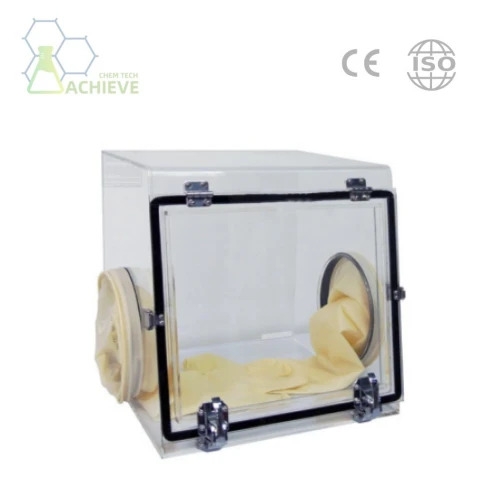

Germfree Glove Box
1)Acrylic Type A glove box: No sample transfer window, must be take it out from the door.
2)Acrylic Type B glove box:There is a sample transfer window, which can protect the gas environment inside the box from being damaged by the outside world.
3)Acrylic Type B glove box:The air in the box can be extracted through the vacuum pump, and then through the high purity dry inert gas into the box, and reach the lower water oxygen content in the box
2.Customization:
1)Single, double, multiple people and other different station boxes.
2)Different shapes, different structures, different applications, different thickness customization options.
3)Doors of different sizes can be opened on any side of the box to facilitate the entry and exit of equipment and accessories.
4)For other optional configurations, contact sales personnel.
***Price List for whole above, inquire us to get
Description
Technical Parameters
Germfree Glove Box, also known as biosafety cabinet, is used in the field of microbiology and biotechnology one-way protection equipment, it is mainly composed of work area, neutral zone and negative pressure zone three parts, in the field of microbiology and biotechnology has a wide range of application prospects. The working principle is to use a fan to draw air from the neutral and negative pressure zones, filter out particles such as microorganisms or dust in the air, and then isolate the air flowing through the work zone from the outside air through the HEPA filter. At the same time, the internal walls, countertops, gloves and other components of the sterile glove box need to be disinfected to ensure sterile operation. Sterile glove boxes are usually sterilized with UV lamps and air filters.
When performing various operations through this device, be careful to move gently to avoid damaging the gloves and the equipment inside the box. Avoid introducing excessive moisture, oxygen or other impurities. If reagents or materials need to be added, they should first be processed in the transition chamber and then moved into the glove box. If heating, cooling or other operations that require energy supply are needed, make sure the corresponding equipment is properly connected and operate in accordance with the equipment's user manual.
Specifications


Main use
Aseptic operation
The core function of a aseptic glove box is to provide a sterile environment in which the operator can perform aseptic operations. This includes, but is not limited to, inoculation of microorganisms, culture of cells, preparation of sterile media, preparation of sterile solutions, handling of sterile materials, transfer of sterile samples, etc.
Sample protection
A sterile glove box protects samples from external contamination, which is essential for experiments and preparation processes that require high purity or sterile conditions. For example, in the fields of biopharmaceutical, biotechnology, microbiology, cell biology, etc., sterile glove boxes can be used to prepare sterile drugs, sterile media, sterile cell suspensions, etc.
Prevent cross contamination
When handling many different samples, the sterile glove box prevents cross contamination between different samples. This is especially important for experiments that require handling many different microbes or cells at the same time.
Protecting the operator
The sterile glove box also protects the operator from harmful microorganisms or chemicals to a certain extent. For example, a sterile glove box can act as a safety barrier when handling certain potentially dangerous microorganisms or toxic chemicals.
Long time operation
The inside of the sterile glove box is usually equipped with accessories such as lighting, ventilation and gloves to facilitate the operator to carry out long time sterile operation. This is useful for experimental processes that require constant observation and adjustment.
Special experimental requirements
The sterile glove box can also be customized according to the experimental requirements to meet the requirements of specific experimental conditions. For example, it can be equipped with constant temperature control system, humidity control system, gas control system, etc., to meet the special requirements of different experiments on the environment.
Cell culture
Function of Germfree glove box in cell culture

Provide a sterile environment
The sterile glove box, through its closed chamber and efficient filtration system, can effectively isolate external microbial contamination and provide an almost sterile operating environment for cell culture. This is essential to protect cell lines, avoid cross-contamination, and ensure the accuracy of experimental results.
Adjust environmental parameters
The sterile glove box is equipped with a precision control system that can accurately adjust environmental parameters such as temperature, humidity, and gas composition to meet the needs of different cell growth. For example, in cell culture experiments, the sterile glove box can control the temperature at about 37 ° C and maintain the humidity at about 95% relative humidity, providing the best environmental conditions for cell growth and reproduction.

The application in cell culture
Cell inoculation and passage
In the sterile glove box, the operator can carry out cell inoculation and passage operation through the glove, avoiding the pollution of the external environment on the cell. This helps maintain the purity and stability of the cell line and improves the success rate of cell culture.
Cell Culture and observation: The sterile glove box provides cells with a stable, controlled culture environment in which they can be cultured and observed for a long time. This helps researchers understand the growth characteristics of cells, their metabolism and their response to external stimuli.
Cell Therapy and regenerative medicine
Sterile glove boxes also play an important role in the field of cell therapy and regenerative medicine. For example, in stem cell culture, sterile glove boxes can provide a low-oxygen or no-oxygen environment that mimics physiological conditions in the body and promotes the proliferation and differentiation of stem cells. This is of great significance for the research of stem cell therapy, tissue engineering and other frontier fields.
Procedure of use
Preparatory phase
Ensure that the sterile glove box has been properly sterilized and is in a clean condition.
Prepare the reagents, media, petri dishes, etc. needed for cell culture and make sure they are all sterile.
Wear aseptic clothing, gloves, masks and other personal protective equipment.
Enter the sterile glove box
Enter the box through the glove mouth of the sterile glove box, and keep the integrity of the glove to avoid damage.
Use aseptic handling techniques, such as the use of aseptic holding pliers, to transfer the required items from the outside of the box to the inside.
Cell culture operation
Following the usual steps of cell culture, such as cell inoculation, culture medium change, etc.
Pay attention to keep the operating area clean to avoid cross contamination.
During the operation, always pay attention to the integrity of the gloves, once found damaged, should be replaced immediately.
End operation
After completing the cell culture operation, dispose of the used items properly, e.g. dispose of them in designated medical waste containers.
Clean and disinfect the sterile glove box as necessary for next use.
Gene editing
Gene editing refers to a group of technologies that enable scientists to modify an organism's DNA with precision. One of the most well-known tools for gene editing is CRISPR-Cas9, which has revolutionized the field due to its simplicity, efficiency, and versatility. CRISPR allows researchers to target specific sequences in the genome and make changes, such as deleting, inserting, or replacing DNA segments.
This technology has vast potential applications, including in medicine, agriculture, and basic research. In medicine, gene editing holds promise for treating genetic disorders by correcting faulty genes responsible for diseases like cystic fibrosis or sickle cell anemia. It could also be used to develop new cancer therapies by enhancing the immune system's ability to target tumor cells.
In agriculture, gene editing can help create crops with improved yields, enhanced nutritional value, and greater resistance to pests and environmental stresses. Additionally, it can be used to develop disease-resistant livestock, contributing to food security.
Despite its potential, gene editing raises ethical concerns, particularly regarding the modification of human embryos and the possibility of creating "designer babies." Regulatory frameworks are being developed to ensure that these technologies are used responsibly and ethically. Overall, gene editing represents a powerful tool with the potential to significantly impact various aspects of life, provided it is applied with caution and consideration.
Applications in gene editing

Provide a sterile environment
The sterile glove box, through its closed chamber and efficient filtration system, can effectively isolate external microbial contamination, providing a near-sterile working environment for gene editing experiments. This is essential to prevent experimental failures due to contamination during the gene editing process.

Protect samples
During the gene editing process, samples (such as cells, tissues, or embryos) are extremely vulnerable to external contamination. The sterile glove box protects these samples from contamination, ensuring the accuracy and reliability of the experiment.

Precise control of environmental factors
The sterile glove box is usually equipped with a control system that can precisely adjust environmental factors such as temperature, humidity, and light to meet the needs of different gene editing experiments.
Steps for gene editing
Preparation stage
Ensure that the sterile glove box has been properly sterilized and is in a clean condition. Prepare the reagents, tools, samples, etc. needed for gene editing and make sure they are all sterile.
Enter the sterile glove box
Enter the box through the glove mouth of the sterile glove box. Keep the integrity of the glove to avoid damage. Use aseptic handling techniques to transfer required items from the outside of the box to the inside.
Gene editing operation
In the sterile glove box, follow the usual steps of gene editing, such as cell culture, gene introduction, screening, etc. Pay attention to keep the operating area clean to avoid cross contamination.
End the operation
After completing the gene editing operation, dispose of the used items properly, such as discarding them into the designated medical waste container. Clean and disinfect the sterile glove box as necessary for next use.
A germfree glove box, also known as a sterile or aseptic glove box, is a sealed enclosure designed to provide a contaminant-free environment for handling sensitive materials. This specialized equipment is essential in various scientific, pharmaceutical, and industrial settings where maintaining sterility or preventing contamination is critical.
The primary function is to protect samples or processes from external contaminants such as dust, microorganisms, and particulate matter. It achieves this through a combination of high-efficiency particulate air (HEPA) filters and a controlled atmosphere. The box is typically made of transparent materials like acrylic or glass, allowing operators to observe procedures while wearing gloves attached to the box's ports. These gloves enable manipulation of contents without direct contact, thus preserving the sterile conditions inside.
In scientific research, they are indispensable for experiments involving cell cultures, tissue engineering, and microbiological studies. They ensure that samples remain uncontaminated, which is crucial for obtaining accurate and reliable results. In the pharmaceutical industry, these glove boxes are used for the formulation and testing of sterile drugs, ensuring product safety and efficacy.
Moreover, they are utilized in semiconductor manufacturing and nanotechnology, where even minute particles can cause defects in microchips and nanomaterials. By maintaining an ultra-clean environment, these boxes contribute to the production of high-quality electronic components and advanced materials.
The operation of a germfree glove box requires adherence to strict protocols to maintain its sterile conditions. This includes regular decontamination, proper gowning procedures for operators, and continuous monitoring of environmental parameters such as humidity and oxygen levels.
Hot Tags: germfree glove box, China germfree glove box manufacturers, suppliers, factory, Rotary Evaporator Distillation, 50L Jacketed Reactor, 20 Liter Rotary Evaporator, Hydrothermal Autoclave, 50l Rotary Evaporator, SS Reactor
Previous
Small Glove BoxNext
Isolation Glove BoxSend Inquiry


