



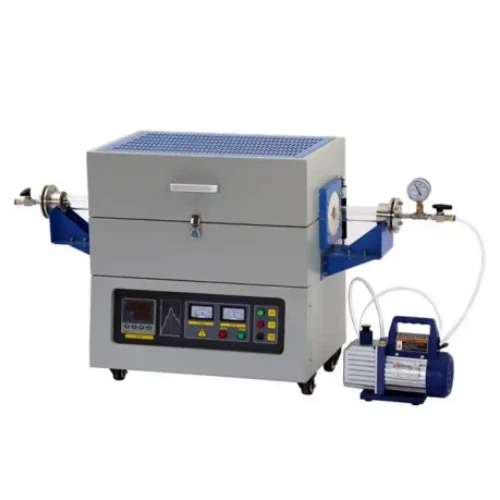
Rotary Tube Furnace
2.Lab Box Furnace Equipment:1L-36L
3.Working Temperature can reach 1200℃-1700℃
***Price List for whole above, inquire us to get
Description
Technical Parameters
Rotary tube furnaces are mainly composed of a furnace body, a heating element, a rotating system, a temperature control system and an atmosphere control system. The furnace body is usually made of high-temperature-resistant material with a rotatable tube inside for placing the samples to be treated. Heating elements are located around or inside the furnace body and transfer heat to the tube and the sample inside it by radiation and convection. The rotating system ensures that the sample is heated uniformly during the heating process by means of a motor-driven tube rotation. The temperature control system is used to accurately control the temperature inside the furnace to meet the needs of different experiments or production. The Atmosphere Control System is used to regulate the atmosphere inside the furnace, such as the introduction of inert gases, reducing gases, etc., in order to protect the samples or to promote specific chemical reactions.
Parameter
| Lab Tubu Furnace Equipment | ||||
| Specification | Working Temperature | Outer diameter of furnace tube(mm) | Number of heating zones | Length of heating zone(mm) |
| TFH:Desktop Type | 1200:1200℃ | 25:Φ25mm | Single Temperature Zone | 150:150mm |
| TFV:Vertical Type | 1500:1500℃ | 30:Φ30mm | Double Temperature Zone | 220:220mm |
| TFR:Rotary Type | 1700:1700℃ | 50:Φ50mm | Three Temperature Zone | 290:290mm |
| TFM:Multi-station Type | 60:Φ60mm | 440:440mm | ||
| TFP:High Pressure Type | 80:Φ80mm | |||
| TFC: CVD | 100:Φ100mm | |||
| TFE: PECVD | ||||
| TFG:Atmosphere Fired Type | ||||
| TFD:Customized | ||||
| Lab Box Furnace Equipment | ||
| Specification | Working Temperature | Volume(L) |
| BFC:General type | 1200:1200℃ | 1:1L |
| BFV:Vacuum Type | 1500:1500℃ | 3.4:3.4L |
| BFW:Visible type | 1700:1700℃ | 4.5:4.5L |
| BFD:Customized | 7.2:7.2L | |
| 12:12L | ||
| 16:16L | ||
| 18:18L | ||
| 36:36L | ||
Design and Construction
|
|
|
|
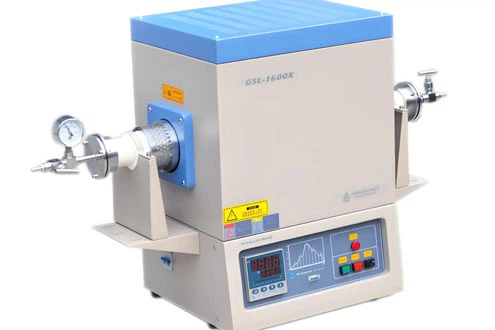
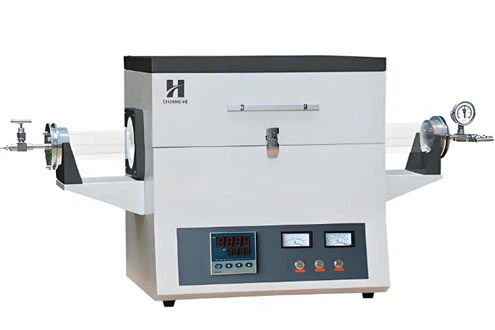
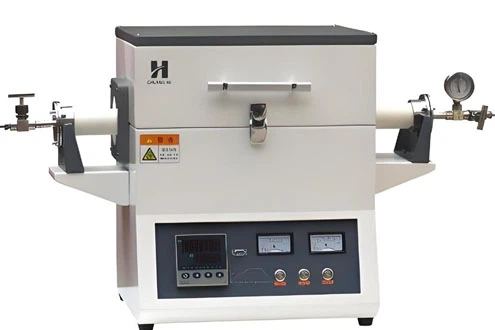
Rotary system to ensure the rotary accuracy and stability of the furnace tube is mainly through the following aspects of the design and measures to achieve:
► Precision Transmission Device
High-quality transmission components:
High-precision, wear-resistant transmission components, such as precision gears, high-quality bearings, etc., are used to ensure the accuracy and stability of the transmission process.
These components need to be strictly screened and tested to ensure that they meet the requirements of the rotating system.
Reasonable transmission ratio:
According to the size and weight of the furnace tube and the required rotation speed, the transmission ratio is reasonably designed to ensure that the motor can drive the furnace tube to rotate stably and efficiently.
► Precise Control System
Speed controller:
Adopt advanced speed controller, such as frequency converter, to precisely control the speed of the motor.
By adjusting the parameters of the controller, the precise adjustment of the rotational speed of the furnace tube can be realized, so as to meet the needs of the experiment or production.
Feedback mechanism:
Feedback mechanisms, such as encoders or sensors, are introduced into the rotating system to monitor the rotational speed and position of the furnace tube in real time.
By comparing the real-time monitored data with the set value, the control system can automatically adjust the motor speed to eliminate errors and ensure the rotational accuracy of the furnace tube.
► Stable Support Structure and Effective Safety Protection
High-strength support parts:
The supporting parts of the furnace tube (such as bearing seat, flange, etc.) are made of high-strength and corrosion-resistant materials to ensure that they can withstand various forces and moments generated during the rotation of the furnace tube.
01
Reasonable layout:
The layout of the supporting parts should be reasonable to ensure that the furnace tube can maintain balance and stability during rotation.
At the same time, friction and wear between the supporting parts and the furnace tube should be avoided to reduce the impact on the rotational accuracy and stability.
02
Protective cover:
Install guards at key parts of the rotating system to prevent operators from accidentally touching the rotating parts and causing accidental injuries.
The shield should be made of transparent material so that the operator can clearly observe the rotation of the furnace tube.
03
Emergency stop button:
Provide an emergency stop button near the rotating system to immediately stop the rotating system in case of emergency.
The emergency stop button should be visible, easy to operate and ensure a quick response in case of emergency.
04
Research in Drug Synthesis
|
|
|
|
|

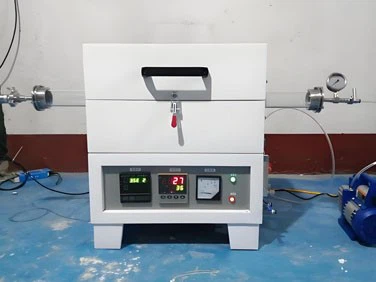
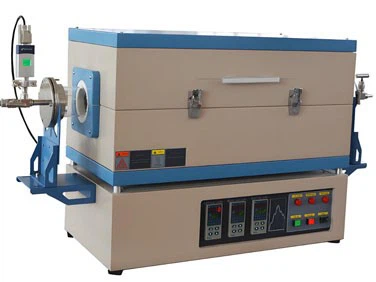

Precise control of reaction conditions:
They provide precise temperature control and reaction time control, which is critical for chemical reactions that require a high degree of control during drug synthesis. By adjusting the temperature of the heated zones, optimal conditions for different reaction segments can be achieved, resulting in improved reaction efficiency and selectivity.
01
Continuous and customized production:
They are suitable for continuous process production, which reduces intermediate steps and wasted resources, and improves product consistency and productivity. In addition, by adjusting reaction conditions and processing parameters, they can also enable customized production of different drugs to meet specific patient or market needs.
02
Processing highly active compounds:
In drug synthesis, some pharmaceutical ingredients have highly active or volatile properties. It enable reactions to be carried out in a small area, minimizing the loss of active ingredients and allowing for efficient material transfer and control to ensure the quality of the drug.
03
Sustainability and safety:
Rotary tube furnaces are designed to better meet environmental and safety requirements. By designing effective waste disposal systems and control of reaction conditions, the environmental impact can be minimized while increasing operator safety.
04
Specific Application Examples
Catalyst synthesis and regeneration:
The use of catalysts in drug synthesis processes can improve reaction rates and selectivity. It can be used for catalyst synthesis and regeneration processes to improve catalyst activity and lifetime by precisely controlling parameters such as temperature and atmosphere.
Synthesis of drug intermediates:
Drug intermediates are the key raw materials in the process of drug synthesis. It can be used to synthesize various drug intermediates, such as through high temperature sintering or heat treatment and other processes to improve the purity and stability of the intermediates.
Control of drug crystal shape:
The crystalline form of a drug has an important impact on its solubility and bioavailability. It can achieve precise control of drug crystal shape through precise control of temperature and cooling rate and other conditions, so as to optimize the physical and chemical properties of drugs.
Drug purification and separation:
In the later stages of drug synthesis, purification and separation of the drug is required to remove impurities. It can be used in some specific purification process, such as through high-temperature heat treatment or chemical reaction methods to remove impurities and by-products in the drug.
In summary, the device has wide application prospect and important research value in the field of drug synthesis. Through precise control of reaction conditions, continuous and customized production is achieved, and highly active compounds are processed to provide efficient, reliable and safe solutions for drug synthesis.
Application analysis of catalyst
Application in catalyst synthesis
Synthetic environment
The device provides a stable high temperature environment, which is necessary for catalyst synthesis. At high temperature, raw materials can be decomposed, compounded and other chemical reactions to form catalysts with specific structures and properties. In addition, its heating elements are usually made of high-temperature materials such as resistance wires and silicon carbon rods, which can withstand long-term work at high temperatures to ensure the smooth progress of catalyst synthesis.
Atmosphere control
The atmosphere is one of the key factors affecting the synthesis quality of catalyst. The equipment is equipped with an atmosphere control system, which can adjust the atmosphere in the furnace according to the needs of catalyst synthesis. For example, in the synthesis of some metal oxide catalysts, oxygen is needed to promote the oxidation reaction of the raw material; In the synthesis of some sulfide catalysts, gases such as hydrogen sulfide are required. Through the precise control of the atmosphere type and concentration, the synthesis conditions of the catalyst can be optimized and the quality and performance of the catalyst can be improved.
Uniform heating
Its rotating design enables the catalyst to be heated evenly in the furnace tube. This helps to reduce the temperature gradient, improve heating efficiency, and ensure uniform synthesis of the catalyst. In the process of catalyst synthesis, the uneven temperature distribution may lead to the difference of catalyst structure and performance, thus affecting its catalytic effect. The uniform heating characteristics of the device can avoid this problem and ensure the consistency of catalyst quality and performance.
Application in catalyst treatment
Roasting and activation
Roasting is one of the important steps in the process of catalyst treatment. The impurities, moisture and organic matter in the catalyst can be removed by roasting, and the purity and stability of the catalyst can be improved. At the same time, roasting can also improve the pore structure and specific surface area of the catalyst, increase its active site, and thus improve the catalytic activity. The high temperature uniform heating characteristic of the equipment makes the catalyst uniformly heated during the roasting process, avoiding the occurrence of local overheating or undertemperature. In addition, by precisely controlling the calcination temperature and time, the calcination effect of the catalyst can be further optimized.
Activation is another important step in catalyst treatment. In some catalysts, activation treatment is required to release the active site or improve its catalytic performance. It can provide suitable temperature and atmosphere conditions to promote the activation process of the catalyst. For example, when synthesizing certain precious metal catalysts, they need to be reduced to an active state by reduction treatment. The high-temperature reduction atmosphere of the device can reduce precious metal ions to precious metal atoms, thereby increasing the activity of the catalyst.
Regenerative treatment
The catalyst may be deactivated during use due to carbon accumulation, poisoning and other reasons. Regeneration treatment is one of the important means to restore catalyst activity. The rotary tube furnace can be used for the regeneration treatment of the catalyst, and the carbon accumulation and impurities on the surface of the catalyst can be removed by high-temperature treatment, and the catalytic activity can be restored. This method not only improves the utilization rate of catalyst, but also reduces the production cost. At the same time, the high temperature environment of the equipment can also promote the reconstruction and regeneration of the catalyst surface, and further improve its catalytic performance.
Application in catalyst performance evaluation
Temperature control
The equipment provides precise temperature control, which is crucial for the evaluation of catalyst performance. By testing the performance of the catalyst at different temperatures, the change of its activity with temperature can be understood. This helps to determine the optimum operating temperature range of the catalyst and provides guidance for the practical application of the catalyst.
Atmosphere simulation
By adjusting the atmosphere in the rotary tube furnace, the working environment of the catalyst in practical application can be simulated. This helps to more accurately evaluate the performance of the catalyst and provides a basis for its optimization and improvement. For example, when evaluating some gas catalysts, it is necessary to pass the corresponding gas to simulate their operating environment; When evaluating some liquid catalysts, the liquid sample needs to be heated in a rotating tube furnace.
Continuous test
The continuous feed and feed function of the furnace make the performance evaluation of the catalyst more efficient. Through continuous testing of different batches of catalysts, catalysts with superior performance can be selected more quickly. This will help accelerate the development process of catalysts and provide strong support for their industrial applications.
Summary and outlook
The equipment plays an important role in the application of catalysts, which cannot be separated from the synthesis, treatment and performance evaluation of catalysts. Its high temperature uniform heating characteristics and precise temperature control ability provide a strong guarantee for the synthesis of the catalyst. At the same time, the atmosphere control system and continuous feed feed function make the treatment and performance evaluation of the catalyst more efficient and accurate. With the continuous progress of science and technology and the continuous development of the catalyst field, it will play an increasingly important role in the application of catalysts. In the future, we can expect more innovative rotary furnace technologies to emerge, providing more efficient, convenient and intelligent support for catalyst development and application.
Conclusion
Rotary tube furnaces are valuable pieces of thermal processing equipment that offer numerous advantages in terms of uniform heat treatment, high throughput, good mixing, versatility, and energy efficiency. While they face some challenges, such as mechanical wear, sealing issues, temperature gradients, and high initial investment, ongoing research and development are addressing these issues and driving the evolution of rotary tube furnaces. With the integration of advanced materials, process optimization techniques, and renewable energy sources, rotary tube furnaces are expected to play an even more important role in various industries in the future, contributing to the development of high - quality products and sustainable manufacturing processes.
Hot Tags: rotary tube furnace, China rotary tube furnace manufacturers, suppliers, factory, SS Reactor Manufacturer, High Pressure Hydrogenation Reactor, 50L Jacketed Reactor, High Pressure Stirred Lab Autoclaves, Molecular Distillation Unit, Teflon Lined Autoclave
Previous
High Temperature Tube FurnaceNext
Split Tube FurnaceSend Inquiry


