


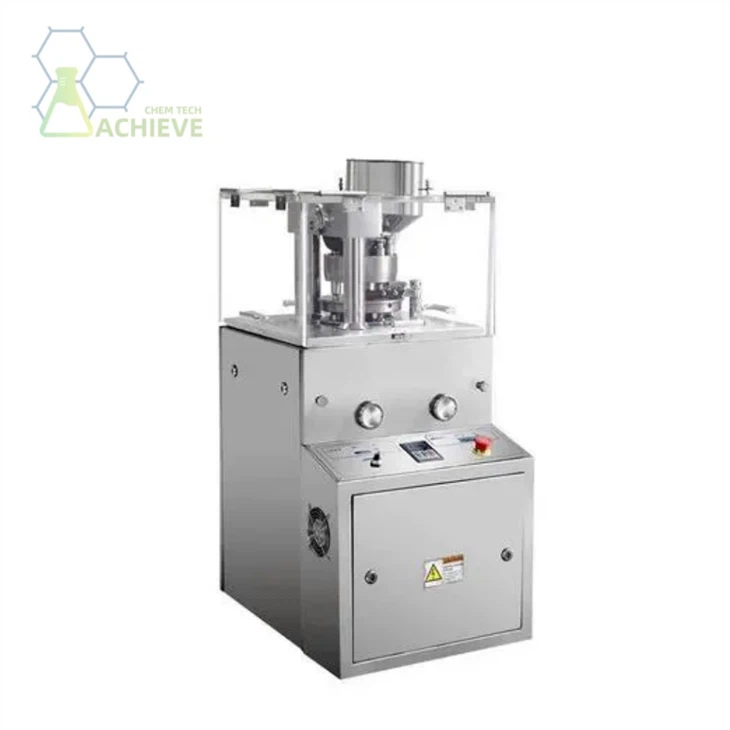


Mini Tablet Press Machine
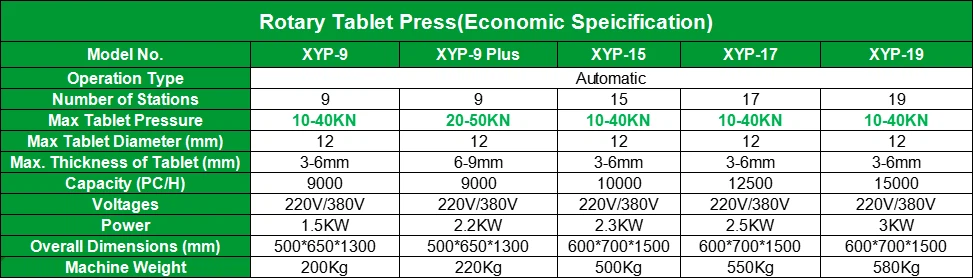
(1)Number of Stations: 5/7/9/12/19
(2)Production Capacity: 9000/12600/16200/17000/40000(PC/H)
***Price List for whole above, inquire us to get
2. Customization:
(1)Design support
(2)Directly supply the Senior R&D organic intermediate, shorten your R&D time and cost.
(3)Share the advanced purifying technology with you
(4)Supply the high quality chemicals and analysis reagent
(5)We want to assist you on Chemical Engineering (Auto CAD, Aspen plus etc.)
3. Assurance:
(1)CE and ISO certification Registered
(2)Trademark: ACHIEVE CHEM(since 2008)
(3)Replacement parts within 1-year for free
Description
Technical Parameters
A Mini Tablet Press Machine, also known as a small-scale tablet press, is a type of machinery that utilizes compression to transform raw materials into solid tablets. They are designed to be space-saving, allowing them to fit easily into laboratories, pharmacies, or small-scale production facilities. Its small size, adjustability, and ease of operation make it an ideal choice for small-scale production, R&D, and educational purposes.
The main technical parameters of small tablet press may vary according to different models and brands. In the selection of small tablet press, it is recommended to carefully compare the parameters and performance of different models and brands according to actual needs and production requirements to ensure that the most suitable equipment is selected.
Specifications Table
 |
 |

Differences & Advantages
Mini tablet press machine, also known as a mini press tablet machine, is a specialized equipment that differs from other larger and more complex press tablet machines in several key aspects, including size, functionality, and intended applications. Here's a detailed comparison and an outline of its advantages over other models:
Differences
- Mini: These machines are designed for desktop use, featuring a small footprint and lightweight construction, making them easily movable and suitable for laboratories, research institutions, and small-scale production environments.
- Other models: Larger press tablet machines, such as high-speed rotary presses or dual-station presses, occupy more space and are less portable, making them better suited for industrial-scale production lines.
- Mini: Typically has a lower production capacity and slower pressing speed compared to larger models. For instance, some mini tablet presses have a capacity of around 3500 pieces per hour (as per a recent listing), making them ideal for trial production, research, and development.
- Other models: High-speed rotary presses can achieve significantly higher production rates, sometimes exceeding tens of thousands of tablets per hour, making them the choice for large-scale manufacturing.
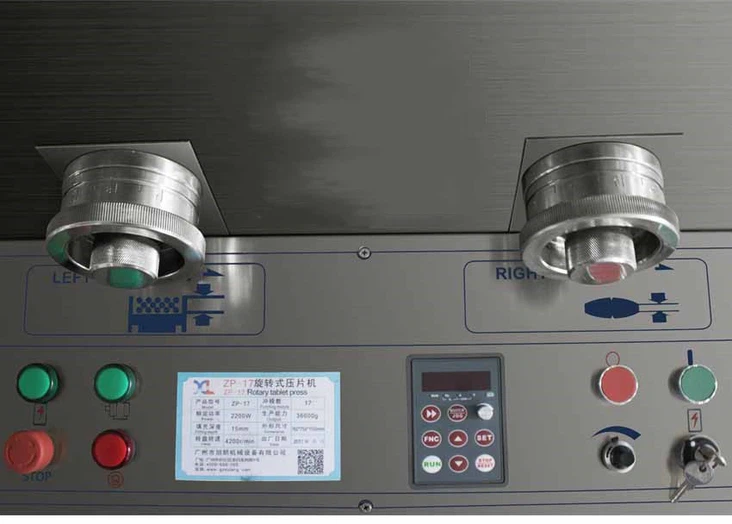
- Mini: Offers flexibility in terms of customization, including adjustable filling depth and tablet thickness, as well as the ability to accommodate various shapes of molds according to customer requirements. This allows for precise control over the tablet-making process.
- Other models: While also customizable, larger machines often require more specialized tools and expertise for extensive customization.
- Mini: Generally, mini tablet presses are more affordable than larger models, making them accessible to smaller operations, research institutions, and individuals. Additionally, their simplicity translates to easier maintenance and lower operational costs.
- Other models: Larger presses, especially those with advanced features, can be significantly more expensive and require specialized training and maintenance procedures.
 |
 |
 |
Advantages
Versatility
Mini tablet presses can press a wide range of materials into tablets, including powders, granules, and even some viscous materials. They are suitable for making various types of tablets, such as pharmaceutical, nutraceutical, food, and cosmetic tablets.
Easy Operation and Maintenance
Due to their compact design and simplified controls, mini tablet presses are relatively easy to operate and maintain. This makes them ideal for use in educational settings, research laboratories, and small-scale production facilities.
Cost-Effectiveness
For low-volume production and research purposes, mini tablet presses offer a cost-effective solution. They allow for quick and efficient trial production of tablets without the need for investing in expensive, large-scale equipment.
Portability and Space-Saving
The small size and lightweight design of mini tablet presses make them easy to transport and store. This is particularly advantageous for researchers and educators who need to move their equipment between different locations or share it among multiple users.
How to prevent mold wear and tear
Preventing die wear of mini tablet press machine is the key to ensure stable operation of tablet press and improve production efficiency. The following are some effective measures to prevent small tablet press mold wear:
Choose the right mold material
High hardness and wear resistance materials: Choose materials with high hardness and good wear resistance, such as cemented carbide, high-speed steel, etc., which can better resist the impact and wear of particles.
Thermal stability and corrosion resistance: Consider the thermal stability and corrosion resistance of the material to ensure that the mold can maintain stable performance in high temperature, high humidity or corrosive environment.
Optimize the production process
Particle pretreatment: Pretreatment of the tablet material, such as screening, drying, etc., to ensure that the particle size distribution is uniform, the shape is regular, and the humidity is moderate, so as to reduce the impact and wear on the mold.
Reasonable setting of process parameters: According to the material characteristics and product requirements, reasonable setting of the press pressure and speed and other process parameters. Avoid excessive pressure and excessive speed to reduce the impact and wear of the mold.
Standardize operation and maintenance
Standard operation: The operator should be familiar with the operating procedures of the tablet press and the requirements for the use of the mold, and operate in accordance with the specifications. Avoid rough handling or overloaded use of molds to reduce unnecessary wear.
Regular cleaning: Clean the mold surface regularly to remove particles and impurities attached to the surface. Keeping the mold clean and smooth helps to reduce wear and improve sheet quality.
Lubrication and inspection: Regular lubrication of the mold, the use of appropriate lubricants can reduce friction and wear. At the same time, regularly check the wear of the mold, timely find and deal with wear and damage problems.
Improve the working environment
Control temperature and humidity: keep the temperature and humidity of the working environment of the tablet press appropriate to avoid excessive or too low temperature and humidity on the mold.
Reduce corrosive gases: If corrosive gases exist in the working environment, effective measures should be taken to isolate and purify them to reduce corrosion and damage to the mold.
Establish regular maintenance and replacement system
Regular inspection: Regular comprehensive inspection of the tablet press and mold, including mold wear, equipment operating status, etc.
Timely replacement: Timely replacement or repair of molds with serious wear to avoid increasing wear affecting the quality of sheet and production efficiency.
Maintenance: Carry out comprehensive maintenance and maintenance of the equipment, including cleaning, lubrication, fastening, etc., to ensure that the equipment is in good working condition.
Improve the quality of operators
Training and education: Regular training and education of operators to improve their professional skills and operational levels.
Safety awareness: enhance the safety awareness of operators, so that they understand the harm of mold wear and preventive measures.
To sum up, the prevention of mold wear of small tablet presses needs to start from many aspects such as material selection, production process optimization, correct use and maintenance, standardized operation and maintenance, improving the working environment and improving the quality of operators. Through comprehensive policies, the durability of the mold and the production efficiency of the tablet press can be significantly improved.
How to complete sample preparation
Sample preparation
Sample selection and pretreatment:
Select the appropriate sample material, such as powder, particle or mixture, according to the experimental requirements.
The sample is pre-treated, such as grinding, screening or drying, to ensure that the sample uniformity and particle size meet the requirements of the tablet.
Weigh the sample:
Use an accurate weighing tool, such as an electronic balance, to weigh the required amount of sample. Weighing is usually based on the specifications of the tablet press and experimental requirements.
Setting of tablet parameters
Pressure setting
Adjust the pressure parameters of the tablet press according to the characteristics of the sample and the required tablet hardness. The amount of pressure directly affects the density and hardness of the tablet.
Time setting
Set the time required for the tablet press to press the sample to ensure that the sample is fully pressed in the mold.
Temperature control (if applicable)
For some samples that are heat sensitive or require pressing under specific temperature conditions, the heating or cooling system of the tablet press needs to be controlled to maintain the appropriate temperature.
The tablet process


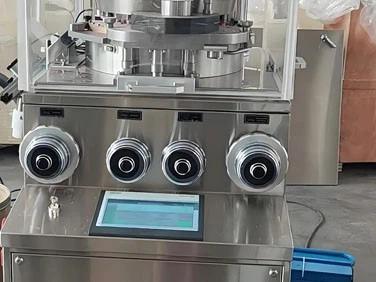
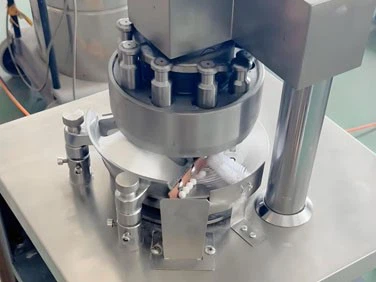
Mold installation and commissioning:
Select the appropriate mold, install it on the tablet press, and debug it to ensure that the mold and the tablet press fit well without leakage or dislocation.
Sample filling:
The pre-treated sample is evenly filled into the mold, taking care to avoid uneven accumulation of samples or beyond the edge of the mold.
Pressing operation:
Start the tablet press and press according to the set pressure and time. In the pressing process, pay attention to the running state of the tablet press and the molding of the sample.
Unloading and inspection:
After pressing is complete, close the tablet press, wait for the mold to cool (if applicable), carefully remove the mold, and take out the pressed sample.
Check the appearance of the sample, such as whether the edges are neat, the surface is smooth, and there are no cracks or breakage. At the same time, measuring tools can also be used to detect the thickness of the sample, hardness and other physical properties.
Follow-up treatment
Sample storage
Store pressed samples in a dry, light-resistant, airtight container to protect them from moisture, oxidation, or contamination.
Sample analysis
According to the experimental requirements, the sample is further analyzed and tested, such as chemical composition analysis, physical property testing, solubility testing, etc.
Data recording and reporting
Record the key parameters (such as pressure, time, temperature, etc.) and the test results of the sample.
Write a test report to summarize the tablet process, sample test results and possible suggestions for improvement.
Precautions
Before operating the tablet press, be sure to read and follow the operating instructions and safe operating procedures carefully.
Regular maintenance and maintenance of the tablet press, such as cleaning molds, lubrication of moving parts, etc., to ensure the normal operation of the equipment and extend the service life.
In the process of tablet pressing, pay attention to the operating status of the equipment and the molding of the sample, if found abnormal should be stopped in time to check and troubleshoot.
In summary, the process of sample preparation in the laboratory requires careful preparation and operation, involving multiple links and details. Through reasonable parameter setting and fine operation process, we can prepare uniform, stable and high quality samples that meet the experimental requirements.
Hot Tags: mini tablet press machine, China mini tablet press machine manufacturers, suppliers, factory, 16 Station Tablet Compression Machine, Manual Tablet Punching Machine, Tablet Press Machine, Tablet Punching Machine, Zp17 Rotary Tablet Press, Zp9 Rotary Tablet Press
Previous
No InformationSend Inquiry


