


Teflon Lined Stainless Autoclave
Sep 06, 2024
Leave a message
Introduction
A Teflon-lined stainless autoclave is essentially a pressure vessel that combines the durability and strength of stainless steel with the chemical resistance and non-stick properties of Teflon (polytetrafluoroethylene, PTFE). This hybrid design enables the autoclave to withstand high temperatures and pressures while protecting its interior from the corrosive effects of various chemicals.
Structure and Design
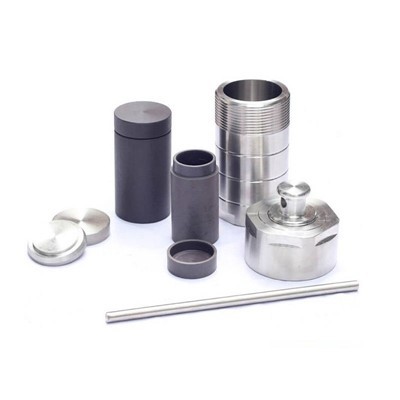
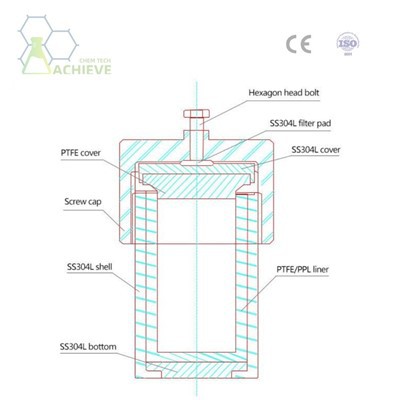
The Teflon Lined Stainless Autoclave consists of two main components: the outer stainless steel shell and the inner Teflon lining. The stainless steel shell provides the structural integrity and durability, while the Teflon lining offers superior chemical resistance and non-stick properties.
The stainless steel shell is typically made from high-grade, corrosion-resistant stainless steel, such as 304 or 316 stainless steel. These materials are chosen for their excellent resistance to rust, corrosion, and high temperatures. The thickness and design of the stainless steel shell vary depending on the intended use and pressure requirements of the autoclave.
The inner Teflon lining is a seamless, continuous layer that covers the entire inner surface of the autoclave. Teflon is a synthetic polymer known for its excellent chemical resistance, low friction coefficient, and non-stick properties. It can withstand a wide range of acids, bases, and solvents, making it an ideal material for use in high-pressure, high-temperature environments.

Advantages
Chemical Resistance
One of the primary advantages of Teflon-lined stainless autoclaves is their exceptional chemical resistance. Teflon is highly resistant to acids, bases, solvents, and most other chemicals, making the autoclave suitable for a wide range of applications. This resistance ensures that the integrity of the vessel is maintained even during aggressive reactions, minimizing the risk of corrosion or leaching of contaminants into the reaction mixture.
High Temperature and Pressure Capability
Stainless steel, being a highly durable material, allows the autoclave to withstand high temperatures and pressures. When combined with Teflon's heat resistance (up to 260°C in continuous use), the autoclave becomes a powerful tool for high-temperature, high-pressure reactions and sterilization processes.
Easy Cleaning and Maintenance
The non-stick properties of Teflon make cleaning and maintenance of the autoclave a breeze. Residues and contaminants that might otherwise adhere to the vessel walls can be easily removed with minimal effort, reducing downtime and ensuring the purity of subsequent reactions.
Versatility
Teflon-lined stainless autoclaves are highly versatile and can be used for a wide range of applications, including hydrothermal synthesis, digestion, sterilization, and more. Their ability to withstand extreme conditions and resist corrosion makes them ideal for use in various scientific and industrial settings.
Disadvantages

The disadvantages of eflon Lined Stainless Autoclave can be mainly considered from the following aspects:
● Temperature limitation: Polytetrafluoroethylene (Teflon) as a lining material, although its high temperature resistance is relatively good, but it is usually recommended to use below 200°C. For experiments or production processes that require higher temperature conditions, Teflon linings may be restricted or even deformed or fail.
● Pressure limitation: While the stainless steel housing can withstand higher pressures, the Teflon lining has a relatively weak pressure resistance. Under extremely high pressure conditions, the Teflon lining may be at risk of rupture or leakage, thus affecting the safety of the experiment and the accuracy of the results.
● Chemical compatibility: Although Teflon has good acid and alkali resistance and corrosion resistance, it is not fully compatible with all chemicals. When handling certain specific chemicals, chemical reactions or degradation may occur, resulting in failure of the lining or contamination of the experimental sample.
● Cost considerations: Compared with ordinary stainless steel autoclaves, Teflon lined stainless steel autoclaves are usually more expensive to manufacture and sell. This is mainly because the processing and installation of Teflon linings require higher technical and material costs.
● Maintenance difficulty: Due to the special nature of Teflon linings, their maintenance and replacement can be relatively complex and difficult. Once the lining is damaged, the entire lining assembly needs to be replaced, which may involve professional technical and equipment support.
● Durability: Although Teflon lining has a high durability under normal conditions of use, long-term use or improper use may accelerate its aging and wear process. Therefore, it is necessary to pay attention to maintenance and maintenance during use to extend its service life.
Applications
Hydrothermal Synthesis
Hydrothermal synthesis is a popular technique for the synthesis of nanomaterials, minerals, and other compounds under high-temperature, high-pressure conditions. Teflon-lined stainless autoclaves provide an ideal environment for these reactions, as they can withstand the harsh conditions while protecting the reaction mixture from contamination.
Digestion
In the field of analytical chemistry, digestion is a crucial step in the preparation of samples for analysis. Teflon-lined stainless autoclaves can be used to perform digestion reactions, such as acid digestion, which involve exposing samples to concentrated acids at high temperatures. The chemical resistance of Teflon ensures that the vessel remains intact and uncontaminated throughout the process.
Sterilization
Teflon-lined stainless autoclaves are also commonly used for sterilization processes, particularly in the medical and healthcare industries. The ability to withstand high temperatures and pressures makes them ideal for sterilizing surgical instruments, laboratory equipment, and other items that require strict sterility standards.
Limitations
Despite their numerous advantages, Teflon-lined stainless autoclaves also have some limitations that users should be aware of.
Temperature Limit
Although Teflon can withstand relatively high temperatures, it has a maximum continuous use temperature of around 260°C. This limitation may restrict the use of Teflon-lined autoclaves in some high-temperature applications.
Abrasion Resistance
Teflon, being a soft material, is susceptible to abrasion and scratching. This can be a concern in applications where the interior of the autoclave is exposed to abrasive particles or rough surfaces.
Cost
Teflon-lined stainless autoclaves can be more expensive than their unlined counterparts due to the additional cost of the Teflon lining. This may be a consideration for users on a tight budget.
Conclusion
The Teflon Lined Stainless Autoclave is a highly versatile and functional piece of equipment that combines the durability of stainless steel with the exceptional chemical resistance and non-stick properties of Teflon.
Its unique combination of features makes it suitable for use in a wide range of industries and applications, including laboratory research, food processing, medical and pharmaceutical, and industrial processing. While it has some limitations, such as temperature and pressure limits, its advantages far outweigh its disadvantages.
With proper maintenance and care, the Teflon Lined Stainless Autoclave can provide years of reliable service in demanding environments.
