



Lyophilization Equipment
(a)10 series
Lab Scales Desktop(Freeze-dried material 1.5-2KG)
(b)12 series
Lab Scales Vertical(Freeze-dried material 2KG)
(c)18 series
Scientific Research Scales(Freeze-dried material 3KG)
2.Pilot Freeze Dryer:
0.2m²/0.3m²/0.5m²/1m²/2m²/---Pilot Scales(Freeze-dried material 3KG-20KG)
3.Industrial Freeze Dryer:
5㎡/10㎡/20㎡/30㎡/50㎡/100㎡/200㎡/300㎡(Freeze-dried Weight 5T~60T)
4.Customization: set up the specifications you need
(a)Freeze-dried Area
(b)Freeze-dried Weight
(c)Freeze-dried Material
(d)Interlayer Quantity/Size
(e)Cold Trap Temperature
Description
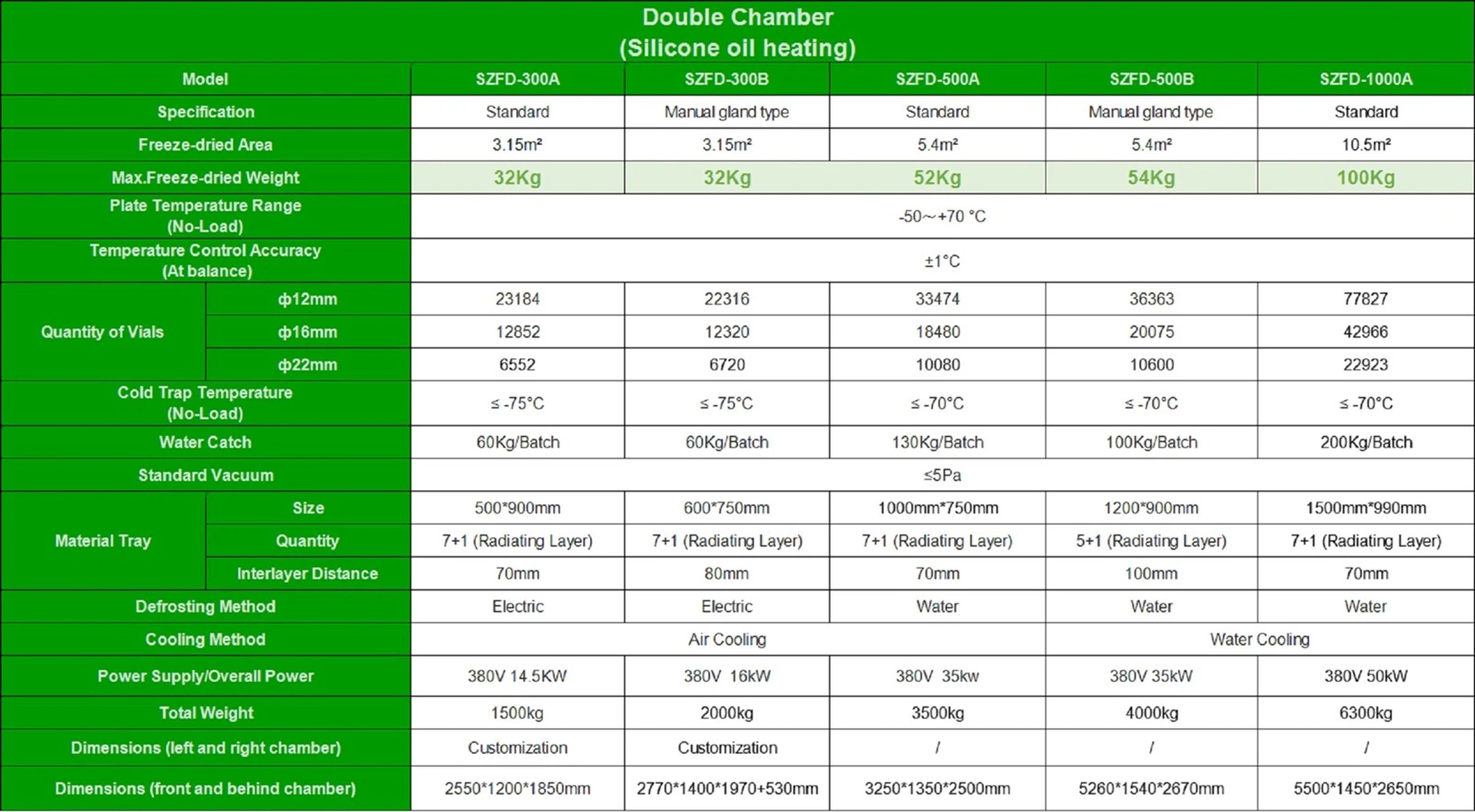
Technical Parameters
A lyophilization equipment, also known as a freeze dryer, is a piece of equipment that utilizes a freezing technology to rapidly dehydrate materials. It works by quickly freezing the water content of a material into ice, and then, under high vacuum conditions, removes the ice through a process called sublimation, where the ice transforms directly into water vapor without going through a liquid state. This technique significantly accelerates the evaporation rate and improves cooling efficiency. The resulting freeze-dried product is spongy, with minimal shrinkage, excellent rehydration properties, and very low moisture content, making it suitable for long-term storage and transportation.
Freeze dryers find widespread applications in industries such as food processing, pharmaceuticals, and biotechnology, due to their ability to preserve the original properties and bioactivity of the materials being processed.

Specifications Guide
10 Series


12 Series


18 Series


Heating Methods
Electric Heating
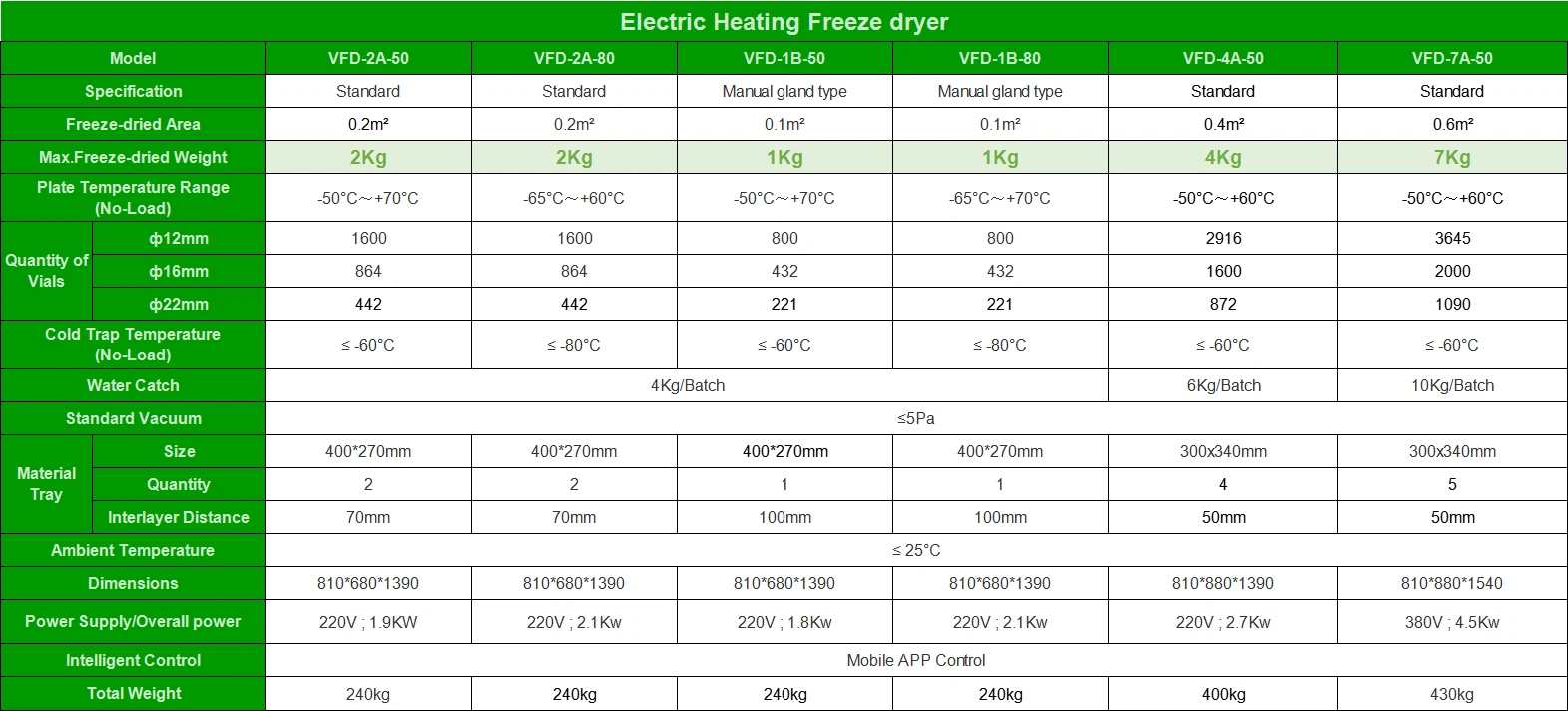
Silicone Oil Heating
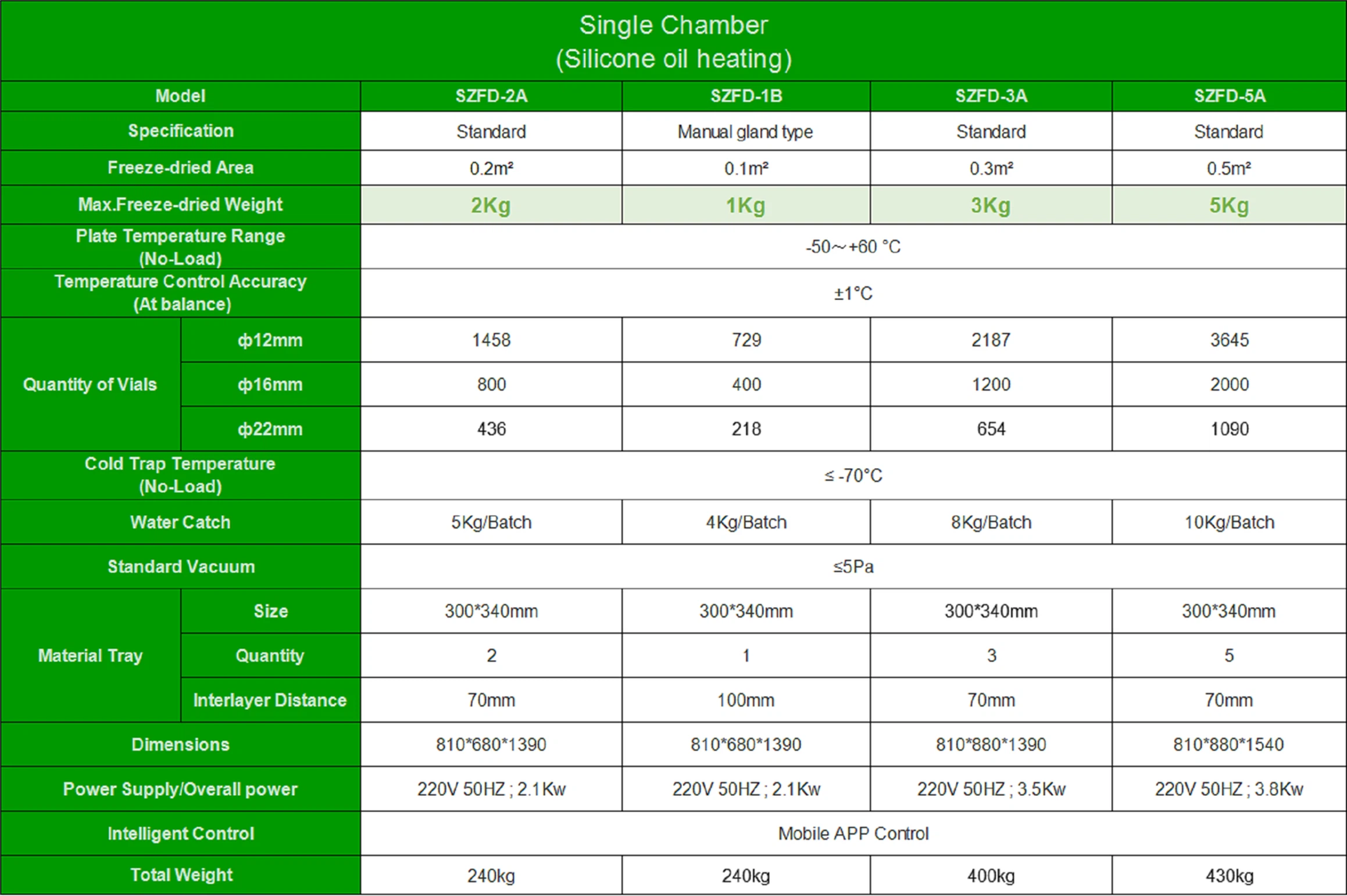
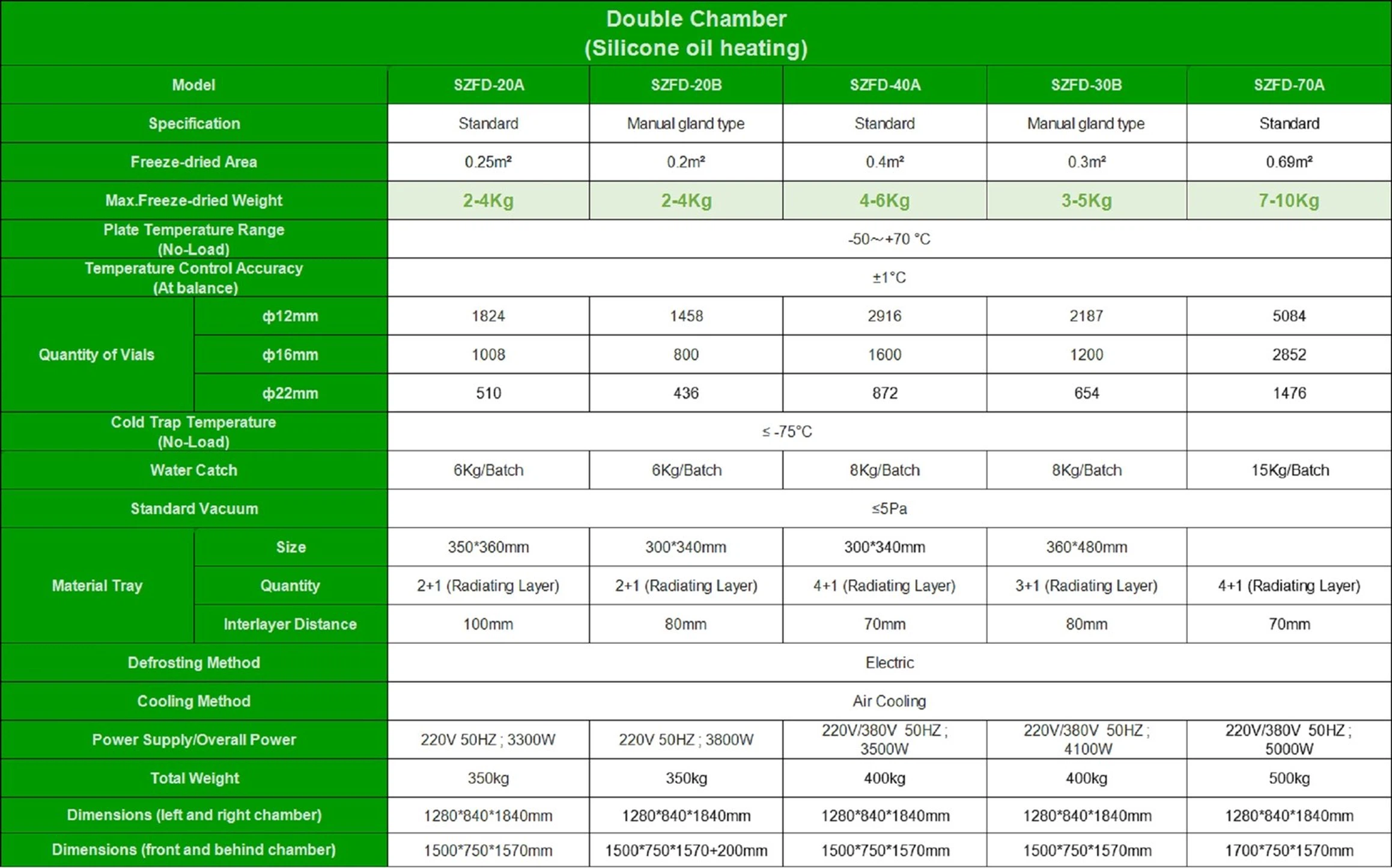
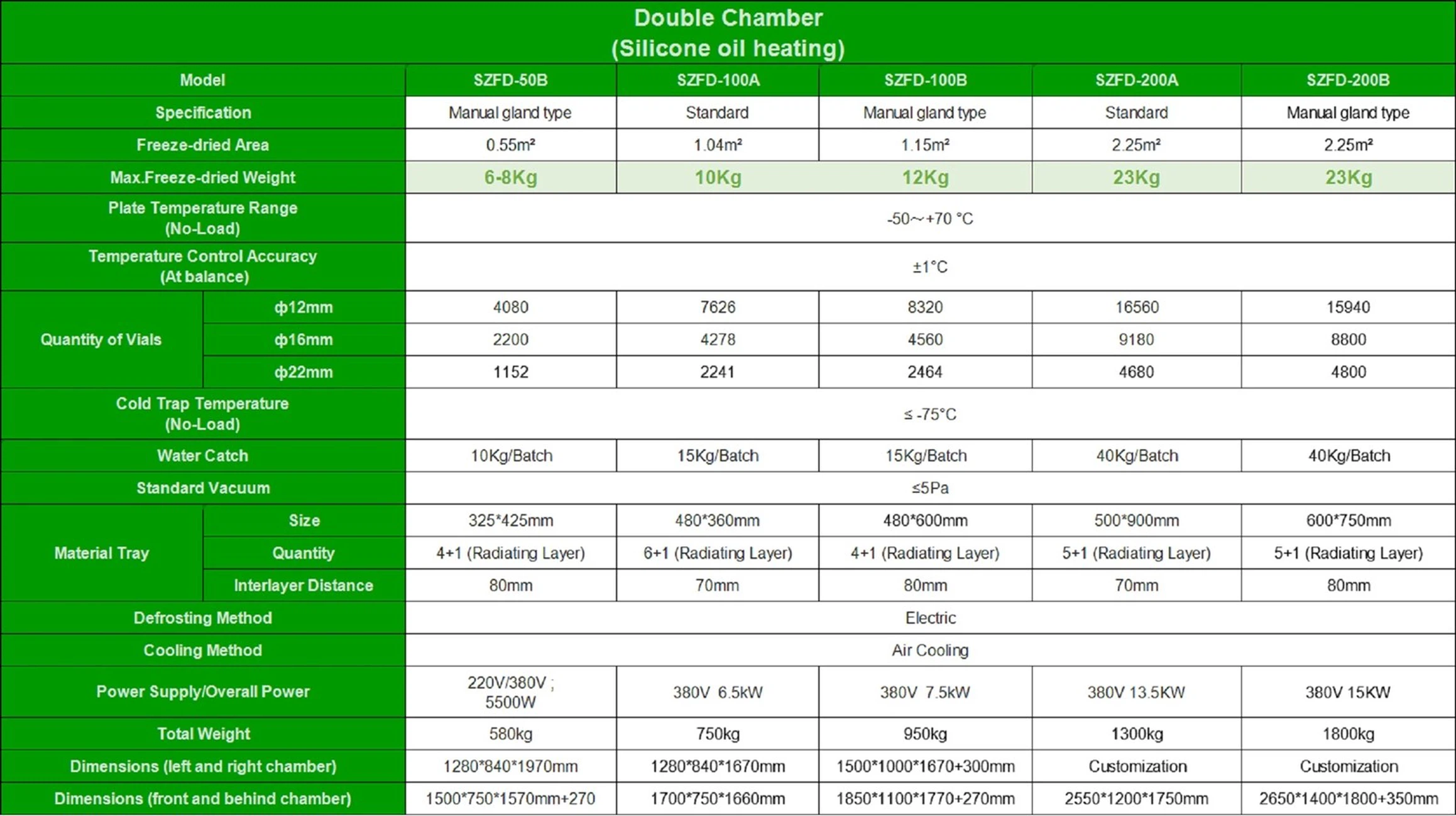
Operating Procedures
The operational process of freeze-drying herbal materials using a lyophilization equipment involves several crucial steps. Here's a detailed overview:
Cleaning and Sorting: Begin by thoroughly cleaning the herbal materials to remove any impurities such as dust, dirt, or unwanted plant parts. Sort through the herbs to ensure uniformity and discard any damaged or unsuitable specimens.
Pre-Treatment: Depending on the specific herb, pre-treatment steps might include cutting, grinding, or sizing the material to enhance the freeze-drying efficiency and ensure even drying.
Blanching (Optional): For some herbs, a brief blanching process in hot water or steam can inactivate enzymes and help maintain color. However, this step should be carefully considered as it might alter the herb's properties.
Loading the Trays: Arrange the prepared herbal materials evenly on the freeze-drying trays, ensuring they are not overcrowded to allow for proper air circulation and ice sublimation.
Freezing Chamber: Place the loaded trays into the freezing chamber of the equipment. The chamber is cooled down to temperatures typically ranging from -40°C to -80°C. This step solidifies the water content within the herbal material into ice crystals.
Freezing Time: The duration of the freezing process depends on the type and quantity of herbal material, as well as the equipment's capacity and settings. It can vary from a few hours to overnight.
Vacuum Application: Once the materials are fully frozen, the vacuum pump is activated to create a low-pressure environment within the chamber. This reduces the pressure to a level where water vapor can be directly converted from solid (ice) to gas (vapor) without passing through the liquid state, a process known as sublimation.
Temperature Adjustment: The chamber temperature is gradually raised, typically to between -20°C and +20°C, to facilitate sublimation. The precise temperature is controlled to optimize the rate of sublimation without causing thermal degradation of the herbs.
Primary Drying Duration: This phase can last from several hours to several days, depending on factors such as the size of the batch, the water content of the herbs, and the efficiency of the lyophilization.
Further Vacuum and Warming: After primary drying, residual water bound to the herbal matrix in the form of adsorbed water is removed. The chamber temperature is increased further, usually to around room temperature or slightly above, while maintaining the vacuum.
Duration: Secondary drying can take several hours to complete, ensuring thorough removal of any remaining moisture.
Stopping the Vacuum: Once the desired level of dryness is achieved, the vacuum is slowly released to prevent reabsorption of moisture.
Unloading: Carefully remove the trays from the lyophilization chamber and allow the dried herbal materials to cool to room temperature before handling.
Packaging: Store the freeze-dried herbs in airtight, moisture-proof containers to maintain their quality. Consider using nitrogen flushing or vacuum sealing for long-term storage.
6. Quality Control
Moisture Content Testing: Use moisture analyzers to verify the final moisture content of the dried herbs, ensuring they meet the specified quality standards.
Organoleptic Evaluation: Conduct visual, olfactory, and tactile inspections to ensure the herbs retain their desired color, aroma, and texture.
Applications
Freeze Dried vaccine

Freeze-dried vaccines use pathogenic microorganisms through passage or genetic modification to make the pathogenic microorganisms non-pathogenic without destroying the original immunogenicity.
The pathogenic microorganisms that have lost their pathogenicity are amplified. Put the culture solution into a freeze-drying machine, and use low temperature to increase the vacuum in the freeze-drying machine, so that the water in the culture solution is separated by sublimation, and a dry powder that maintains the original immunogenicity of the microorganism is made, which is freeze-drying vaccine.
Advantages of Freeze-dried vaccines
Freeze-dried vaccines possess numerous advantages that contribute to their widespread use and effectiveness. Here is a detailed overview of the key benefits of freeze-dried vaccines:
Highly stable due to their dehydrated form. As a result, they can be stored and transported under regular cold-chain conditions without the need for rigorous refrigeration. This stability ensures the vaccines retain their potency and effectiveness over longer periods, even in remote or resource-limited settings.
Allows vaccines to be packaged in lightweight and portable formats, such as vials or tablets. This portability makes it easier to distribute vaccines to hard-to-reach areas, ensuring wider coverage and access. Additionally, freeze-dried vaccines can be reconstituted quickly and easily at the point of use, providing flexibility in vaccination programs.
Preserves the antigenic properties of vaccines, ensuring that they trigger the desired immune response. The dehydration process minimizes chemical and physical changes that could compromise the vaccine's immunogenicity. This preservation of antigenicity is crucial for the vaccines to be effective in preventing diseases.
It is a cost-effective method of vaccine production and storage. The process is relatively simple and scalable, allowing for efficient production of large quantities of vaccines. Additionally, the stability and portability of freeze-dried vaccines reduce the need for expensive cold-chain infrastructure, further reducing costs.
Generally safer and easier to administer compared to other vaccine formulations. Since they are free of preservatives and stabilizers, they pose a lower risk of allergic reactions or other adverse events. Additionally, the reconstitution process is straightforward, minimizing the potential for errors or contamination during administration.
In summary, freeze-dried vaccines offer a range of advantages that enhance their effectiveness, accessibility, and cost-effectiveness. These vaccines play a crucial role in global vaccination programs, contributing to the prevention and control of various diseases.
Why choose us?

Our company's lyophilization equipments offer significant advantages in the production of freeze-dried vaccines. First and foremost, our advanced freeze-drying technology ensures vaccines retain their potency and immunogenicity throughout the dehydration process. This preserves the antigenicity of the vaccines, crucial for effective disease prevention.
Additionally, our freeze-dryers are designed for high efficiency and scalability, allowing for the production of large quantities of vaccines with minimal downtime. The stability and portability of the resulting freeze-dried vaccines contribute to their widespread use and accessibility, even in remote areas. Furthermore, our freeze-dryers comply with strict quality and safety standards, ensuring the safety and reliability of the vaccines produced.
In summary, our freeze-dryers offer a comprehensive solution for the efficient and effective production of freeze-dried vaccines, contributing to global health and well-being.
Lyophilization equipment, also known as freeze-drying apparatus, is a crucial technology utilized in various industries including pharmaceuticals, biotechnology, food processing, and cosmetics for preserving sensitive materials in a stable, shelf-stable form. This advanced equipment operates on the principle of sublimation, where water is transformed directly from a solid (ice) to a gas (vapor) state without passing through the liquid phase.
The core components include a freezing chamber, a vacuum pump system, and a heating system. Initially, the material to be lyophilized is frozen at extremely low temperatures, typically below -40°C. Once solidified, the chamber is evacuated to create a low-pressure environment, which allows the ice to sublime under controlled heating conditions. The vacuum pump system plays a vital role in maintaining this low-pressure atmosphere, ensuring efficient sublimation.
Modern lyophilization features advanced control systems that monitor and regulate temperature, pressure, and heating cycles precisely. This ensures optimal process conditions, enhancing product quality and minimizing the risk of degradation. Furthermore, some models incorporate automation and remote monitoring capabilities, facilitating streamlined operation and improved process consistency.
The benefits of using lyophilization are numerous, including extended shelf life, preservation of the material's structure and activity, and ease of reconstitution. However, the technology is also known for its high initial investment and operational costs, necessitating careful consideration of process requirements and economic factors. Overall, it remains a cornerstone in the preservation of delicate materials, enabling the development and commercialization of innovative products across diverse industries.
Hot Tags: lyophilization equipment, China lyophilization equipment manufacturers, suppliers, factory
Previous
Pilot Scale LyophilizerSend Inquiry


