



Vacuum Drying Oven
Built with SS304 stainless‑steel inner chamber, capacity ranges from 8L‑430L for lab, pilot and small‑scale industrial production.
Temperature: RT+10℃‑200℃, stable vacuum performance.
Widely used in pharmaceutical API, chemical, food, TCM and electronics.
Optional five‑sides heating, cold trap and custom sizes.
OEM & customization available.
Request your quotation.
Description
Technical Parameters
Products Description
AchieveChem DZF-series vacuum drying oven is a professional low-temperature vacuum dehydration equipment designed for laboratories, pharmaceutical factories, chemical plants, food processing and electronics manufacturing. Different from traditional high-temperature drying ovens, our vacuum drying equipment creates a low-pressure internal environment to reduce the boiling point of water and organic solvents, realizing efficient drying at low temperatures. It effectively avoids thermal degradation, oxidation and ingredient damage of heat-sensitive materials, ensuring complete retention of material activity, color, taste and nutritional components. All models adopt SS304 stainless steel liner and anti-corrosion spray-paint shell, featuring stable temperature control, uniform heating, safe operation and wide applicability, supporting standard configuration and personalized customized services.

Key Features of Vacuum Drying Oven
- Premium Material Configuration: Adopts high-quality SS304 stainless steel inner liner, anti-rust and anti-corrosion, easy to clean; the outer shell uses spray-paint anti-corrosion technology, durable for long-term industrial and laboratory use.
- Precise Constant Temperature Control: Temperature control range from RT+10℃ to 200℃, with temperature stability of ±1.0℃ and temperature accuracy up to 0.1℃, ensuring uniform and stable heating in the chamber.
- Efficient Vacuum Drying Performance: Ultimate vacuum degree reaches 0.098Mpa (98KPa), which greatly shortens the drying cycle and improves experimental and production efficiency.
- Diversified Optional Configurations: Supports five-sides heating, LED observation light, cold trap, vacuum tower, anti-reflux flask and body color customization to meet diverse experimental and production needs.
- Complete Safety Protection: Built-in over-temperature protection device, high-precision pressure sensor and leak-proof sealing structure to avoid equipment failure and material damage, ensuring safe and stable operation.
- Wide Volume Coverage: Complete model range with chamber capacity from 8L to 430L(500-1500L size is customized model), covering laboratory testing, pilot production and small industrial batch processing.
- Customizable Service: Supports personalized customization of chamber size, shelf quantity, working temperature, vacuum parameters and equipment voltage.

Parameters
| NO. | AC31-1 | AC31-2 | AC31-3 | AC31-4 | AC31-5 | AC31-6 |
| Model | DZF-6010 | DZF-6020 | DZF-6050 | DZF-6090 | DZF-6210 | DZF-6500 |
| Power Supply (V/Hz) | 220/50 | |||||
| Shell Material | Spray-paint Anti-corrosion | |||||
| Liner Material | SS304 | |||||
| Temp. Range (°C) | RT+10~200 | |||||
| Vacuum Degree (Mpa) | 0.098 | |||||
| Temp. Stability (°C) | ±1.0 | |||||
| Temp. Accuracy (°C) | 0.1 | |||||
| Working Temp. (°C) | +5~40 | |||||
| Input Power (W) | 500 | 800 | 1500 | 2000 | 4000 | 4000 |
| Chamber Capacity (L) | 8 | 25 | 55 | 90 | 215 | 430 |
| Shelves (Pcs) | 1 | 2 | 3 | 4 | ||
| Time Range (Min) | 1~9999 | |||||
| Optional Configuration | LED observe light, Color customization, Five-sides heating, Cold trap or Vacuum tower, Anti-reflux flask. | |||||
Optional Configurations
- LED observe light for real-time internal working monitoring
- Custom equipment body color to meet brand customization needs
- Five-sides heating design for more uniform internal temperature
- Cold trap or vacuum tower for enhanced vacuum drying effect
- Anti-reflux flask to prevent material backflow and pollution
- Equipped with imported brand vacuum pump.
Applications
1. Food Processing Industry
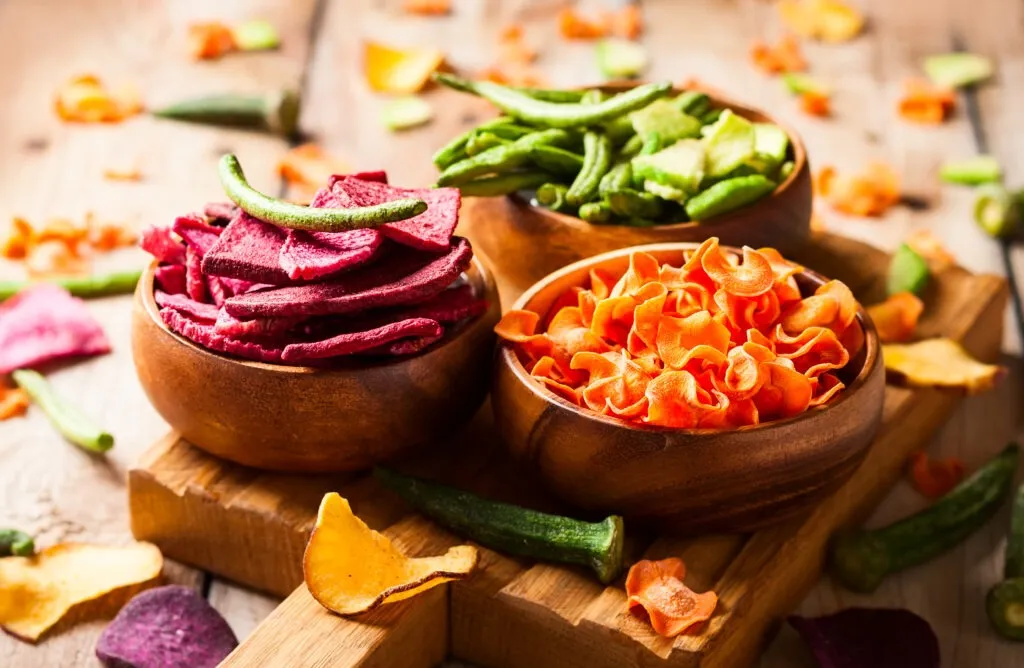
Widely applied in dehydration and drying of fruits, vegetables, meat, seafood and dairy products. Low-temperature vacuum drying retains food original color, flavor and nutritional elements, inhibits bacterial growth, and effectively extends food shelf life while facilitating storage and transportation. Large-capacity models DZF-6210 and DZF-6500 are suitable for industrial food dehydration.
2. Chemical Industry
Ideal for removing residual solvents from chemical reaction products, drying chemical powders and paste materials. The vacuum environment effectively prevents material oxidation and chemical reaction deterioration, improving product purity. Recommended models: DZF-6020, DZF-6050.


3. Pharmaceutical & API Industry
Our vacuum drying oven is specially used for drying heat-sensitive pharmaceutical intermediates, APIs and pharmaceutical raw materials. The low-temperature vacuum environment avoids ingredient denaturation and purity loss, ensuring drug stability and efficacy. Recommended models: DZF-6050, DZF-6090 for laboratory testing and small-batch production.
4.Health food & Traditional Chinese Medicine
It can efficiently remove excess water from Chinese herbal extracts, health food raw materials and biological preparations, completely retaining the physiological activity and effective nutritional ingredients of materials. It solves the problems of active ingredient loss and quality degradation caused by traditional high-temperature drying. Small models DZF-6010/DZF-6020 are for laboratory research, and large models are for batch processing

5. Electronics Industry
Used for dehumidification and drying of electronic components, circuit boards and precision electronic assemblies. It eliminates residual moisture inside electronic parts, prevents short circuit and component aging, and ensures the stability and reliability of electronic products.
Vacuum Drying Oven VS Freeze Dryer (Lyophilizer)
Many customers confuse vacuum drying oven with freeze dryer, but the two devices have completely different working principles and application scenarios:
It operates by creating a low-pressure environment within a heated chamber, facilitating the evaporation of moisture and volatile components from materials at relatively low temperatures. This approach minimizes the risk of thermal degradation, making it ideal for heat-sensitive substances. The key advantages lie in its versatility-suited for a wide range of industries from chemicals and electronics to pharmaceuticals and food processing. By removing oxygen or substituting it with inert gases, the oven further protects sensitive materials from oxidation, enhancing the quality of the final product. Moreover, vacuum drying can be applied to a variety of material forms, including powders, pastes, and solid objects, providing a flexible solution for diverse drying needs. The controlled environment ensures consistent results and makes it an excellent choice for delicate materials requiring precise handling.
It is the preferred equipment for conventional laboratory and industrial dehydration.
In contrast, a Freeze-Drying Machine focuses on the sublimation process, directly converting frozen water within materials into vapor without passing through the liquid state. This technique preserves the structural integrity and biological activity of samples, crucial for applications in pharmaceuticals, biotechnology, and food preservation. Freeze-drying enables the production of lightweight, stable, and easily rehydrated products, extending shelf life and maintaining original qualities such as taste, texture, and nutritional content. Another significant advantage is its ability to handle large volumes of material, making it scalable for industrial-scale production. The low-temperature processing minimizes heat-induced denaturation, preserving the delicate structures of living organisms and sensitive biomolecules. Furthermore, the dried product is often porous, allowing rapid and uniform rehydration when needed, ideal for quick-dissolving formulations and convenience foods.
. It is mainly used for high-value materials such as biological samples, probiotics, high-end health products and special pharmaceutical raw materials, with higher equipment cost.
If you need high-precision freeze-drying equipment, please check our independent Freeze Dryer product page for detailed parameters and solutions.
Customization Service
As a professional vacuum drying oven manufacturer, AchieveChem provides one-stop customized services to meet your special experimental and production requirements:
Custom chamber volume and external dimension
Custom shelf quantity, size and spacing
Custom special temperature and vacuum degree parameters
Special anti-corrosion material configuration for special solvents
Custom voltage and frequency for different national standards
Custom appearance color and functional accessories
Send us your detailed requirements, and our technical team will provide you with exclusive customized equipment solutions and quotation.

Frequently Asked Questions
1.What is a vacuum drying oven used for?
Vacuum drying oven is used to remove moisture and volatile solvent under vacuum low‑temperature condition for heat‑sensitive samples in lab, pharmaceutical, chemical, food and electronics.
2.What temperature can a vacuum drying oven reach?
Our DZF series vacuum drying oven working temperature range is RT+10℃ up to 200℃.
3.What is the difference between vacuum drying oven and freeze dryer?
Vacuum drying uses heating‑assisted vacuum evaporation; freeze dryer freezes sample first and remove ice via sublimation, better for biological active samples but higher cost.
4.Can you make custom size vacuum drying oven?
Yes, we provide OEM & custom service for chamber size, shelves, material and special working condition.
5.What is MOQ for vacuum drying oven?
MOQ: 1 unit for standard DZF‑series model. Contact sales for bulk order price.
Hot Tags: vacuum drying oven, China vacuum drying oven manufacturers, suppliers, factory, Glass Reactor Laboratory, High Pressure Autoclave Reactor, High Pressure Stirred Lab Autoclaves, 500ml Short Path Distillation Kit, Stainless Steel Chemical Reactor, Short Path Distillation
Previous
Blast Drying OvenSend Inquiry


