


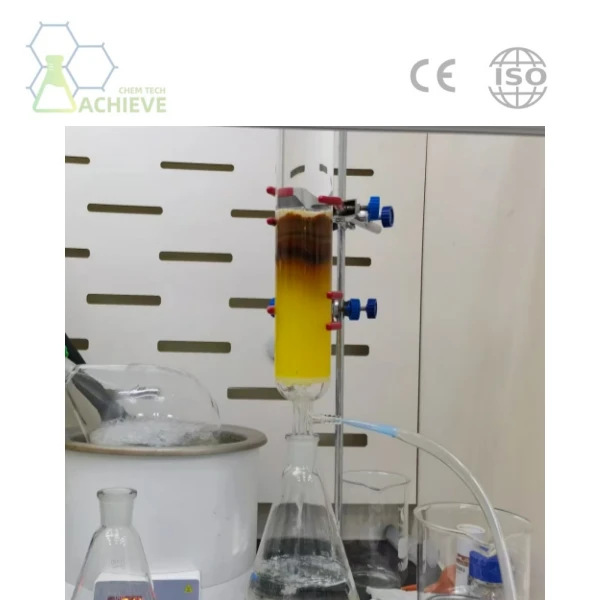


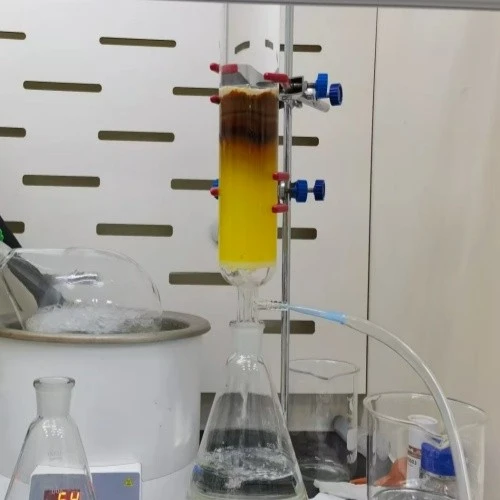
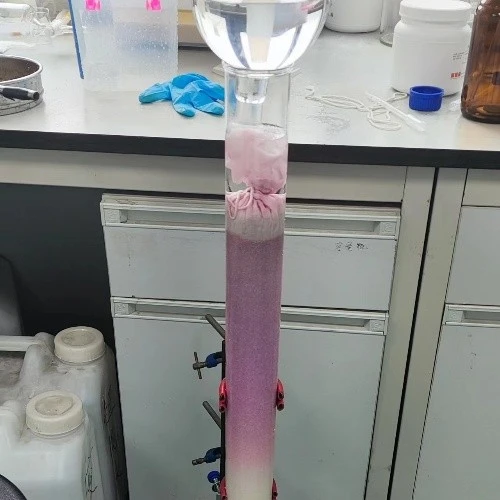

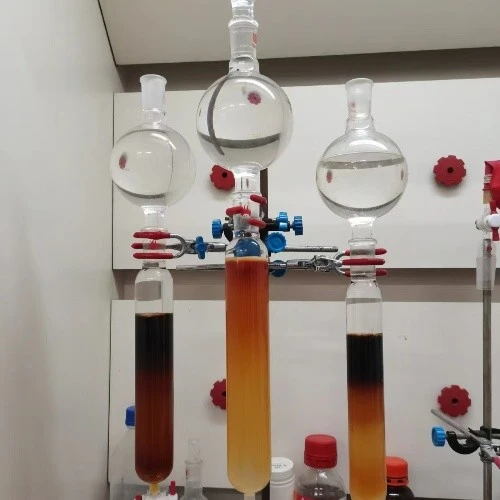
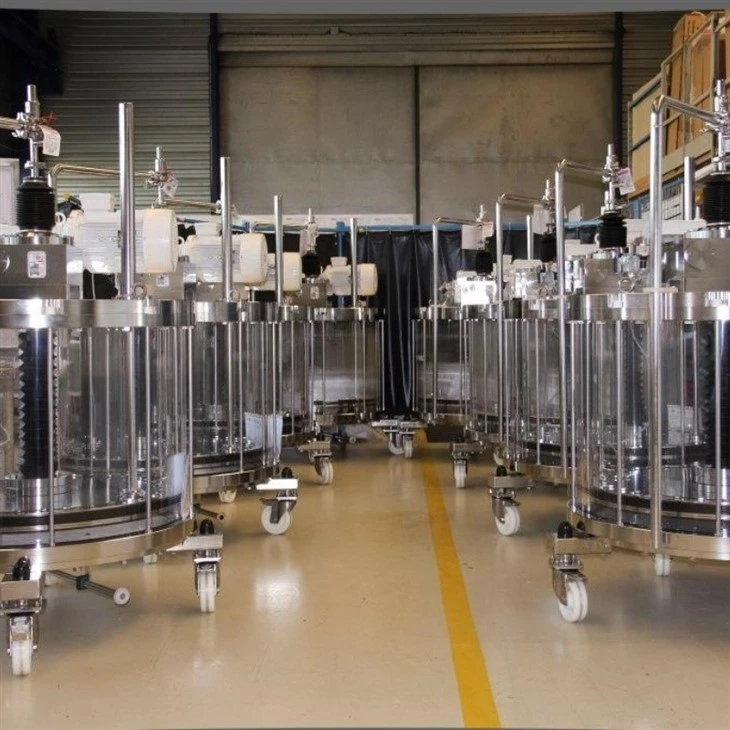
Small Chromatography Column
2.Chromatographic Column (Rotation Type)
3.Chromatographic Column (Manual)
***Price List for whole above, inquire us to get
Description
Technical Parameters
A small chromatography column is a colmn shaped device used for chromatographic analysis, with a relatively small size, typically used for laboratory scale sample analysis or preparation. The chromatographic colmn is the core component of chromatographic separation technology, which interacts with sample molecules in the mobile phase through specific fillers (such as silica gel, alumina, polymers, etc.) to achieve sample separation and purification. As an important component of chromatographic analysis technology, it plays a crucial role in the laboratory. By continuously improving and optimizing its performance and technical parameters, this chemical tailorism will provide more reliable and efficient separation and analysis tools for scientific research and technological innovation in more fields in the future.
Parameters


applications
|
|
|
|
|


Small chromatography columns, often referred to as micro or analytical-scale columns, play a pivotal role in various scientific and industrial applications due to their efficiency, precision, and versatility. These columns are designed to handle smaller sample volumes, making them ideal for applications where sample quantity is limited or when high sensitivity is required.
One of the primary applications is in analytical chemistry, where they are used for the separation and purification of complex mixtures. Their compact size allows for rapid separations with minimal solvent consumption, which is both cost-effective and environmentally friendly. In pharmaceutical analysis, small columns are employed to quantify active pharmaceutical ingredients, impurities, and degradation products, ensuring drug safety and efficacy.
In the field of biotechnology, they are indispensable for protein purification and characterization. They enable researchers to isolate specific proteins from complex biological samples with high purity, facilitating downstream applications such as enzyme assays, structural studies, and therapeutic development. The ability to perform separations at a small scale also supports high-throughput screening processes, accelerating drug discovery efforts.
Additionally, they find use in environmental monitoring, where they help in detecting and quantifying trace contaminants in water, soil, and air samples. Their sensitivity and selectivity make them valuable tools for assessing environmental pollution and ensuring regulatory compliance.
In academic research, small columns are frequently utilized in method development and optimization studies. Their flexibility allows researchers to explore different separation conditions and stationary phases quickly, leading to the development of more efficient and robust analytical methods.
Overall, small chromatography columns offer a range of benefits, including reduced sample and solvent consumption, faster separations, and enhanced sensitivity. These advantages make them essential tools in various fields, driving advancements in research, development, and quality control. As technology continues to evolve, the applications are expected to expand further, meeting the growing demands for precision and efficiency in analytical science.
Operation steps

- Selection and preparation of chromatographic columns: Select the appropriate chromatographic colmn based on the properties of the sample to be analyzed, and ensure that the filling material of the chromatographic colmn is uniform and free of cracks. Before use, it is usually necessary to rinse the tailorism with mobile phase to remove impurities and bubbles.
- Sample preparation: Dissolve the sample to be analyzed in an appropriate solvent and adjust its concentration to the appropriate range. For certain samples, pre-treatment may be necessary, such as derivatization, extraction, etc.
- Injection: Use an injector to inject the sample solution into the top of the chromatographic colmn. The injection volume should be adjusted according to the capacity of the chromatographic colmn and the concentration of the sample.
- Elution of mobile phase: Turn on the pump system of the chromatograph to allow the mobile phase to pass through the chromatographic colmn at a constant flow rate. The selection of mobile phase should be adjusted according to the properties of the sample and separation requirements.


- Detection and recording: During the process of mobile phase elution, a detector is used to detect the separated sample molecules, and the signal is converted into an electrical signal and recorded on a computer. Based on the peak shape, peak area, and retention time information on the chromatogram, the composition and content of the sample can be determined.
- Data processing: Perform data processing and analysis on the obtained chromatogram, such as peak area integration, correction factor calculation, etc., to obtain accurate sample analysis results.
advantages & disadvantages
It has the following advantages:
- High separation efficiency: Due to the high uniformity and selectivity of the packing material in the chromatographic colmn, efficient sample separation can be achieved.
- High sensitivity: By using highly sensitive detectors such as UV absorption detectors, fluorescence detectors, etc., trace amounts of sample components can be detected.
- Good selectivity: By selecting appropriate chromatographic colmns and mobile phases, selective separation of specific compounds can be achieved.
- Easy to operate: The operation of small chromatography columns is relatively simple, and it is easy to achieve automation and computer control.
However, there are also some drawbacks:
- High cost: High quality tailorisms and supporting equipment are usually expensive, increasing experimental costs.
- Complex maintenance: The chromatographic colmn requires regular cleaning and maintenance to ensure its separation performance and stability. Meanwhile, the packing material of the chromatographic colmn is susceptible to contamination and damage, and requires careful handling.
- Long analysis time: For some complex samples, a longer analysis time may be required to obtain accurate results.
Conventional column crossing process
The diverse range of chromatographic column models available in the market caters to a wide spectrum of analytical needs, spanning various types, manufacturers, and technical specifications. This variety allows researchers and practitioners to tailor their choice of column to the specific demands of their applications, whether in academic research, industrial quality control, or pharmaceutical development.
When selecting a chromatographic column, it is crucial to consider several key factors. Firstly, understanding the properties of the compounds to be separated-such as their polarity, molecular size, and ionic characteristics-is essential for choosing a stationary phase that will provide optimal interactions and resolution. Secondly, the analysis requirements, including desired separation speed, sensitivity, and the need for specific detection techniques, should guide the selection of column dimensions and particle size.
Budget constraints also play a significant role in the decision-making process. While high-end columns may offer superior performance and durability, there are often cost-effective alternatives that provide adequate results for routine analyses. Balancing performance with cost is key to maximizing the value of the investment.
By carefully evaluating these factors, one can select a chromatographic column that not only achieves excellent separation efficiency and reproducibility but also aligns with the practical considerations of the laboratory or industrial setting. This strategic selection process is fundamental to advancing scientific research, ensuring product quality, and driving technological innovation across various fields. Ultimately, the right chromatographic column serves as a cornerstone of analytical success, enabling accurate and reliable data generation.
Common types
- C18 chromatography column: C18 is one of the most commonly used reverse phase tailorisms, suitable for separating compounds with weak polarity, such as hydrocarbons, esters, ketones, etc. The packing material for C18 is usually high adsorption non-polar silica gel, with an alkyl chain of 18 carbon atoms bonded to the surface.
- C8 and C4 chromatography columns: Similar to C18, the alkyl chain lengths bonded to the packing surface of C8 and C4 are 8 and 4 carbon atoms, respectively. These chromatographic colmns are typically used to separate compounds with slightly stronger polarity or requiring milder separation conditions.
- CN chromatography column: The filling surface of the CN is bonded with cyanide groups, which has high polarity and hydrophobicity, and is suitable for separating polar compounds and certain specific functional compounds.
- Silicone chromatography column: Silicone tailorism is one of the most common normal phase tailorisms, suitable for separating compounds with strong polarity, such as sugars, amino acids, organic acids, etc. The packing material for silica gel tailorisms is usually hydrophilic silica gel particles.
- Alumina chromatography column: Alumina chromatography colmn is also a type of normal phase tailorism, suitable for separating certain specific compounds, such as phenols, alcohols, etc. The filling material of the alumina tailorism is alumina particles, which have different polarities and pore size distributions on their surfaces.
- SAX/SCX chromatography columns: SAX (strong anion exchange) and SCX (strong cation exchange) are representative of ion exchange tailorisms, used to separate compounds with negative and positive charges, respectively. The filling material for these tailorisms is usually charged ion exchange resin.
- WCX/WAX chromatography columns: WCX (weak cation exchange) and WAX (weak anion exchange) are also a type of ion exchange tailorism, but their separation mechanisms are relatively weak and suitable for separating certain specific charged compounds.
- GPC chromatographic column: gel permeation chromatographic colmn (GPC) is mainly used to separate compounds with different molecular weights, such as proteins, polysaccharides, polymers, etc. The packing of GPC colmn is porous gel particles, and the pore size determines the molecular size that can enter the gel particles.
Considerations for selection
Separation mechanism
Select appropriate separation mechanism according to the properties of the compounds to be separated, such as reverse phase chromatography, normal phase chromatography, ion exchange chromatography or gel permeation chromatography.
01
Filler
Choose fillers with excellent separation performance and stability, such as high-performance silica gel, alumina, ion exchange resin, etc.
02
Specifications
Select the appropriate chromatographic colmn specifications based on analysis requirements, including length, inner diameter, particle size, etc.
03
PH range
For certain specific applications, it is necessary to consider the pH stability of the chromatographic colmn to ensure that it is not compromised during the analysis process.
04
Cost
Consider the cost of the tailorism and the cost of the equipment and consumables used in conjunction with it to ensure optimal separation efficiency within the budget.
05
Development Trends and Prospects
By improving the material and structure of the filling material, the separation efficiency and selectivity of the chromatographic colmn can be enhanced. At the same time, develop new detectors and data processing technologies to improve the sensitivity and accuracy of chromatographic analysis. With the continuous development of micro nano technology, small chromatographic colmns will gradually move towards miniaturization and integration. This will make chromatographic analysis equipment more portable, efficient, and intelligent, providing more convenient tools for on-site detection and rapid analysis. In the future, this chemical tailorisms will place greater emphasis on the design of automation and intelligence. By integrating modules such as automatic sampler, automatic cleaning system, and intelligent control system, the entire process of chromatographic analysis can be automated and intelligently controlled, improving analysis efficiency and accuracy. In order to meet the analysis needs of different fields and samples, future this chemical tailorisms will pay more attention to the design of multifunctionality and modularity. By combining different fillers, mobile phases, and detector modules, multiple separation modes and detection methods can be combined to improve the flexibility and applicability of chromatographic analysis.
As an important component of chromatographic analysis technology, it plays a crucial role in the laboratory. By continuously improving and optimizing its performance and technical parameters, this chemical tailorisms will provide more reliable and efficient separation and analysis tools for scientific research and technological innovation in more fields in the future.
Hot Tags: small chromatography column, China small chromatography column manufacturers, suppliers, factory, Short Path Molecular Distillation, 5l Rotovap, Autoclave For Hydrothermal Synthesis, Single Layer Glass Reactor, 10 Liter Short Path Distillation, Laboratory Rotary Evaporator
Previous
20mm Chromatography ColumnSend Inquiry


