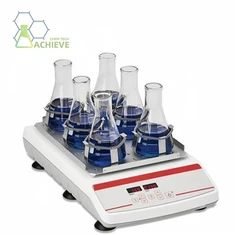
Titration Conical Flask
1) Narrow-mouth Bottle: 50ml~10000ml;
2) Big B Bottle: 50ml~3000ml;
3) Horn Mouth: 50ml~5000ml;
4) Wide-mouth Bottle: 50ml/100ml/250ml/500ml/1000ml;
5) Conical Flask With Cover: 50ml~1000ml;
6) Screw Conical Flask:
a. Black Lid (General Sets): 50ml~1000ml
b. Orange Lid (Thickening Type): 250ml~5000ml;
2. Single and Multi-mouth Round Bottom Flask:
1) Single Mouth Round Bottom Flask: 50ml~10000ml;
2) Inclined Three-mouth Flask: 100ml~10000ml;
3) Inclined Four-mouth Flask: 250ml~20000ml;
4) Straight Three-mouth Flask: 100ml~10000ml;
5) Straight Four-mouth Flask: 250ml~10000ml.
***Price List for whole above, inquire us to get
Description
Technical Parameters
The titration conical flask is a common and very important glass instrument in chemical laboratories, and its unique design and multiple functions make it the preferred container for many chemical reactions and experiments. The titrtion concal flak, also known as the Erlenmeyer flask, Erlenmeyer flask, concal flak, or Erlenmeyer flask, was invented by German chemist Richard Erlenmeyer in 1861. This instrument is named after its inventor and has been widely used in the field of chemistry.
Products Description
The basic feature of a titraton concal flak is that it has a wide bottom and a narrow top, forming a conical structure. It has a cylindrical neck with a wider opening above it, which can usually be closed with a cork or rubber stopper. There are usually several markings on the bottle to indicate the capacity that the container can hold.
The main purpose of a titraton concal flak is for titration experiments, which is a method of determining the concentration of unknown substances by accurately measuring the amount of reactants consumed. In titration experiments, the stability and ease of grip of concal flaks make them an ideal reaction vessel.
The main use
Titration reaction
The conical structure of the concal flak makes it difficult for the liquid to splash out during titration, thereby reducing experimental errors. The lower end of the burette should be inserted into the conical bottle mouth about 1-2 centimeters away, and the titration speed should be controlled at 3-4 drops per second to avoid splashing caused by the liquid flowing too quickly.
01
Containing reactants
Cone shaped bottles can be used to contain reactants, and their long neck not only facilitates the addition of a stopper, but also slows down the loss during heating and avoids the overflow of chemicals.
02
Quantitative analysis
Due to the markings on the bottle, it is easy to read the volume of reactants for quantitative analysis.
03
Reflux heating
The concal flak can be heated on a water bath or electric furnace, and its flat bottomed conical design makes heating more uniform.
04
Ordinary experiments and gas production
In addition to titration experiments, concal flaks can also be used for ordinary experiments, gas production, or as other types of reaction vessels. Its conical structure is relatively stable, not easy to tilt, and suitable for various experimental needs.
05


Design advantages
Competitive advantage
Easy to observe
The flat bottomed conical design of the conical bottle makes full use of its internal space and facilitates observation of reaction conditions. Whether observing sediment and insoluble particles from the front or observing the color of the solution from the side, a clear view can be obtained.
01
Reduce splashing
The small mouth and large bottom design of the concal flak makes it difficult for the titrant to splash during titration, thereby reducing experimental errors. At the same time, the slope design on the bottle wall also ensures that droplets can flow smoothly into the bottom, further reducing the possibility of splashing.
02
Uniform heating
The conical bottle can be heated on a water bath or electric furnace, and its flat bottom design makes the heating more uniform. This helps ensure that the reactants are uniformly heated during the heating process, thereby improving the accuracy of the experiment.
03
Stability
The conical structure of the conical bottle results in a lower center of gravity, making it more stable and less prone to tipping. This stability is particularly important for experiments that require long-term reactions.
04
Easy to hold
The neck design of the conical bottle makes it easy to grip and operate. Whether during titration or heating, the bottleneck can be easily grasped for operation.
05
noted Tips
Preparation
Before use, ensure that the concal flak is clean and free of impurities. If heating is required, it should be done on asbestos mesh to avoid direct contact with flames that could cause rupture.
Cleaning and maintenance
After use, the concal flak should be cleaned promptly and stored properly. When cleaning, appropriate cleaning agents should be used and cleaning procedures should be followed to ensure the cleanliness and service life of the conical bottle.
Titration operation
During the titration process, the lower end of the burette should be inserted into the conical bottle mouth about 1-2 centimeters away. The titration speed should be controlled at around 3-4 drops per second to avoid splashing caused by the liquid flowing too quickly. Meanwhile, the concal flak should be shaken while dripping to ensure thorough mixing of the reactants.
Observation and recording
During the titration process, the reaction situation should be closely observed. When approaching the endpoint, the titration rate should be slowed down and the reactants should be added dropwise. At the same time, a small amount should be blown into the concal flak to rinse the inner wall of the flask, so that all the attached solution flows down. Then shake the concal flak and observe if the endpoint has been reached. If the endpoint has not been reached, continue titration until the endpoint is accurately reached.
Specification and selection
The specifications of titraton concal flaks are usually expressed in terms of capacity, with common capacity ranges ranging from 50 milliliters to 250 milliliters. But there are also some specially designed conical bottles, whose capacity can be as small as 10 milliliters or as large as 2000 milliliters.
When choosing a titraton concal flak, the following factors should be considered:
Experimental requirements:
Select the appropriate capacity based on the specific needs of the experiment. If a larger amount of reactants is required for the experiment, a concal flak with a larger capacity should be selected; On the contrary, a concal flak with a smaller capacity should be chosen.
01
Material and Durability:
Cone shaped bottles are usually made of hard glass, which has high durability and corrosion resistance. When selecting, it should be ensured that the material of the conical bottle meets the experimental requirements and checked for cracks or defects.
02
Scale clarity:
The scale on the concal flak should be clear and readable for accurate reading of the volume of reactants. When selecting, the clarity of the scale should be checked and ensured to meet the experimental requirements.
03
Price and cost-effectiveness:
The price of conical bottles varies depending on factors such as brand, specifications, and materials. When choosing, comprehensive consideration should be given to factors such as experimental budget and cost-effectiveness.
04
Maintenance and upkeep
To ensure the accuracy and service life of the titraton concal flak, regular maintenance and upkeep are necessary. Here are some common maintenance and upkeep methods:
Cleaning
The concal flak should be cleaned promptly after use to avoid residue interference with the next experiment. When cleaning, appropriate cleaning agents should be used and cleaning procedures should be followed to ensure the cleanliness and transparency of the concal flak.
Drying
After cleaning, the concal flak should be air dried or dried to avoid residual moisture affecting the experiment. During the drying process, methods such as high temperature or strong wind that may cause the conical bottle to break should be avoided.
Storage
Cone shaped bottles should be stored in a dry, cool, well ventilated place, away from direct sunlight and high temperature environments. Meanwhile, it should be avoided to mix with other hard objects or chemicals to prevent damage or contamination.
Inspection and replacement
During use, it is necessary to regularly check whether the scale of the conical bottle is clear and readable, and whether there are cracks or defects on the bottle body. If any problems are found, a new concal flak should be replaced in a timely manner to ensure the accuracy of the experiment.
Application examples
The application of titraton concal flak in chemical experiments is very extensive, and the following are some common application examples:
Acid base titration: In acid-base titration experiments, a concal flak is used as a reaction vessel to hold the test solution. By accurately measuring the volume of acid or base consumed during the titration process, the concentration of the test solution can be calculated.
Redox titration:
In redox titration experiments, concal flaks are also used as reaction vessels. The content of the substance to be tested can be calculated by measuring the volume of oxidant or reducing agent consumed during the titration process.
Precipitation titration:
In precipitation titration experiments, concal flaks are used to contain reactants and indicators. By observing the formation and dissolution of precipitates, the endpoint of the reaction can be determined and the content of the analyte can be calculated.
Complexation titration:
In chelation titration experiments, concal flaks are also used as reaction vessels. By measuring the volume of chelating agent consumed during titration, the concentration of the metal ion to be measured can be calculated.
Alternative and Comparison
Although titration conical flasks have a wide range of applications and importance in chemical experiments, other alternatives can also be considered in certain situations. Here are some common alternatives and their comparison with conical bottles:
Beaker:
Beakers are also a common laboratory container, but their shape and purpose are different from conical bottles. Beakers are usually used for dissolution, dilution, and heating operations, while concal flaks are more suitable for titration and quantitative analysis.
Test tube:
A test tube is a small laboratory container typically used for small reactions and heating operations. Compared to concal flaks, test tubes have a smaller capacity and a straighter shape, making them unsuitable for titration experiments.
Volumetric flask:
A volumetric flask is a container used for precise preparation of solutions, and its shape and scale design enable it to accurately measure the volume of the solution. However, volumetric flasks are typically used to prepare solutions of known concentrations, rather than for titration experiments.
A titration conical flask, commonly referred to as an Erlenmeyer flask, is a specialized piece of laboratory glassware designed for titration experiments-a quantitative analytical technique used to determine the concentration of a substance in a solution.
During titration, the flask holds the analyte-the solution with an unknown concentration. A titrant (a solution of known concentration) is gradually added from a burette until the reaction reaches its endpoint, often indicated by a color change (using an indicator) or a measurable property like pH. The flask's shape allows for efficient mixing without losing solution, ensuring precise results.
Typically crafted from borosilicate glass, which withstands thermal and chemical stress, some flasks are also made from plastic for disposable use. Its transparency enables clear observation of the endpoint, while the graduated neck (though not calibrated for exact measurements) aids in rough volume estimation.
In summary, the titration conical flask is indispensable in analytical chemistry, combining practical design with durability to facilitate accurate and reliable titrations.
Hot Tags: titration conical flask, China titration conical flask manufacturers, suppliers, factory, Double Glass Reactor, Stainless Steel Jacketed Reactor, High Pressure Laboratory Reactor, Double Jacketed Glass Reactor, Short Path Distillation Equipment, 5l Rotovap
Previous
Quartz Round Bottom FlaskSend Inquiry