


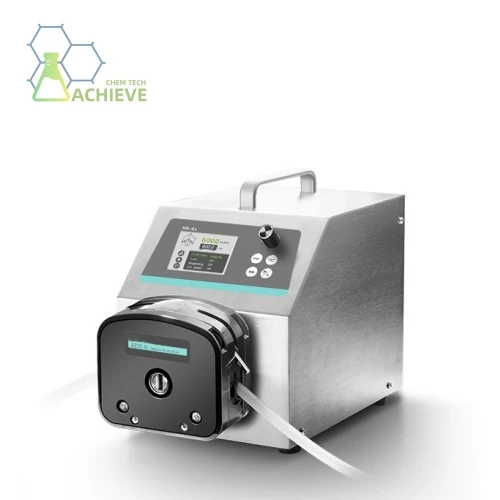

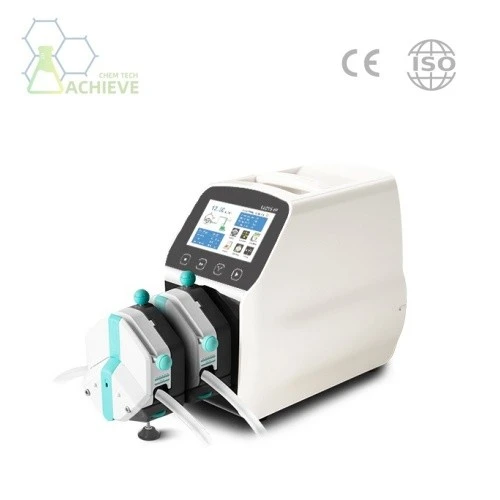
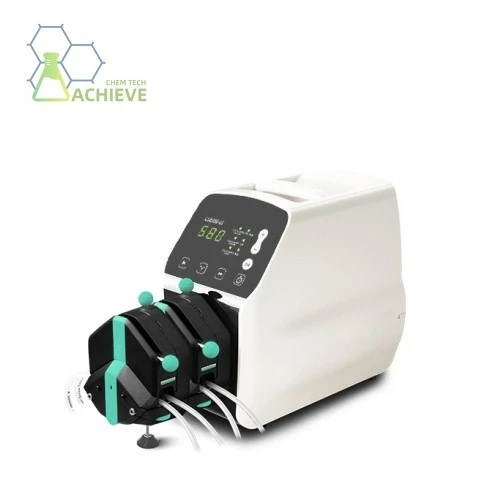
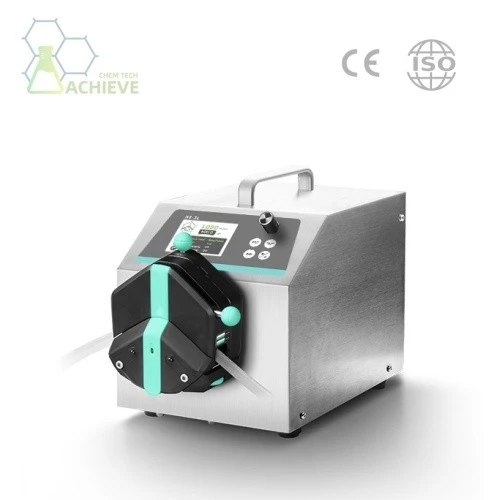

Multichannel Peristaltic Pump
Flow range:0.0053-6000ml/min
2.Basic peristaltic pump:LabM series
Flow range:0.0053-3100ml/min
3.Industrial peristaltic pump
Speed range:0.1-600rpm
Description
Technical Parameters
The multichannel peristaltic pump is a versatile fluid handling device that utilizes a series of rollers to compress a flexible tube, propelling the fluid within in a pulsatile manner. Its multichannel design allows for the simultaneous pumping of multiple fluids, making it highly efficient and effective for a variety of applications.
In terms of structure, it typically features multiple independent channels, each equipped with its own set of rollers and tube. This allows for precise control over the flow rate and volume of each fluid, ensuring accuracy and consistency in fluid delivery.
One of the key advantages is its ability to handle a wide range of fluids, including viscous, corrosive, and sensitive materials. The pump operates without direct contact with the fluid, minimizing the risk of contamination and wear and tear on the pump itself.
Additionally, it offers high precision and repeatability, making it ideal for applications requiring precise fluid control, such as laboratory research, pharmaceutical manufacturing, and biotechnology.
Overall, it is a reliable and efficient fluid handling solution that offers versatility, precision, and compatibility with a wide range of fluids. Its ability to pump multiple fluids simultaneously makes it an invaluable tool for a variety of industries and applications.
Specifications


applications
Applications in Agriculture
Multichannel peristaltic pumps can be used to deliver water at variable rates, adapting to the changing needs of crops throughout their growth cycle. This ensures that crops receive the right amount of water at the right time, promoting healthy growth and maximizing yield. By integrating the pumps into irrigation systems, farmers can deliver water-soluble fertilizers directly to the crop roots. This process, known as fertigation, optimizes nutrient uptake and reduces the risk of nutrient leaching or runoff. They can be used to adjust the pH and electrical conductivity (EC) of irrigation water and nutrient solutions. This ensures that crops receive the optimal growing environment, promoting healthy growth and minimizing stress.
Fertigation
- Efficient Nutrient Delivery: They are used in fertigation systems to deliver water-soluble fertilizers and nutrients directly to the plant roots. By precisely controlling the flow rates and volumes, farmers can ensure that plants receive the optimal amount of nutrients needed for growth.
- Mixed Fertilizer Application: These pumps can handle multiple fertilizer solutions simultaneously, allowing for the application of customized nutrient blends tailored to specific crop needs.
Irrigation Systems
- Variable Flow Rates: Enable the implementation of variable flow rate irrigation systems. This allows for more efficient water use by delivering the precise amount of water required by the crops, reducing waste and improving overall water management.
- Automated Control: Integration with automation systems enables precise timing and control of irrigation schedules, further enhancing water-use efficiency and crop productivity.
Pesticide Application
- Accurate Dosage: These pumps are used to apply pesticides and herbicides in agriculture. By precisely controlling the dosage, farmers can minimize chemical use, reduce environmental impact, and enhance crop safety.
- Multi-Chemical Handling: Multichannel pumps facilitate the simultaneous application of multiple chemicals, enabling the use of complex treatment protocols tailored to specific pest and disease management needs.
About Agricultural irrigation & fertilization systems
Agricultural irrigation and fertilization systems are integral components in modern farming, enhancing crop productivity and sustainability. These systems combine the precise delivery of water with tailored nutrient applications, optimizing resource use and minimizing environmental impact.
At its core, an irrigation and fertilization system employs a network of pipes, valves, and nozzles to distribute water uniformly across fields. This can be achieved through drip, sprinkler, or micro-sprinkler systems, each tailored to specific crop needs and soil conditions. Drip systems, for instance, are highly efficient, delivering water directly to the plant roots via small tubes, reducing evaporation and runoff.
Fertigation, a term coined for the simultaneous application of fertilizers through irrigation systems, allows for precise nutrient dosing based on soil tests and crop requirements. This method ensures that plants receive the right amount of nutrients at the right time, promoting healthier growth and higher yields. Sensors monitoring soil moisture and nutrient levels can further refine this process, enabling real-time adjustments to irrigation and fertilization schedules.
Automated controls and remote monitoring capabilities are increasingly incorporated into these systems, facilitating smarter farm management. Farmers can now access data on water usage, nutrient levels, and crop health via mobile apps, enabling informed decisions and reducing the risk of over- or under-watering and fertilizing.
In summary, agricultural irrigation and fertilization systems represent a significant advancement in precision agriculture, balancing productivity with resource conservation and environmental stewardship. By leveraging technology and innovative practices, these systems contribute to more sustainable and profitable farming operations.
|
|
|


Applications in Biotechnology
Bioreactor Feeding
- Nutrient Supply: In bioreactors used for cell culture and fermentation, multichannel peristaltic pumps are employed to deliver nutrients, gases, and other growth factors to the culture media. The precise control of flow rates ensures optimal growth conditions for cells and microorganisms.
- pH and Dissolved Oxygen Control: These pumps can also be used to regulate the pH and dissolved oxygen levels in bioreactors, maintaining a stable environment conducive to cell growth and product formation.
Cell Culture and Harvesting
- Media Exchange: In cell culture systems, they are used to exchange media, ensuring that cells receive fresh nutrients and are maintained in optimal growth conditions.
- Cell Harvesting: These pumps are also used in cell harvesting processes, facilitating the gentle removal of cells from culture flasks or bioreactors without causing damage.
Biopharmaceutical Production
- Buffer and Media Preparation: In biopharmaceutical production, the pumps are used to prepare buffers and media required for various stages of the production process.
- Product Purification: These pumps are also employed in product purification steps, such as chromatography and filtration, enabling the precise delivery of eluents and buffers.
Design Features
|
The multichannel peristaltic pump is a sophisticated fluid delivery device renowned for its versatility and precision. Designed with a multitude of elastomeric pump tubes, it operates on the principle of sequential occlusion and release, mimicking the peristaltic action of the human digestive tract. Its design highlights include a common inlet and discharge valve system, facilitated by cams that sequence the opening and closing of valves, ensuring smooth and controlled fluid flow. A common displacer, typically shaped as a rectangular plate, acts upon each pump tube, forming individual pumping chambers. Each channel of the pump boasts an individually movable section of the pump frame, adjustable via a sliding wedge, enabling precise balancing of fluid delivery across all channels. The advantages are numerous. Firstly, it eliminates contamination as the fluid only comes into contact with the pump tube. Secondly, its durability makes it suitable for a variety of industrial or laboratory conditions. Cleaning and maintenance are straightforward, often requiring only the replacement of the pump tube. Moreover, its soft, low-shear flow characteristics make it ideal for handling liquids, gases, two-phase flows, and highly viscous fluids. With no seals or valves to maintain, operational costs are kept low. Additionally, its self-priming function ensures that the system can operate efficiently even in dry conditions. |
|

Future Prospects
The future of multichannel peristaltic pumps looks promising, with several trends and developments on the horizon:
● Integration with Microfluidics
As microfluidics continues to advance, there is a growing need for pumps that can handle small volumes with high precision. Multichannel peristaltic pumps are well-suited for this application, and future developments may focus on integrating these pumps with microfluidic devices to create more compact and efficient systems.
● Smart Pump Technology
The integration of sensors, actuators, and control algorithms into peristaltic pumps is leading to the development of smart pumps. These pumps can automatically adjust flow rates, detect tube failures, and communicate with other devices in a network, improving overall system efficiency and reliability.
● Sustainability and Eco-Friendly Designs
With increasing environmental awareness, there is a growing demand for pumps that are energy-efficient and made from sustainable materials. Future peristaltic pumps may incorporate features such as low-power consumption, recyclable materials, and reduced waste generation.
Conclusion
Multichannel peristaltic pumps have revolutionized the field of precision fluid handling by offering a combination of precision, flexibility, and ease of use. Their unique working principle, coupled with the latest technological advancements, has made them an indispensable tool in various industries, including biotechnology, pharmaceuticals, chemical processing, and food and beverage. As the demand for high-precision fluid handling continues to grow, it is likely that multichannel peristaltic pumps will play an even more significant role in shaping the future of these industries.
In conclusion, multichannel peristaltic pumps represent a significant step forward in fluid handling technology. Their ability to provide precise and accurate flow rates, ensure no contamination, and handle a wide range of fluids makes them a versatile and reliable solution for many applications. As technology continues to evolve, we can expect to see further improvements in the performance and capabilities of multichannel peristaltic pumps, opening up new possibilities and driving innovation in various fields.
Hot Tags: multichannel peristaltic pump, China multichannel peristaltic pump manufacturers, suppliers, factory, Short Path Distillation Kit, Short Path Molecular Distillation, Stainless Steel Reactor, Rotary Evaporator Distillation, Chemglass Jacketed Reactor, High Pressure Hydrogenation Reactor
Previous
Peristaltic Chemical PumpSend Inquiry


