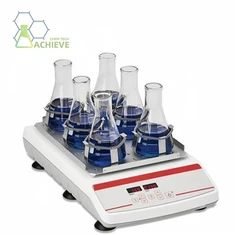
Disposable Erlenmeyer Flask
1) Narrow-mouth Bottle: 50ml~10000ml;
2) Big B Bottle: 50ml~3000ml;
3) Horn Mouth: 50ml~5000ml;
4) Wide-mouth Bottle: 50ml/100ml/250ml/500ml/1000ml;
5) Conical Flask With Cover: 50ml~1000ml;
6) Screw Conical Flask:
a. Black Lid (General Sets): 50ml~1000ml
b. Orange Lid (Thickening Type): 250ml~5000ml;
2. Single and Multi-mouth Round Bottom Flask:
1) Single Mouth Round Bottom Flask: 50ml~10000ml;
2) Inclined Three-mouth Flask: 100ml~10000ml;
3) Inclined Four-mouth Flask: 250ml~20000ml;
4) Straight Three-mouth Flask: 100ml~10000ml;
5) Straight Four-mouth Flask: 250ml~10000ml.
***Price List for whole above, inquire us to get
Description
Technical Parameters
Disposable Erlenmeyer Flask,A disposable conical flask is a commonly used container in laboratories,especially when it is necessary to avoid cross contamination or conduct large-scale experiments.Compared with traditional glass conical flasks,disposable conical flasks have the advantages of being lightweight,easy to handle,and low-cost,and have therefore been widely used in fields such as biology,chemistry,and medicine.This innovative laboratory tool holds a pivotal position in the scientific research community due to its unique advantages.As a disposable conical flask,it not only inherits the classic design of wide bottom and narrow mouth of traditional glass conical flasks,ensuring stability and liquid mixing efficiency during the experimental process,but also surpasses traditional materials in multiple aspects,greatly improving the convenience,safety,and economy of experimental operations.
Specifications


Diverse usage and meticulous operation
With the advancement of technology and the continuous changes in experimental needs,Disposable Erlenmeyer Flask is also constantly innovating and developing.In the future,we can look forward to the application of more new materials,such as more environmentally friendly biodegradable materials,and the integration of intelligent design,such as real-time monitoring of experimental conditions with built-in sensors.These innovations will further enhance the performance and practicality of product,contributing greater strength to the development of scientific research.
Its portability is a major highlight that cannot be ignored.Compared to heavy glass conical flaks,it is made of lightweight polymer materials such as PETG,which greatly reduces the burden and improves work efficiency for researchers when conducting a large number of experiments or frequently moving the flak.At the same time,this material also has good drop resistance,reducing the risk of breakage caused by accidental collisions during the experiment,further ensuring the safety of the experimenters.
The disposable feature of product demonstrates unparalleled advantages in avoiding cross contamination.In fields such as biology and microbiology,the purity and sterility of experimental materials are crucial.Although traditional glass conical flaks can be reused,the cleaning and disinfection process is cumbersome and difficult to completely ensure no residue,increasing the risk of cross contamination.The disposable conical flask fundamentally solves this problem by using a new flak for each experiment,without worrying about the residue of the previous experiment affecting subsequent experiments,thus ensuring the accuracy and reliability of the experimental results.
Cost-effectiveness is also one of the reasons why it is highly favored.Although from a single use perspective,its cost may be slightly higher than that of a glass conical flak,considering the costs of cleaning,disinfection,storage,and possible damage replacement during long-term use,the overall cost of a disposable conical flak is actually more economical.Especially when a large number of conical flaks are required for high-throughput experiments,this cost advantage is even more pronounced.
Design advantages
Disposable Erlenmeyer Flask,as an important tool in the laboratory,will continue to leverage its unique advantages and continuously innovate and develop in the future.By combining laboratory automation technology,launching personalized customization services,improving environmental performance,and expanding applications in education and training,these disposable conical flasks will provide more convenient,efficient,and sustainable support for the development of scientific research.
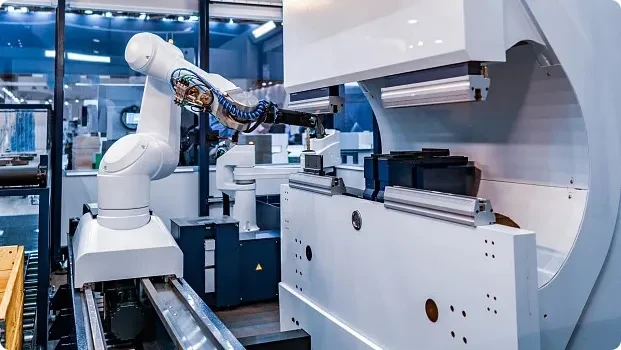
Laboratory Automation
With the rapid development of laboratory automation technology,it is expected to seamlessly integrate with advanced equipment such as automated workstations and liquid processing robots.By designing standardized interfaces and labeling systems,these flaks can be automatically identified and located,achieving full process automation from sample preparation,reaction mixing to product collection.This highly integrated automation solution will greatly improve experimental efficiency,reduce human errors,and enable researchers to focus on higher-level tasks such as experimental design and data analysis.
Personalized customization
In order to meet the specific needs of different laboratories and research projects,personalized customization services for its will also become a future development trend.For example,flasks with different capacities,shapes,colors,and even special coatings can be customized according to experimental requirements.Special coatings can include materials that are anti-static,anti fog,enhance transparency,or have specific chemical reactivity to optimize experimental results.In addition,personalized identification,barcodes,or QR codes can be printed on the flak for sample tracking,inventory management,and data analysis.


Environmental Protection and Sustainability
With the global emphasis on environmental protection and sustainable development,the environmental performance of its will also become a focus of attention.In the future,manufacturers will pay more attention to using recyclable,biodegradable,or biobased materials to produce these flasks,in order to reduce their negative impact on the environment.Meanwhile,optimizing design and production processes to reduce material and energy consumption is also an important way to achieve sustainable development.In addition,establishing an effective waste recycling and disposal system to ensure proper disposal of disposable conical flaks after use is also a key step in achieving environmental goals.
Education and Training
In the fields of education and training,it also has broad application prospects.Due to its low cost,easy accessibility,and no need for tedious cleaning and disinfection processes,it is highly suitable for student experimentation and skill training.By using these disposable flaks,students can focus more on experimental operations and theoretical knowledge without worrying about damage or contamination of experimental equipment.In addition,teachers can flexibly adjust the specifications and quantity of flaks according to experimental needs to meet the needs of different teaching scenarios.

Features
► Aseptic & Ready-to-Use
Disposable conical flasks are typically packaged sterile and ready to use, eliminating the need for additional cleaning and sterilization steps, saving lab time and resources.
► Scale & Accuracy
Bottles are clearly labeled with graduations, making it easy to accurately measure and record the volume of experimental liquids.
► Non-Pyrogenic
Certified non-pyrogenic materials ensure the safety and reliability of the experimental process.
► Gas Exchange & Leak Prevention
Equipped with a vent cap option that allows continuous gas exchange while preventing liquid leakage.
Difference
The significant differences between Disposable Erlenmeyer Flask and other types of flasks or containers are not only reflected in their respective physical properties,but also deeply affect all aspects of laboratory operations.The following is a further expansion and analysis of these differences:
Material and Durability
Disposable conical flask:
It is made of lightweight and transparent materials such as PETG or HDPE,ensuring convenience and safety during operation.These polymer materials not only have good transparency,making it easy to observe the reaction changes during the experimental process,but also have excellent chemical stability and can withstand a certain range of acid-base corrosion.However,this design also means that they are not suitable for long-term repeated use,as deformation,aging,or contamination issues may occur after multiple uses,thereby increasing the risk of experimental failure.
Other flasks:
Such as flat bottomed flasks and round bottomed flasks,are known for their sturdy glass material.Glass flaks are not only resistant to high temperatures and corrosion,but also capable of withstanding experimental operations under high pressure environments,making them an ideal choice for many complex chemical reactions and physical experiments.Its high durability allows these flaks to be reused after strict cleaning and disinfection procedures,greatly reducing experimental costs.
Purpose and Design
Disposable conical flask:
Its unique conical design not only looks beautiful,but more importantly,maximizes functionality.The conical bottom facilitates uniform mixing and stirring of liquids,while the wide bottle mouth facilitates the addition of reagents and sampling.In addition,its disposable nature makes it particularly popular in biological experiments that require highly sterile environments,such as cell culture,microbial fermentation,etc.In these experiments,any minor contamination can lead to experimental failure or result bias,making disposable conical flasks an important tool for ensuring experimental success.
Other flasks:
Flat bottomed flasks and round bottomed flasks are widely used in various laboratory operations due to their diverse designs and capacities.Flat bottomed flasks are suitable for heating and stirring reactants,while round bottomed flasks are more suitable for distillation and fractionation operations that require condensation reflux.The bottom shape and capacity design of these flasks are carefully crafted to meet specific experimental needs.
Cleaning and maintenance
Disposable conical flask:
Its biggest advantage lies in the convenient handling after use.Without the need for tedious cleaning and disinfection procedures,simply discarding it can avoid the risk of cross contamination.This not only saves valuable time and labor costs,but also improves the efficiency of laboratory work.
Other flasks:
In contrast,cleaning and maintenance of glass flasks are much more complex.Thoroughly clean and dry after each use to ensure cleanliness and no pollution during the next use.In addition,flasks that are not used for a long time also need to be properly stored to prevent the intrusion of dust and pollutants.
Cost and Environmental Protection
Wide Product Range:
Disposable conical flask:Although the cost of single use is relatively low,long-term costs may accumulate to a considerable level in the case of extensive use and frequent replacement.Meanwhile,the disposal of waste is also an issue that cannot be ignored.A large amount of disposable flask waste needs to be effectively treated and recycled to reduce environmental pollution.
Wide Applications:
Other flasks:Although the initial purchase cost may be higher,considering their reusability and long-term economic benefits,these costs can usually be gradually amortized over multiple uses.In addition,with the improvement of environmental awareness and the advancement of recycling technology,the recycling rate of glass flasks is also constantly increasing,which helps to reduce resource waste and environmental pollution.
Dissolved solid preparation,choice of solvent
► Common solvent
1. Water
Scope of application:Most inorganic salts,sugars,some organic matter,etc.,can be dissolved in water.
Advantages:safe,environmentally friendly,easy to obtain,and has good solubility to many reagents.
Note:For some reagents that are easily hydrolyzed or oxidized in water,consider using other solvents.
2. Organic solvent:
Scope of application:Used to dissolve insoluble or insoluble organic reagents in water,such as grease,wax,resin,rubber,dyes,etc.
Common organic solvents:methanol,ethanol,acetone,dimethyl sulfoxide (DMSO),dimethylformamide (DMF) and so on.
Selection principle:Select the appropriate organic solvent according to the polarity and solubility parameters of the reagent.Solutes and solvents of similar polarity are more likely to dissolve each other.
3. Mixing solvent:
Scope of application:When a single solvent cannot completely dissolve the reagent,you can consider using a mixed solvent.
Selection principle:By adjusting the proportion of solvents,the solubility of the reagent and the stability of the solution can be optimized.
► Solvent selection considerations
1. Solubility:Ensure that the solvent is able to dissolve the required reagent adequately.
2. Safety:Choose a solvent with low toxicity and low volatility to reduce the harm to the experimentalists and the environment.
3. Stability:The solvent should not react with the reagent to maintain the stability of the solution.
4. Economy:Under the premise of ensuring solubility and safety,choose a lower cost solvent to reduce the cost of the experiment.
► Solvent use precautions
1. Solvent purity:Use a high purity solvent to reduce the impact of impurities on the experimental results.
2. Solvent treatment:Some solvents may contain moisture or other impurities and require pretreatment (e.g.drying,distillation) to ensure their purity.
3. Solvent dosage:Reasonable control of solvent dosage according to experimental requirements and reagent solubility.
Hot Tags: disposable erlenmeyer flask, China disposable erlenmeyer flask manufacturers, suppliers, factory, Rotary Tablet Press Machine, Hydrothermal Synthesis Reactor, Hydrothermal Reactor Autoclave, Jacketed Glass Reactor, 10l Glass Reactor, Jacketed Lab Reactor
Previous
Vented Erlenmeyer FlaskSend Inquiry