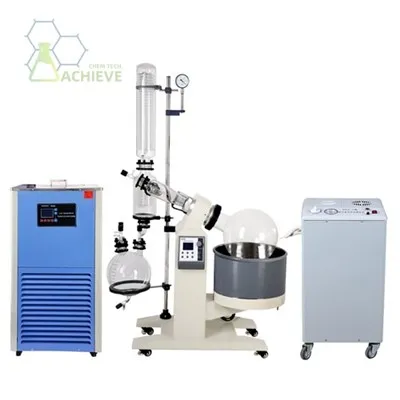
Blood Sample Centrifuge Machine
Description
Technical Parameters
A blood sample centrifuge machine is a key device used in medical laboratories to separate blood components, separating different components of blood (such as red blood cells, white blood cells, platelets, and plasma) by centrifugal force to provide basic samples for clinical diagnosis, blood testing, and biological research. It works on the principle of centrifugal force. When the blood sample is placed in the rotor of the centrifuge and rotated at high speed, the blood components of different densities are stratified under the action of centrifugal force:
The red blood cells settled to the bottom of the centrifuge tube because of their high density.
White blood cells and platelets form an intermediate layer (the "leukocyte layer" or "buffer layer");
The plasma is in the upper layer.
Blood sample centrifuges are indispensable tools in medical laboratories, and their efficient and precise separation capabilities provide important support for clinical diagnosis and scientific research. With the advancement of technology, the improvement of centrifuge automation and intelligence will further optimize the experimental process and improve the quality of detection.
Image processing and interpretation techniques
The image processing and interpretation technology of blood sample centrifuge machine is an important development direction in the field of modern blood analysis. By combining advanced image processing algorithm and automatic interpretation system, the efficiency and accuracy of blood sample analysis are significantly improved. The following are the core contents and applications of this technology:
Image processing technology
Image enhancement and segmentation
Image enhancement: For the uneven illumination of blood samples after centrifugation, adaptive histogram equalization and denoising algorithm (such as Gaussian filter) are used to enhance image contrast and eliminate noise interference.
Image segmentation: By threshold segmentation (such as Otsu algorithm) or edge detection (such as Canny operator), red blood cells, white blood cells, platelets and other components are separated from the background for subsequent analysis.
Feature extraction and quantification
Morphological features: Cell size, shape, texture and other features are extracted for cell classification.
Color characteristics: Based on HSV or Lab color space, analysis of cell color changes (such as hemolysis, jaundice) to assist disease diagnosis.
3D reconstruction and visualization
The three-dimensional structure of blood samples is reconstructed by using multi-view images or tomographic imaging technology, and the distribution and spatial relationship of cells are visually displayed.
Automatic interpretation technology
Machine learning and deep learning
Classification model: Support vector machine (SVM), random forest and other traditional machine learning algorithms, or convolutional neural network (CNN), recurrent neural network (RNN) and other deep learning models are used to classify cells (such as red blood cells, white blood cells, platelets).
Target detection: Target detection algorithms such as YOLO and Faster R-CNN are used to locate and count specific cells in the blood.
Rule engine and knowledge graph
Combined with the knowledge of medical experts, a rule engine was built to make a comprehensive judgment on cell morphology, number and other parameters to generate diagnostic suggestions.
The knowledge map is used to integrate the knowledge of hematology, pathology and other fields to improve the accuracy and interpretability of interpretation.
Multimodal fusion
Multi-source information such as optical microscope images and flow cytometry data is integrated to improve the comprehensiveness and reliability of interpretation.
Technical application scenarios
Blood routine test
Automatic analysis of red blood cells, white blood cells, platelet number and shape, to assist the diagnosis of anemia, infection, leukemia and other diseases.
Screening for blood diseases
Through image processing technology to identify abnormal cells (such as naive cells, cancer cells), improve the efficiency of early screening of blood diseases.
Blood transfusion safety detection
Blood samples are tested for pathogens (e.g. viruses, bacteria) to ensure transfusion safety.
Drug efficacy monitoring
Analyze the effects of drugs on blood composition and evaluate the effectiveness of treatment.
Technical advantages
High efficiency: Automated processing greatly reduces analysis time and improves detection efficiency.
Accuracy: Reduce human error and improve diagnostic accuracy.
Scalability: Easy to integrate new algorithms and functions to adapt to different application requirements.
Interpretability: Combine medical knowledge to provide intuitive diagnostic basis.
Future Development Direction
Artificial Intelligence and edge computing: real-time image processing and interpretation on local devices, reducing data transmission latency.
Miniaturization and portability: Develop miniaturized, low-power image processing modules for mobile medical scenarios.
Standardization and normalization: Establish a unified image processing and interpretation standards to promote the popularization and application of technology.

Summary
The image processing and interpretation technology of blood sample centrifuge realizes the automation and intelligence of blood analysis through the integration of computer vision, machine learning and medical knowledge, and provides strong technical support for clinical diagnosis, disease screening and blood transfusion safety. With the continuous progress of technology, the field will play a greater role in precision medicine, personalized treatment and so on.
Application in the extraction of biological macromolecules
In the field of biomedical research, blood sample centrifuge machines are the core tools for separating and extracting biological macromolecules such as DNA, RNA, proteins, etc. It generates centrifugal force through high-speed rotation to layer substances of different densities and sizes, thus achieving efficient separation of target molecules. The following is a detailed description of its application from the principle, operation process, application scenario and optimization strategy.
The working principle of centrifuge and the separation mechanism of biological macromolecules
Centrifuges operate on the principle of density gradient separation: when a blood sample is rotated at high speed, biomacromolecules of different densities are assigned to different positions due to differences in centrifugal force. For example, cell fragments and nucleoproteins are deposited at the bottom of the tube because of their high density, while proteins and nucleic acids in plasma are distributed in layers. By adjusting the rotational speed (RPM) and centrifugal time, the separation effect can be precisely controlled.
The operation process of biological macromolecule extraction

Sample pretreatment
Anticoagulant treatment: Blood samples should be added with EDTA, heparin and other anticoagulants to prevent coagulation from affecting the separation.
Cell lysis: Destruction of cell membranes by the addition of lysates (such as Trizol reagents), releasing nucleic acids and proteins.

Centrifugal parameter setting
Low speed centrifugation: 3000-5000 rpm for 5-10 minutes to remove cell debris and unlysed cells.
High speed centrifugation: 1000-16000 rpm, 10-20 minutes, separation of nucleic acids or proteins in the supernatant.
Ultracentrifugation: >100,000 rpm, used to separate suborganelles or viral particles.

Target molecule extraction
Nucleic acid extraction: Take the supernatant, add organic solvent such as chloroform, and separate the aqueous phase (including nucleic acid) and organic phase by centrifugation.
Protein extraction: The supernatant is taken and the protein is separated using a precipitant (such as trichloroacetic acid) or a ultrafiltration membrane.
Application scenarios and cases
Nucleic acid extraction
Clinical diagnosis: Viral RNA (such as the novel coronavirus) is extracted from the blood for PCR detection.
Genetic research: Isolation of DNA from white blood cells for whole genome sequencing.
Proteomics
Detection of disease markers: Plasma proteins were extracted and tumor markers were screened by mass spectrometry.
Signaling pathway studies: isolation of nuclear proteins and study of transcription factor regulation mechanisms.
Suborganelle separation
Mitochondrial studies: mitochondria were isolated by density gradient centrifugation to analyze the relationship between functional abnormalities and diseases.
Optimization strategy and precautions
Balanced centrifugal tube
Ensure symmetrical placement to avoid vibration resulting in separation failure.
Temperature control
Cryocentrifuge (4 ° C) is used for high speed centrifuge to prevent nucleic acid and protein degradation.
Repeated centrifugation
Complex samples (such as plasma) can be centrifuged multiple times to improve purity.
Verify the separation effect
The concentration and purity of the target molecules are detected by electrophoresis, spectrophotometer and other methods.
Technological progress and future direction
Miniaturized centrifuges: Portable devices for rapid on-site testing (e.g. POCT).
Automation System: Fully automated platform integrating sample processing, centrifugation and inspection.
Multi-omics analysis: Combining centrifugation with mass spectrometry and sequencing technology, protein-nucleic acid interaction is realized.

The blood sample centrifuge machine provides an efficient and repeatable technical means for the extraction of biomacromolecules through precise centrifugal force control. With the continuous progress of centrifugation technology, its application in molecular diagnosis, disease mechanism research and biopharmaceutical and other fields will be more extensive. Researchers need to select appropriate centrifugation parameters and separation strategies according to the experimental objectives in order to obtain high-quality biomacromolecule samples.
Development trend
With the continuous deepening of biomedical, clinical diagnosis and life science research, blood sample centrifuge machine as a key experimental equipment, its technology development is moving towards intelligence, automation, multi-function, miniaturization and green environmental protection. The following is an analysis of specific trends:


Intelligence and automation
Intelligent control system: Modern centrifuges are generally equipped with microcomputer control system, which supports parameter presetting, automatic speed regulation, fault diagnosis and other functions. For example, the user can set the centrifugal speed, time and temperature through the touch screen, and the system automatically completes the operation and monitors the running status in real time.
Automated process integration: Centrifuges are integrated with laboratory automation systems (such as sample pre-processing and testing equipment) to achieve full process automation from sample loading to result output, reducing manual intervention and improving experimental efficiency.
Multi-functional and modular design
Multi-purpose compatibility: The centrifuge supports a wide range of centrifuge tubes, adapters, and rotor types to handle different needs from tiny samples (such as PCR tubes) to large samples (such as blood bags).
Modular expansion: By changing the rotor or accessories, the centrifuge can be quickly switched to different application scenarios, such as cell separation, nucleic acid extraction, protein purification, etc.
High-speed and ultra-high-speed centrifugal technology
Speed increase: The speed of high-end centrifuges has exceeded 100,000 rpm, meeting the high-precision needs of sub-organelle separation (such as mitochondria, ribosomes) and viral particle purification.
Temperature control optimization: The temperature range of the frozen centrifuge is extended to -20 ° C to 40 ° C to ensure the stability of biological macromolecules such as nucleic acids and proteins during centrifugation.
Miniaturization and portability
Benchtop and portable centrifuges: The miniaturized design makes the centrifuge more suitable for laboratory or field testing with limited space (such as POCT equipment).
Low noise and vibration: Improve the user experience by reducing operating noise and vibration through shock absorption technology and optimized design.
Green environmental protection and energy efficiency
Energy-saving design: Efficient motor and intelligent sleep mode are adopted to reduce energy consumption and meet the needs of sustainable development of the laboratory.
Material innovation: Rotor and centrifugal tube materials are becoming lightweight, corrosion-resistant and recyclable, reducing environmental impact.
Security and compliance
Multiple safety protection: including rotor identification, unbalance detection, emergency braking and other functions to ensure safe operation.
Compliance with regulatory standards: The products have passed CE, FDA and other international certifications to meet the quality requirements of clinical and scientific research fields.
Data management and remote monitoring
Data recording and traceability: Centrifuge can record operating parameters, support data export and laboratory information management system (LIMS) docking.
Remote monitoring and maintenance: Through the Internet of Things technology, to achieve real-time monitoring of equipment status and remote fault diagnosis, reduce maintenance costs.
Customization and personalized service
Customer-oriented: Manufacturers provide customized solutions, such as special rotor designs, software function extensions, etc.
Technical support and training: Strengthen user training and technical support to help customers give full play to equipment performance.
Future outlook
With the integration of biotechnology, nanotechnology and artificial intelligence, blood sample centrifuges will further develop into precision, intelligence and integration. For example, the combination of microfluidic technology to achieve automated sample processing and centrifugation, or the use of AI algorithms to optimize centrifugation parameters, improve separation efficiency and purity. In addition, the application of centrifuges in emerging fields such as single-cell analysis and exosome research will continue to expand.
Conclusion
The development of blood sample centrifuge closely follows the needs of biomedical research, and provides more efficient and accurate solutions for scientific research and clinical use through technological innovation and functional upgrading. In the future, centrifuges will continue to play a central role in the field of life sciences, promoting breakthroughs in basic research and applied technologies.
Hot Tags: blood sample centrifuge machine, China blood sample centrifuge machine manufacturers, suppliers, factory, 10 Liter Short Path Distillation, Hand Tablet Press Machine, Rotary Evaporators, SS Reactor Manufacturer, Multi Station Rotary Press, Teflon Lined Hydrothermal Autoclave
Previous
Centrifugal Extraction EquipmentSend Inquiry