



The Glove Box
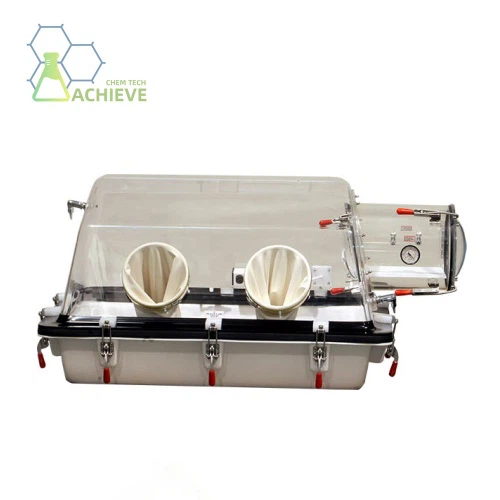
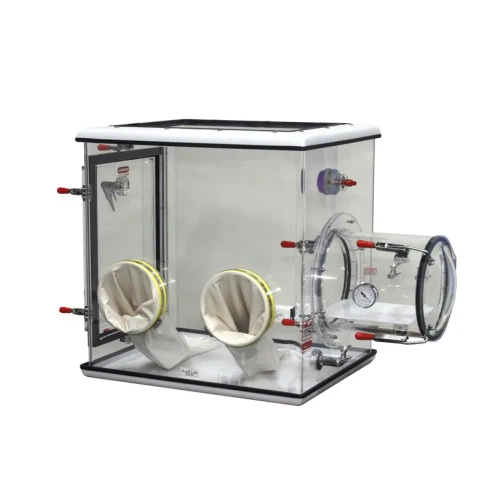
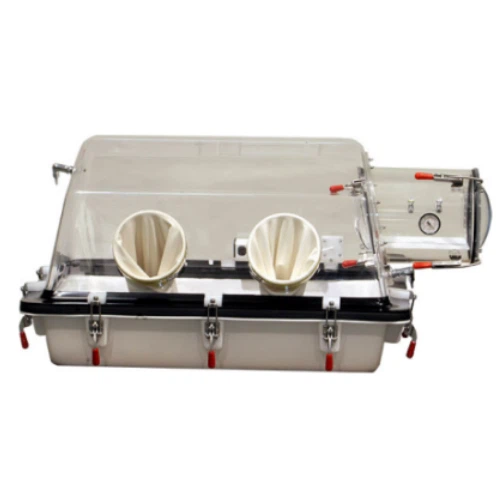
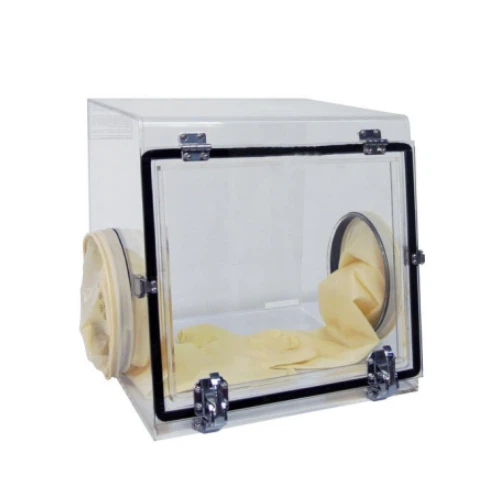
1)Acrylic Type A glove box: No sample transfer window, must be take it out from the door.
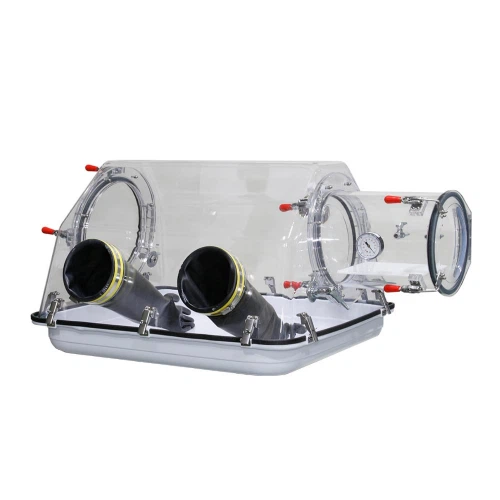
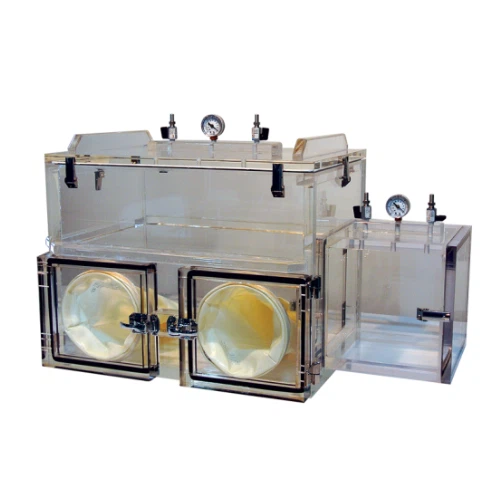
2)Acrylic Type B glove box:There is a sample transfer window, which can protect the gas environment inside the box from being damaged by the outside world.
3)Acrylic Type B glove box:The air in the box can be extracted through the vacuum pump, and then through the high purity dry inert gas into the box, and reach the lower water oxygen content in the box
2.Customization:
1)Single, double, multiple people and other different station boxes.
2)Different shapes, different structures, different applications, different thickness customization options.
3)Doors of different sizes can be opened on any side of the box to facilitate the entry and exit of equipment and accessories.
4)For other optional configurations, contact sales personnel.
***Price List for whole above, inquire us to get
Description
Technical Parameters
The glove box is a laboratory device that fills the box with high purity inert gases and circulates to filter out the active substances.The device creates a relatively anhydrous and oxygen-free environment by filling it with a high purity inert gas (such as argon or nitrogen) and circulating it to filter out the active substances (such as oxygen, moisture, organic gases, etc.). This environment usually has a water oxygen value of less than 1ppm and is suitable for protecting air-sensitive substances, such as materials that are easily oxidized or damp.
When using the equipment, the operating procedures should be strictly observed to ensure the normal operation of the equipment and the accuracy of the experimental results;Regular maintenance and maintenance of the equipment,such as replacing the purification column, checking the sealing performance, etc., to extend the service life of the equipment and keep its performance stable; When conducting biological experiments, it is necessary to pay attention to biosafety to avoid pollution of experimental substances to operators and the environment.
Specifications


Filter replacement
General filter replacement cycle
Inlet/exhaust filter element:
It is recommended to replace it every 2 years, but the specific operation needs to be determined according to the blockage of the filter element.
If the equipment is used more frequently or the concentration of dust particles in the environment is large, the filter element may be clogged faster, and the replacement cycle should be shortened.
Activated carbon device:
If the device is equipped with an activated carbon device, it is recommended to replace it every 3 to 6 months.
If a large number of organic solvents are involved, the replacement cycle should be adjusted according to the actual situation, and the latest should not exceed one year.
When replacing activated carbon twice, it is recommended to replace the filter element simultaneously.
Special filter replacement cycle
High Efficiency Air Filter:
If a HEPA filter is installed in the unit, its replacement cycle may need to be determined based on the results of daily clean room cleanliness tests.
When the cleanliness does not meet the requirements, the high efficiency filter should be replaced.
In general, the replacement cycle of high efficiency air filters may be 1.5 to 2 years, but this is not absolute, and it needs to be judged according to the actual situation.
VTI Water probe:
You are advised to perform maintenance every 2000 hours, but the specific maintenance period must be adjusted based on the actual environment and user habits.
In order to ensure the accuracy of detection, it is recommended to clean the water probe regularly, and the cleaning frequency can be determined according to the actual situation.
Matters needing attention
When replacing the air filter, strictly follow the operating rules to ensure the safety and accuracy of the operation.
When replacing the filter, check whether the filter model and specifications match the filter to ensure the filtering effect.
It is regularly maintained and maintained, including checking the sealing performance, replacing the purification column, etc., in order to extend the service life of the equipment and maintain its stable performance.
Tightness test method
Positive pressure airtight test method
Inflate its interior to the set positive pressure value.
Close the charging valve and start to maintain the pressure.
During the pressure holding period, the pressure inside the equipment is regularly monitored.
If the pressure continues to drop, it indicates a possible leak.
Negative pressure sealing test
It is sealed and pumped inside the box with a vacuum pump to make it reach a certain negative pressure value.
Monitor pressure changes during and after pumping during the pressure holding phase.
If the pressure recovery rate is abnormal, it may indicate that it has a leak.
Volumetric sealing test
Inflate the device and record the volume change of the gas during the inflation process.
The sealing performance was evaluated by comparing the change of gas volume before and after charging.
Oxo method
This method needs to be carried out under the condition of maintaining a certain negative pressure in the sealed box chamber.
The increase of oxygen concentration in the interior of a sealed chamber previously purified with inert gas was measured as a function of time.
The hourly leakage rate of the sealed chamber can be calculated by the change of oxygen concentration in the sealed chamber from the beginning of the inspection to the end of the inspection.
Gas flow type sealing test
The gas flow into the unit is monitored in real time during the charging process.
If the gas flow increases abnormally, it may mean that the device is not adequately sealed.
Constant pressure method
The leakage rate is calculated by measuring the flow rate of the exhaust system that maintains the negative pressure inside the isolated glove box at a constant level.
Glove integrity test
Use a glove leak detector for integrity testing before and after use.
The pressure attenuation method is usually to inflate the glove part to a certain pressure, and then monitor whether the pressure drops.
If the pressure drops beyond the allowable range, it indicates that the glove may be broken.
Helium mass spectrometry leak detection method
A small amount of helium gas is released into the device.
Use a helium mass spectrometer leak detector to detect the presence of helium outside the equipment tank.
Because helium molecules are so small that they can penetrate tiny gaps, the method is able to detect tiny leak points.
Pressure attenuation method (another)
It is filled with a gas (such as nitrogen) at a certain pressure.
Close all air inlet and outlet and record initial pressure value.
After some time, measure the air pressure in the box again.
Its air tightness is evaluated by calculating the pressure drop value.
Bubble method
The equipment is filled with gas at a certain pressure.
Apply a foaming agent such as soapy water to the suspected leak.
If bubbles are produced, there is a leak.

It should be noted that each method has its own characteristics and scope of application, and which detection method to choose can be determined according to the specific use and use environment of the device. In practice, it can also be combined with visual inspection and other auxiliary means for comprehensive judgment. At the same time, regular maintenance and inspection is also an important means to ensure its sealing performance.
Applications in lead bonding
Lead bonding is a traditional method of connecting circuits using metal leads. In semiconductor manufacturing, lead bonding is often used to connect metal leads to chip pads to ensure the transmission of electrical signals. The process involves passing a metal lead through a capillary cleaver, heating and forming it into a ball, and then gluing it to a heated pad. There are many methods of wire bonding, including hot pressing method, ultrasonic method and thermal ultrasonic method.
Examples of applications in lead bonding


Lead bonding of microelectronic devices
In the manufacturing process of micro electronic devices (such as micro sensors, micro actuators, etc.), lead bonding is a key step to connect the internal circuit of the device to the external pins. The glove box provides a clean, oxygen-free, water-free environment that ensures a high quality of wire bonding, thereby improving the performance and reliability of micro-electronic devices.
Lead bonding in microelectronic packaging
In the process of microelectronic packaging, it is necessary to connect the chip to the packaging substrate. Lead bonding is one of the important methods to realize this connection. The lead bonding in the equipment can effectively avoid the impact of pollutants such as oxygen, moisture and dust in the air on the packaging process, and ensure the reliability and stability of the packaging.
Lead bonding of photoelectric devices
In the manufacturing process of photoelectric devices (such as light sensors, light detectors, etc.), lead bonding is also required to connect the photoelectric conversion elements inside the device and the external circuit. This equipment provides an oxygen-free and water-free environment, which helps protect the sensitive components of optoelectronic devices from oxidation and hydrolysis, thereby enhancing the performance and stability of the devices.
Lead bonding of biomedical electronic devices
In the biomedical field, the reliability and stability of electronic devices are critical to the performance and safety of medical devices.The device plays an important role in the lead connection process of biomedical electronic devices, ensuring that the device is connected in a clean, oxygen-free, water-free environment, thereby improving the reliability and service life of the device.
Lead bonding of HPC chips
High-performance computing chips require high-speed, stable electrical connections to ensure the accuracy of data transmission and processing. This device provides a clean, oxygen-free and water-free environment during the wire connection process of HPC chips, ensuring the high-quality completion of the connection and thereby enhancing the performance and stability of the chips.
Lead bonding in sensor manufacturing
A sensor is a device that detects a physical quantity and converts it into a measurable signal. In the manufacturing process of sensors, lead bonding is a key step to connect the internal and external circuits of sensors. The glove box provides a clean, oxygen-free, water-free environment for wire bonding in sensor manufacturing, ensuring a high quality connection completion that improves sensor performance and reliability.
Challenges and Future Development Directions
Technical challenges
Ultra-low leakage rate control
In high-demand fields such as the nuclear industry, the leakage rate of glove boxes needs to be controlled at an extremely low level (such as 10⁻⁹ Pa·l/s), which puts forward higher requirements for sealing technology and detection methods.
High radiation environmental adaptability
In the decommissioning of nuclear facilities, glove boxes need to withstand higher radiation doses, and the radiation resistance performance of materials becomes crucial.
Solvent compatibility
In organic synthesis, glove boxes need to avoid the poisoning of purification materials by solvent vapors, and dedicated solvent adsorption devices need to be developed.
Future development direction
Integration and miniaturization
Integrate the glove box with microscopes, mass spectrometers and other equipment to achieve the "in-situ analysis" function; Develop miniaturized glove boxes to meet laboratory-level research requirements.

Biosafety upgrade
For operations involving highly pathogenic pathogens, a negative pressure glove box has been developed to prevent aerosol leakage and cross-contamination.

Interdisciplinary applications
Expand application scenarios in fields such as deep-sea microbial research (involving radioactive isotope tracing) and the synthesis of materials in extreme environments (such as the first wall materials for nuclear fusion).

Cloud computing and data Management
By integrating cloud computing technology, remote storage and analysis of glove box operation data are achieved, enhancing the efficiency of equipment management.

Policy and standard promotion
International standards: Adhere to standards such as those of the International Commission on Radiation Protection (ICRP) and the International Electrotechnical Commission (IEC) to ensure the compliance of the equipment.
Industry certification: Passed ISO 14644 cleanliness certification and IEC 61508 functional safety certification to enhance the market competitiveness of products.
Hot Tags: the glove box, China the glove box manufacturers, suppliers, factory, Glass Reactor Laboratory, Hydrothermal Synthesis Autoclave Reactor, Rotovap Distillation, Stainless Steel Jacketed Reactor, Short Path Vacuum Distillation, Stainless Steel Reactor
Previous
Nuclear Glove BoxSend Inquiry


