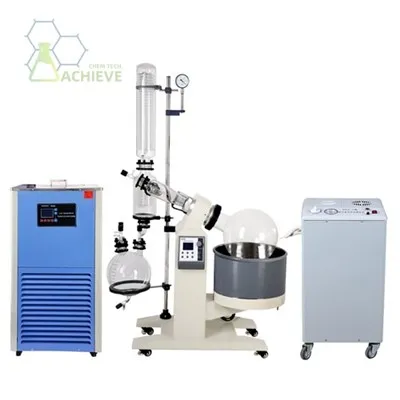
Borosilicate Glass Reactor
(1)1L/2L/3L/5L---Standard
(2)10L/20L/30L/50L/100L---Standard/EX-proof/Lifting Kettle
(3)150L/200L---Standard/EX-proof
***Price List for whole above, inquire us to get
2. Customization:
(1)Design support
(2)Directly supply the Senior R&D organic intermediate, shorten your R&D time and cost
(3)Share the advanced purifying technology with you
(4)Supply the high quality chemicals and analysis reagent
(5)We want to assist you on Chemical Engineering (Auto CAD, Aspen plus etc.)
3. Assurance:
(1)CE and ISO certification Registered
(2)Trademark: ACHIEVE CHEM(since 2008)
(3)Replacement parts within 1-year for free
Description
Technical Parameters
The Borosilicate Glass Reactor is a sophisticated piece of laboratory equipment renowned for its exceptional chemical resistance, thermal stability, and optical clarity. Crafted from high-quality borosilicate glass, it is specifically designed to withstand extreme temperature fluctuations. Boasting a low coefficient of thermal expansion, this reactor can be safely heated and cooled without the risk of cracking or shattering, ensuring the safety of researchers and the integrity of experiments. Its clear glass construction allows for direct visualization of reactions in progress, facilitating precise monitoring and control of experimental conditions.
|
|
|


Introduction
Borosilicate glass reactor is suitable for a variety of chemical reactions, especially some chemical reaction conditions that require higher temperature, greater temperature difference or harsh conditions.
Esterification reaction is an organic chemical reaction, which involves the process of carboxylic acid and alcohol generating ester compounds under the action of catalyst. Because esterification usually needs heating and stirring, borosilicate glass has good heat resistance and chemical stability, which can meet the needs of esterification.
Dehydration of alcohol is an organic chemical reaction, which involves the process of converting alcohol into ether compounds under the action of catalyst. Because alcohol dehydration reaction usually needs heating and stirring, and borosilicate reactor can withstand higher temperature and better heat resistance, it is suitable for alcohol dehydration reaction.
Transesterification is an organic chemical reaction, which involves the exchange of ester groups in ester compounds with ester groups in another molecule. Because the transesterification reaction needs to be carried out under the conditions of heating and stirring, the heat resistance and chemical stability of reactor can meet this demand.
Pyrolysis reaction is an organic or inorganic chemical reaction, which involves the decomposition of compounds into simpler substances at high temperature. The chemical reactor is an ideal choice because the pyrolysis reaction needs to withstand higher temperature and better heat resistance.
Amination reaction is an organic chemical reaction, which involves the addition reaction of ammonia or amine with another molecule. Because amination reaction usually needs heating and stirring, the heat resistance and chemical stability of lab reactor can meet this demand.

Testing Method of Heat Resistance & Stability
Borosilicate was discovered through a series of scientific advancements in the late 19th century. Initially, researchers aimed to enhance the properties of traditional glass by incorporating additives. Otto Schott, a German chemist, played a pivotal role in its development. He systematically experimented with the inclusion of boron oxide (B₂O₃) into silica-based glass compositions, discovering that this blend not only significantly improved the glass's thermal shock resistance but also enhanced its resistance to chemical corrosion. This groundbreaking invention was met with enthusiasm in industries requiring high-performance glass, such as laboratory equipment, cookware, and lighting. Borosilicate's ability to withstand extreme conditions without breaking or degrading made it an invaluable material for scientific research, culinary arts, and household use.

Heat Resistance Detection
- Thermal shock resistance temperature test: It is heated to a certain temperature and quickly put into cold water to observe whether it is broken. Repeated tests were carried out to determine its thermal shock resistance.
- Determination of thermal expansion coefficient: The thermal expansion coefficient is calculated by measuring the size change of reactor at different temperatures. Heat the reactor to a certain temperature, measure its length, width and height changes, and then calculate the thermal expansion coefficient.
Chemical Stability Detection
Acid resistance test
Put the borosilicate glass device into acid solution with different concentrations, and observe whether there are bubbles or corrosion on its surface. By comparing the effects of different acid solutions on the glass reactor, the acid resistance was evaluated.
01
Alkali resistance test
Put the borosilicate glass product into alkali liquor with different concentrations, and observe whether there are bubbles or corrosion on its surface. The alkali resistance of glass reactor was evaluated by comparing the effects of different alkali solutions.
02
Water resistance test
Soak the borosilicate reactor machine in water at different temperatures for a period of time, and observe whether there are water marks or water stains on its surface. By comparing the effects of different temperatures on the glass reactor, the water resistance of its inner surface was evaluated.
03
Solvent resistance test
Put the reactor into different kinds of organic solvents, and observe whether the surface of is dissolved, swollen or discolored. By comparing the effects of different solvents on the glass reactor, its chemical stability was evaluated.
04
They are popular all over the world, especially in the fields of chemical research and laboratory.
- United States: The United States has great strength in scientific research and innovation, which is widely used by many American chemical laboratories and research institutions.
- Germany: Germany is famous for its world-class scientific research and technological development. German laboratories and universities often use it in research and teaching.
- Japan: Japan has made outstanding achievements in the field of science and technology, and its laboratories and research institutions widely use reactors for various types of experiments.
- Britain: Britain has a long history and excellent reputation in the fields of science and education. Reactors are widely used in laboratories and universities in Britain.
Other countries and regions with advanced technology, such as Canada, Australia, France and Switzerland, also commonly use reactors. These countries and regions pay attention to scientific research and innovation, and have relatively high requirements for laboratory equipment.
Features
Borosilicate glass, renowned for its exceptional thermal shock resistance and durability, is a type of glass with a unique blend of silica, boron trioxide, and other oxides. Its composition endows it with the ability to withstand rapid temperature changes without cracking, making it ideal for laboratory equipment, cookware, and high-performance lighting applications. The addition of boron significantly increases the glass's strength and chemical resistance, allowing it to retain clarity even under extreme conditions. Borosilicate glass is also lightweight yet sturdy, making it a popular choice for scientific instruments and household items alike. Its durability and versatility have earned it a reputation as a premium material, trusted by professionals and enthusiasts worldwide.
Equipped with durable fittings and seals, the borosilicate glass reactor is also highly versatile, accommodating various accessories such as stirring mechanisms, temperature controllers, and reflux condensers. This modularity enables it to be tailored to specific experimental requirements, making it a versatile tool in research laboratories across diverse fields like pharmaceuticals, biotechnology, and material science. Furthermore, the reactor's smooth surface and resistance to chemicals like acids, bases, and solvents make it easy to clean and maintain, ensuring long-term reliability and cost-effectiveness.
Hot Tags: borosilicate glass reactor, China borosilicate glass reactor manufacturers, suppliers, factory, Hydrothermal Autoclave 100 Ml, 500ml Short Path Distillation Kit, 1l Short Path Distillation Kit, Laboratory Rotary Evaporator, Hydrothermal Autoclave, High Pressure Batch Reactor
Previous
Single Layer Glass ReactorNext
Rotavap LabSend Inquiry