





Pneumatic Peristaltic Pump
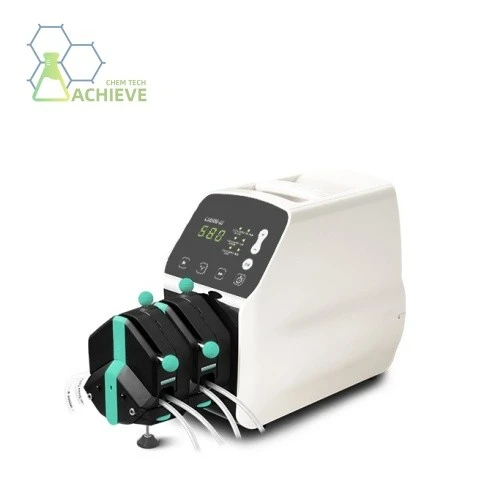
Flow range:0.0053-6000ml/min
2.Basic peristaltic pump:LabM series
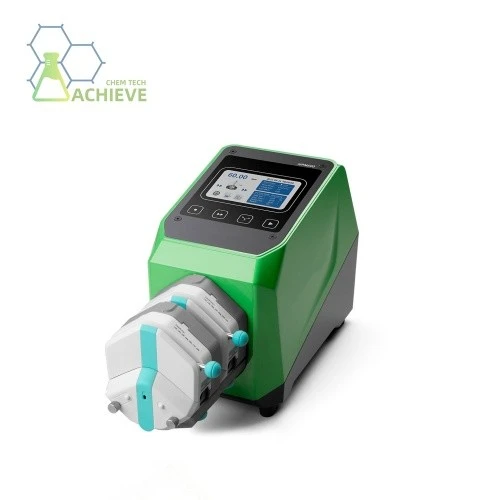
Flow range:0.0053-3100ml/min
3.Industrial peristaltic pump
Speed range:0.1-600rpm
Description
Technical Parameters
Pneumatic peristaltic pump is a pumping device designed specifically for extracting gases and special media. The core working principle is to drive the deformation of the hose inside the pump body through the control unit of compressed air, thereby achieving the transportation of materials along the pipe. This pump can handle media with high concentration, high viscosity, easy crystallization, strong corrosiveness, and high particle content because the hose is not damaged internally. And its fully sealed design effectively prevents leakage and contamination, and has excellent self-priming, vacuuming, and forward and reverse rotation capabilities. In the field of chemical engineering, pneumatic pristaltic pumps can transport corrosive media, high viscosity, and high-purity liquids; In the petroleum industry, it can handle crude oil, putty, sludge, and slurry; In the food industry, various types of paste, cheese, and oils are no problem; In the pharmaceutical industry, it is used to transport drugs, emulsions, powders, and slurries. In summary, pneumatic pristaltic pumps have demonstrated extensive application potential in multiple industries due to their unique advantages.
Parameter


Structural composition
Pneumatic peristaltic pump, as an efficient and flexible fluid conveying device, has a precise structural design and various components work together to achieve stable fluid conveying. Specifically, the pneumatic pristaltic pump is mainly composed of the following key components:
1. Drum:
The drum is the heart zone of the pneumatic pristaltic pump, playing an important role in installing and supporting the flexible casing. It is usually designed as a cylindrical shape with a smooth surface and a certain degree of hardness to ensure that the flexible pipe shell can fit tightly during installation, avoiding displacement or loosening during transportation. The material of the drum is usually chosen to be corrosion-resistant and wear-resistant to meet the transportation needs of different fluid media.

2. Pressure roller:
The pressure roller is a key transmission component in pneumatic pristaltic pumps, which applies pressure to the flexible pipe shell by rotating it, causing it to exhibit a preliminary peristltic state. The pressure roller is usually designed as a cylindrical shape, covered with wear-resistant material on the surface to reduce friction loss with the flexible pipe shell. During the rotation process, the pressure roller periodically squeezes the flexible pipe shell, pushing the fluid inside it forward. The speed and pressure of the pressure roller can be adjusted through a regulating mechanism to meet the needs of different conveying speeds and flow rates.

3. Compressed air circuit:
The compressed air circuit is the power source of the pneumatic pristaltic pump, which achieves fluid transportation through pressure control. The compressed air circuit is usually composed of components such as gas source, pressure regulating valve, and gas pipe. The gas source provides stable air pressure, and the pressure regulating valve is used to adjust the magnitude of the air pressure to meet the needs of different fluid media and transportation conditions. The trachea is responsible for delivering compressed gas to pressure rollers or related transmission components, driving their rotation and generating peristltic effects.

4. Method valve:
The method valve plays a crucial role in pneumatic pristaltic pumps, as it is used to precisely control the pressure of the compressed air path, ensuring the continuity and stability of peristltic propulsion. Method valves are typically designed as adjustable valves that can change the flow rate and pressure of compressed gas by adjusting their opening, thereby achieving precise control over fluid delivery speed and flow rate. In addition, the method valve also has the function of preventing gas leakage and maintaining stable system pressure.

5. Discharge port:
The discharge port is the final position where the fluid is pushed and is also a key component of the pneumatic pristaltic pump for outputting fluid. The discharge port is usually designed as a pipeline or interface connected to a flexible pipe shell, and the fluid is transported to the discharge port and discharged through the flexible pipe shell under the push of a pressure roller. The size and shape of the discharge port can be designed according to actual needs to meet the requirements of different fluid media and transportation conditions. At the same time, the discharge port can also be equipped with monitoring devices such as flow meters and pressure sensors to monitor and record the real-time transportation of fluids.

In summary, the structural composition design of the pneumatic pristaltic pump is precise and powerful, and the various components work together to achieve stable fluid transport. By adjusting the speed and pressure of the pressure roller, controlling the pressure of the compressed air path, and accurately designing components such as the discharge port, pneumatic pristaltic pumps can meet the fluid transportation needs of different industries and application scenarios.
working principle


The working principle of pneumatic peristaltic pump is relatively simple and efficient. When using a pneumatic peistaltic pump, the flexible casing will exhibit a preliminary peristltic state through the rotation of the pressure roller. Then, through the control of the compressed air path, peristalsis continuously advances forward. As peristalsis progresses, the fluid is continuously pushed to a fixed discharge port, thereby achieving fluid transport.
Specifically, the working principle of a peristltic pump can be divided into the following steps:
(1) Initial state: In the initial state, the flexible pipe shell is installed on the drum and is in a relaxed state.
(2) Pressure roller rotation: When the pressure roller starts to rotate, it comes into contact with the flexible pipe shell and generates friction. This friction force causes the flexible casing to start wriggling.
(3) Compressed air path control: As the pressure roller rotates, the compressed air path begins to work. By controlling the method valve, air pressure is applied to the flexible casing, causing it to further creep.
(4) Fluid transport: During the peristltic process, the fluid is continuously pushed to the discharge port. Due to the continuous peristalsis of the flexible casing, fluid transport is also continuous.
(5) Discharge: When the fluid reaches the discharge port, it is discharged and transported to the target location.
Application Area
Pneumatic peristaltic pumps are widely used in various fields due to their high precision, pollution-free, easy cleaning and maintenance characteristics. Here are some of the main application areas:

Laboratory:
In the laboratory, peristltic pumps are commonly used for the distribution and measurement of small volume fluids. It has high precision and high repeatability, which can meet the precise requirements of fluid transportation in experiments. In addition, peristltic pumps are also used in various laboratory applications such as cell tissue transport, specimen decolorization, perfusion, liquid chromatography analysis, etc., to improve the accuracy and efficiency of experiments.
Pharmaceutical industry:
In the pharmaceutical field, peristltic pumps are widely used to transport various corrosive, viscous media, flammable and explosive liquids with special properties. Peristltic pumps can effectively prevent drug contamination and cross contamination, improving the safety and quality of drugs. At the same time, it can achieve precise drug proportioning and flow control, improving production efficiency and product quality.


Chemical industry:
In the chemical process, peristltic pumps have advantages such as corrosion resistance, wear resistance, wide temperature range, and good sealing performance. This enables it to be used for transporting various corrosive, viscous media, flammable and explosive liquids with special properties. In chemical production, peristltic pumps are commonly used for raw material transportation, reactor feeding, product collection, and other processes to ensure the continuity and stability of the production process.
Environmental Protection:
In the field of environmental protection, peristaltic pumps are commonly used in wastewater treatment, gas emission control, and other areas. It can effectively prevent the leakage of wastewater and exhaust gas, and protect the environment from pollution. Meanwhile, peristltic pumps can also achieve continuous transportation and discharge of wastewater, improving the efficiency of wastewater treatment.


Beverages:
In the beverage industry, peristltic pumps can be used to transport viscous liquids and liquids containing small particles. Its self filling and dry transport capabilities can avoid catastrophic failures in many industrial systems, ensuring the continuity and stability of the production process. In addition, peristltic pumps are easy to clean and maintain, meeting the hygiene requirements of the beverage industry.
Product parameters and selection
When choosing a pneumatic pristaltic pump, the following parameters need to be considered:
Flow rate range: The flow rate range refers to the maximum and minimum fluid flow rates that a peristaltic pump can deliver. Different peristaltic pumps have different flow rate ranges, and users need to choose according to their actual needs.
Rotation speed: Rotation speed refers to the rotational speed of the pressure roller of the peristaltic pump. The higher the rotation speed, the faster the peristltic propulsion speed and the greater the flow rate. However, it should be noted that excessive rotation may lead to increased wear of the flexible casing, affecting its service life.
Pump head types: There are various types of pump heads for peristltic pumps, such as standard type, easy to install type, easy to install type II, multi-channel type, etc. Different types of pump heads are suitable for different fluid transportation needs and occasions. Users need to make choices based on their actual needs.
Pump tube material: The pump tube is a key component used to transport fluids in peristltic pumps. Different pump tube materials have different characteristics such as corrosion resistance, temperature resistance, and elasticity. Users need to choose the appropriate pump tube material based on the properties of the fluid and the delivery conditions.
Driving mode: There are two driving modes for pneumatic peristaltic pumps: pneumatic and electric. The pneumatic drive method has characteristics such as explosion-proof and anti spark, and is suitable for flammable and explosive environments. The electric drive method has the characteristics of simple structure and easy maintenance, and is suitable for general occasions. Users need to make choices based on their actual needs.
Hot Tags: pneumatic peristaltic pump, China pneumatic peristaltic pump manufacturers, suppliers, factory, Tablet Punching Machine, Single Layer Glass Reactor, Zp17 Rotary Tablet Press, Short Path Molecular Distillation, Jacketed Glass Reactor, 50L Jacketed Reactor
Previous
4 Channel Peristaltic PumpSend Inquiry


