



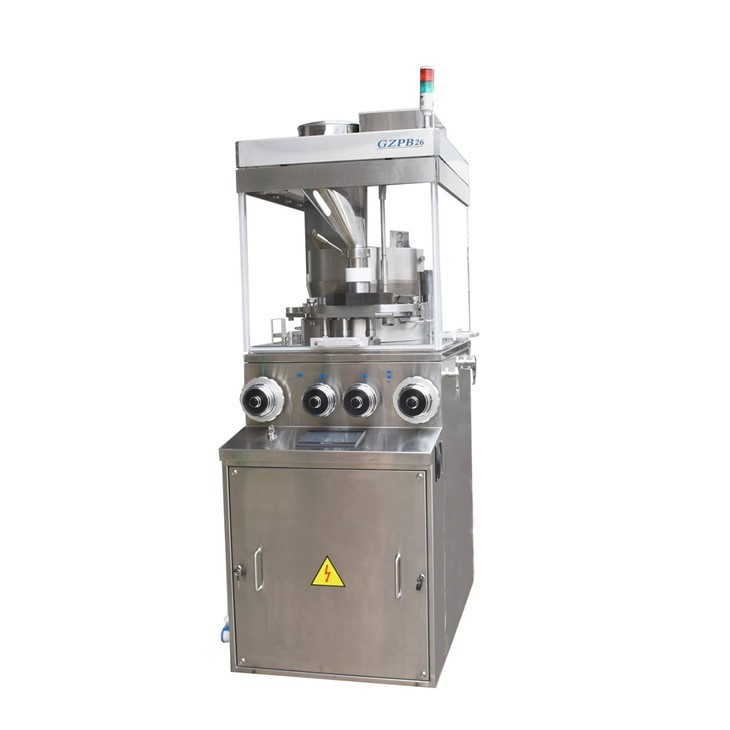


Tablet Pill Maker
(1)Number of Stations: 5/7/9/12/19
(2)Production Capacity: 9000/12600/16200/17000/40000(PC/H)
***Price List for whole above, inquire us to get
2. Customization:
(1)Design support
(2)Directly supply the Senior R&D organic intermediate, shorten your R&D time and cost.
(3)Share the advanced purifying technology with you
(4)Supply the high quality chemicals and analysis reagent
(5)We want to assist you on Chemical Engineering (Auto CAD, Aspen plus etc.)
3. Assurance:
(1)CE and ISO certification Registered
(2)Trademark: ACHIEVE CHEM(since 2008)
(3)Replacement parts within 1-year for free
Description
Technical Parameters
The Tablet Pill Maker, also known as a tablet press machine, is a vital piece of equipment in the pharmaceutical industry for producing solid dosage forms such as tablets. It plays a crucial role in converting powdered or granular medications into compressed, uniform tablets that are easy to swallow and store.
The use significantly enhances production efficiency and ensures the uniformity and stability of tablets, making them safe and effective for patients. Regular maintenance and calibration of these machines are essential to maintain their accuracy and prolong their lifespan. Overall, it is an indispensable tool in the manufacturing of solid dosage forms within the pharmaceutical sector.

Specifications Table
|
|
|


Customization Capabilities
 |
 |
 |
 |
Tablet Pill Makers, often referred to as tablet presses in the pharmaceutical and related industries, are machines designed to compress powdered or granular materials into tablets. These machines typically come with standard molds that produce tablets of a specific shape and size. However, the customization of molds to create tablets with different patterns is indeed possible, albeit subject to certain conditions and limitations.
Custom Mold Design
Manufacturers of tablet presses often offer custom mold design services. This involves creating molds that can produce tablets with unique shapes, logos, or other patterns. The design process typically involves working closely with the customer to understand their specific requirements and then using advanced manufacturing techniques to create the desired mold.
Material Considerations
The material used for the mold is crucial in determining its durability and ability to produce high-quality tablets. Custom molds are typically made from high-strength, wear-resistant materials that can withstand the compression forces involved in the tablet-making process.
Technical Limitations
While customization is possible, there are technical limitations to consider. The complexity of the pattern, the size of the tablet, and the material being compressed can all affect the feasibility of customization. Additionally, custom molds may require longer lead times and higher costs compared to standard molds.
Regulatory Compliance
In the pharmaceutical industry, the production of tablets must comply with strict regulations regarding quality, safety, and efficacy. Therefore, any custom mold used in the tablet-making process must be validated to ensure that it produces tablets that meet these regulatory requirements.
In summary, tablet pill makers can be customized with molds that produce tablets with different patterns. However, this customization is subject to technical limitations, material considerations, and regulatory requirements. Customers interested in custom mold design should consult with their tablet press manufacturer to discuss their specific needs and explore the feasibility of customization.
Sugar-coated tablets
 |
 |
 |
 |
Sugar-coating, also known as sugar-confectionery coating, is a process applied to tablet medications to create a smooth, sweet, and often colorful outer layer. This layer serves several purposes, including improving the taste and appearance of the tablet, as well as providing a protective barrier that can enhance stability, mask unpleasant odors or tastes, and make the tablet easier to swallow.
Smoothing (or Base Coating)
This initial step involves applying a layer of sugar syrup or a sugar-based solution to the tablet. The purpose of this layer is to create a smooth surface that will allow for even application of subsequent coatings. This stage may also involve the use of talc or other powdered materials to help the syrup adhere to the tablet and create an even texture.
01
Sub-coating (or Waterproofing)
In some cases, a sub-coating layer may be applied to provide additional protection and waterproofing. This layer can help prevent moisture from penetrating the tablet and causing it to degrade over time.
02
Coloring
If desired, the tablets can be given a specific color during this stage. Coloring agents are added to the sugar syrup or coating material and applied evenly over the tablet. This not only enhances the visual appeal of the product but also allows manufacturers to differentiate between different strengths or formulations.
03
Polishing
The final step in the sugar-coating process involves polishing the tablets to give them a smooth, glossy finish. This can be achieved using materials such as sugar, talc, or polishing wax, which are applied and then buffed off to create a shiny surface.
04
Sugar-coated tablets, known for their appealing taste and ease of swallowing, are a favorite among patients. They also hold appeal for pharmacists and manufacturers because they provide a flexible and economical means of enhancing the visual appeal and taste of medications. However, it's crucial to recognize that these tablets may not be appropriate for everyone, especially individuals with diabetes or other conditions necessitating limited sugar consumption. For such patients, alternative coating techniques like film coating can be employed.
Film coating is a process where a thin layer of polymer is applied to the tablet, primarily for aesthetic purposes and to improve swallowability. Unlike sugar coating, film coatings can be formulated to be sugar-free, making them suitable for patients with diabetes or those on low-sugar diets. Additionally, film coatings can offer faster disintegration times and improved stability for the medication.
When considering film coating as an alternative, it's important to note the various polymers and excipients used in the process, as they can affect the tablet's taste, appearance, and overall performance. Manufacturers can tailor the coating formulation to meet specific requirements, such as resistance to moisture, light, or other environmental factors, which can extend the shelf life of the product.
In summary, while sugar-coated tablets are popular due to their taste and ease of use, they may not be suitable for all patients. Film coating offers a versatile and often sugar-free alternative that can meet the needs of a broader patient population, including those with dietary restrictions. By carefully selecting the coating materials and process, manufacturers can create tablets that are not only effective but also appealing and safe for a wide range of users.
Precautions for use
Preparation before operation
Equipment inspection
Check that all components of the device are intact and free from loosening, wear, or foreign matter.
Make sure that the wearing parts such as molds and screens are installed correctly without deformation or damage.
Raw material pretreatment
The powder should be screened (such as more than 80 mesh) to ensure uniform particle size and avoid clogging the equipment.
Add appropriate amount of adhesive or lubricant according to the characteristics of the raw material, and adjust the humidity to the appropriate range (such as 40%-60% relative humidity).
Clean and disinfect
Wipe the parts that come into contact with the drug with 75% alcohol to prevent cross-contamination.
Check cleaning records to ensure equipment complies with GMP requirements.
Parameter setting
According to the characteristics of raw materials and pill specifications, appropriate parameters such as pill making speed, pressure and temperature are set.
When using or replacing raw materials for the first time, it is necessary to conduct small batch trial production and adjust the parameters to the best state.
Running specification
Raw material delivery
Uniform and continuous input of raw materials to avoid excessive one-time input resulting in equipment overload.
Check the material hopper regularly to prevent clumps or foreign objects from entering the equipment.
Real-time monitoring
Observe the operating status of the device for abnormal noise, vibration, or temperature increase.
Regularly check the pill quality, such as roundness, hardness, dissolution, etc., timely adjust the parameters.
Safe operation
Wear protective gloves and masks during operation to avoid contact with skin or inhalation of powder.
Do not reach into the operating equipment, and press the emergency stop button immediately in case of emergency.
Environmental control
Keep the production environment clean, temperature 18-26℃, humidity 45%-65%, to prevent raw materials from moisture or caking.
Post-shutdown maintenance
Thorough cleaning
After turning off the power supply, clean up the residual powder and debris in the device immediately.
Clean molds, screens and other parts with a soft brush or vacuum cleaner to avoid residue curing.
Inspection of wearing parts
Check mold, screen, seal ring, etc. wear, timely replacement of damaged parts.
Lubricate moving parts (e.g. bearings, gears) to ensure flexible rotation.
Record and identification
Enter device running records, including production time, parameter Settings, and maintenance status.
Mark the status of the stopped equipment (such as "to be cleaned" and "under maintenance") to prevent misoperation.
Long-term storage
If the device is disabled for a long time, cover it with a dustproof cover and store it in a dry and ventilated place.
Periodically (such as monthly) turn on idle for 10-15 minutes to prevent parts from rusting.
Common problems and solutions
|
Problem |
Possible cause |
Solution |
|
The pill was not formed |
Insufficient humidity and pressure of raw materials |
Increase the amount of adhesive or the pressure |
|
The pill has a rough surface |
Mold wear, raw material particle size uneven |
Replace the mold and re-screen the raw materials |
|
Device temperature is too high |
Insufficient lubrication, long-term overload operation |
Add lubricating oil to reduce single secondary production |
|
Noise anomaly |
Parts are loose and foreign bodies enter |
Tighten screws and clean foreign objects |
Safety and compliance
Operator qualification
Must have professional training, familiar with equipment operation procedures.
Compliance
Ensure that the equipment meets the requirements of GMP, FDA and other regulations, and conduct regular verification.
Emergency treatment
Develop emergency plans for equipment failure, equipped with fire extinguishers and other safety facilities.
Summary
The standard use of tablet pill maker making machine needs to start from three aspects: preliminary preparation, process monitoring and later maintenance, and strictly follow the operating procedures to ensure the efficient and safe operation of the equipment. Regular maintenance and cleaning is the key to extending the life of the equipment, while real-time monitoring and parameter adjustment are the core to ensure the quality of the pill.
Hot Tags: tablet pill maker, China tablet pill maker manufacturers, suppliers, factory, SS316 Reactor, 500ml Short Path Distillation Kit, High Pressure Lab Reactor, Stainless Steel Chemical Reactor, Zp17 Rotary Tablet Press, Stainless Steel Reactor
Previous
Press Pill MachineSend Inquiry


